























Many of us avoid discussing politics with individuals who hold opposing viewpoints. After all, what is the point of engaging? No one is likely to change their perspective, and the discussion might only end up damaging the relationship.
However, new research indicates that this is not necessarily the case. Instead, people tend to overestimate how negatively these types of conversations will unfold and underestimate the extent to which opinions can shift during a discussion, including their own personal viewpoints.
Michael Kardas, the lead researcher from the University of Wisconsin, Madison, points out that entering into a conversation serves as a surprising method for gaining a broader outlook on issues that matter to an individual. Despite widespread pessimistic predictions, these conversations can actually decrease polarization.
Negative predictions are often overstated
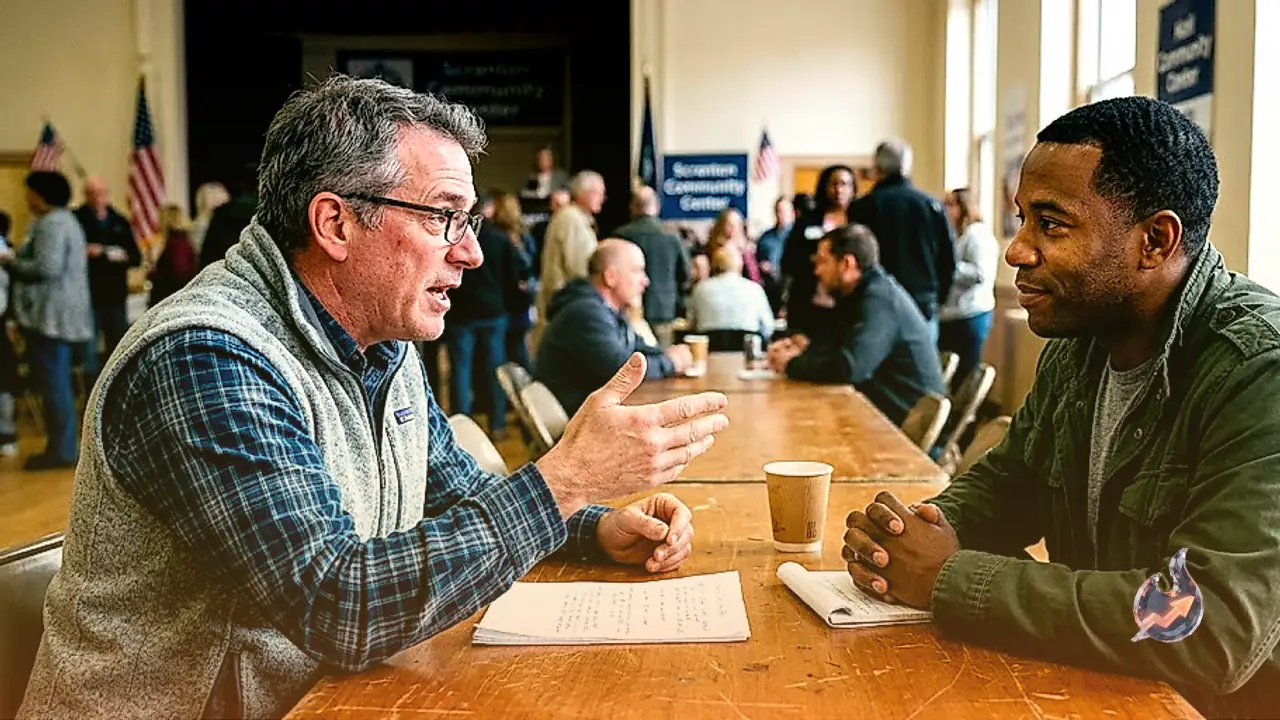
For the study, diverse groups of adults from the United States and, in select cases, from Britain, were recruited to discuss conflicting viewpoints across various topics. These included one non-political subject, focusing on whether dogs or cats make superior pets, alongside two sociopolitical subjects: whether cancel culture is beneficial or harmful, and whether Joe Biden was a successful president.
Prior to engaging in these 10-minute discussions, participants reported on the intensity of their beliefs, the reasons behind those convictions, and their expectations regarding a dialogue with someone holding a differing perspective. Specifically, they noted whether they anticipated that their own views or their partner's views would shift closer together.
Researchers provided participants with prompts to steer their 10-minute conversations, encouraging them to share the rationale for their stances while inquiring about their partner's reasoning. Following the discussion, participants again reported on the strength of their views. Kardas and his team subsequently compared these current ratings against the initial predictions.
Across all scenarios, participants' views shifted more than anticipated, as did the views of their partners. Contrary to mainstream expectations, these conversations ultimately served to depolarize opinions to a notable degree. For Kardas, this outcome came as a surprise.
Participants entered these dialogues anticipating that absolutely no one would alter their mindset, yet it emerged that even during conversations concerning personal preferences like cats versus dogs, individuals moderated their extreme stances to a greater extent than they had predicted.
When researchers followed up with participants one week later, they observed that opinions on the issues remained less polarized than at the outset, though the effect was slightly diminished compared to the immediate aftermath of the conversation. Interestingly, individuals whose attitudes experienced the largest post-conversation shifts were also the most likely to maintain those changes over time.
This indicates that conversations offer a relatively durable pathway for informing individuals about complex issues, an effect that carries forward into their subsequent attitudes, according to Kardas.
Why discussions help reduce polarization
To investigate why cross-group conversations can reduce polarization, the researchers conducted multiple sub-experiments and analyses. One key finding was that engaging in these cross-cutting dialogues broadens a person's perspective because it allows them to better understand the specific information and context others rely on to form their opinions.
As Kardas explains, consider someone who believes that cancel culture is a positive phenomenon. They might hold this view because their focus is centered on a prominent example like Harvey Weinstein, the movie producer exposed as a sexual predator and subsequently cancelled. Conversely, someone else might view cancel culture negatively after witnessing it damage the reputation of an individual whose behavior was provocative rather than criminal, such as Colin Kaepernick, who faced cancellation after kneeling during the national anthem to protest racial injustice.
Hearing the background behind why individuals form supportive or opposing stances helps uncover points of understanding or agreement, thereby softening rigid personal standpoints. When people formulate their attitudes, they frequently draw on a very small subset of information that readily comes to mind. However, engaging in an actual conversation reveals that the foundation of one's own attitude and another person's perspective draw upon different facets of a multifaceted issue.
Recognizing the potential inherent in cross-divide conversations is vital, otherwise individuals remain confined to information sources that merely reinforce pre-existing beliefs, such as supportive friends, family members, or social media echo chambers. This dynamic keeps people trapped in shared anxieties.
If individuals assume a conversation will be entirely unproductive, unfruitful, or unnecessary because nobody will learn anything or alter their stance, they will simply retreat to social media platforms and communities composed of like-minded peers.
Expanding on this dynamic, a 2019 study noted by Kardas demonstrated that people tend to overestimate the emotional toll of listening to speeches delivered by politicians situated on the opposite end of the political spectrum. Once individuals learned that their fears regarding cross-divide engagement were likely exaggerated, their willingness to interact with diverse sources of information increased by 24 to 34 percent.
Similarly, research has demonstrated that people frequently overestimate the extent of political polarization, and correcting this misperception helps individuals adopt less extreme positions. In another study, providing participants with accurate information regarding how members of an opposing political party actually viewed their counterparts—significantly less negatively than anticipated—helped foster more positive attributions toward political opponents.
This serves as an encouraging reminder, given that many individuals already harbor magnified anxieties about interacting with strangers, let alone individuals with whom they strongly disagree. Anticipating hostility or anger based on political views can prevent people from initiating conversations that might otherwise foster greater civility.
The same conversational tendency to reveal unexpected common ground also tends to produce a significantly less hostile and more congenial atmosphere than participants initially anticipate, according to Kardas.
This represents positive news for organizations dedicated to bringing individuals from opposing sides of political divides together for constructive dialogue. While achieving complete depolarization may not be the primary objective of such initiatives, encouraging these exchanges can cultivate greater warmth and shared knowledge, ultimately facilitating consensus on pressing social challenges.
To the extent that people can acquire a comprehensive understanding of an issue and subsequently arrive at an informed personal attitude, society as a whole can foster better-informed citizens capable of addressing significant social and political matters.