






















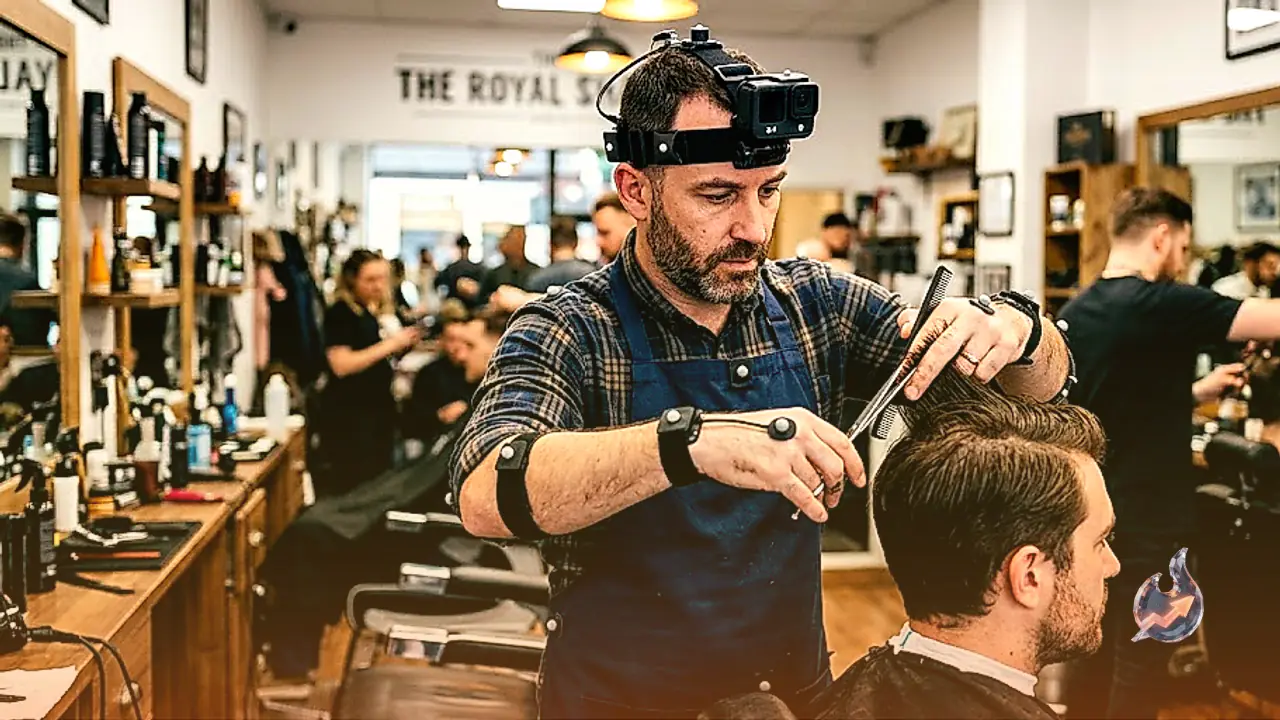

A fascinating glimpse into how future technology might reshape our daily routines and work environments has emerged through a widely discussed video online. Instead of a routine haircut inside a traditional barbershop, the footage reveals a setting deeply integrated with advanced technical experimentation aimed at teaching artificial intelligence how to operate like a human being.
The circulating video features a barber outfitted in a specialized setup that includes a camera mounted directly on his head alongside numerous sensors attached across his torso and limbs. Every single gesture, hand motion, and physical movement executed by the professional is being systematically recorded, turning an ordinary salon environment into a high-tech laboratory.
The primary objective behind this elaborate setup extends far beyond simple video recording. By capturing the precise nuances of how the barber performs his daily tasks, the system gathers essential motion data used to train artificial intelligence models, teaching machines not just what a task entails, but the exact physical manner in which a human executes it.
While handling scissors, angling hands correctly, navigating smoothly around a client's head, or applying the precise amount of pressure come entirely naturally to a human practitioner, these subtle physical dynamics remain exceedingly difficult for a robot or digital system to comprehend autonomously.
This fundamental gap is precisely why real-world human labor is recorded to train intelligence systems effectively, with the sensors and cameras translating physical actions into actionable data streams. It becomes evident that the barber is not merely servicing a client, but actively imparting his professional skill set to a machine. The video clip was shared publicly on छपरा जिला on X.
Paving the Way for Humanoid Robots
Such demonstrations highlight how future humanoid robots might eventually acquire the capacity to perform intricate manual tasks by leveraging accumulated behavioral datasets. What an ordinary worker demonstrates inside a salon today could serve as the foundational training data enabling autonomous machines to replicate physical labor tomorrow. Nevertheless, experts note it remains premature to assume that artificial intelligence will completely replace human workers overnight, given that operating fluidly within the unpredictable physical world continues to present immense challenges for robotics. Even so, this style of physical training underscores the reality that technological applications are rapidly breaking free from the confines of computer screens.
Streamlining Demanding and Repetitive Tasks
The expanding integration of advanced systems across diverse industries points toward a future where strenuous or repetitive physical duties can be significantly eased through automation. Humans act as the initial trainers, allowing automated counterparts to replicate those established routines efficiently. Yet, this dynamic gives rise to a profound question regarding whether teaching machines our specialized skills today might eventually render human labor obsolete tomorrow, potentially sparking major debates in the years ahead. For now, the footage demonstrates that modern development has moved beyond text and speech processing into the realm of real-world physical execution.