














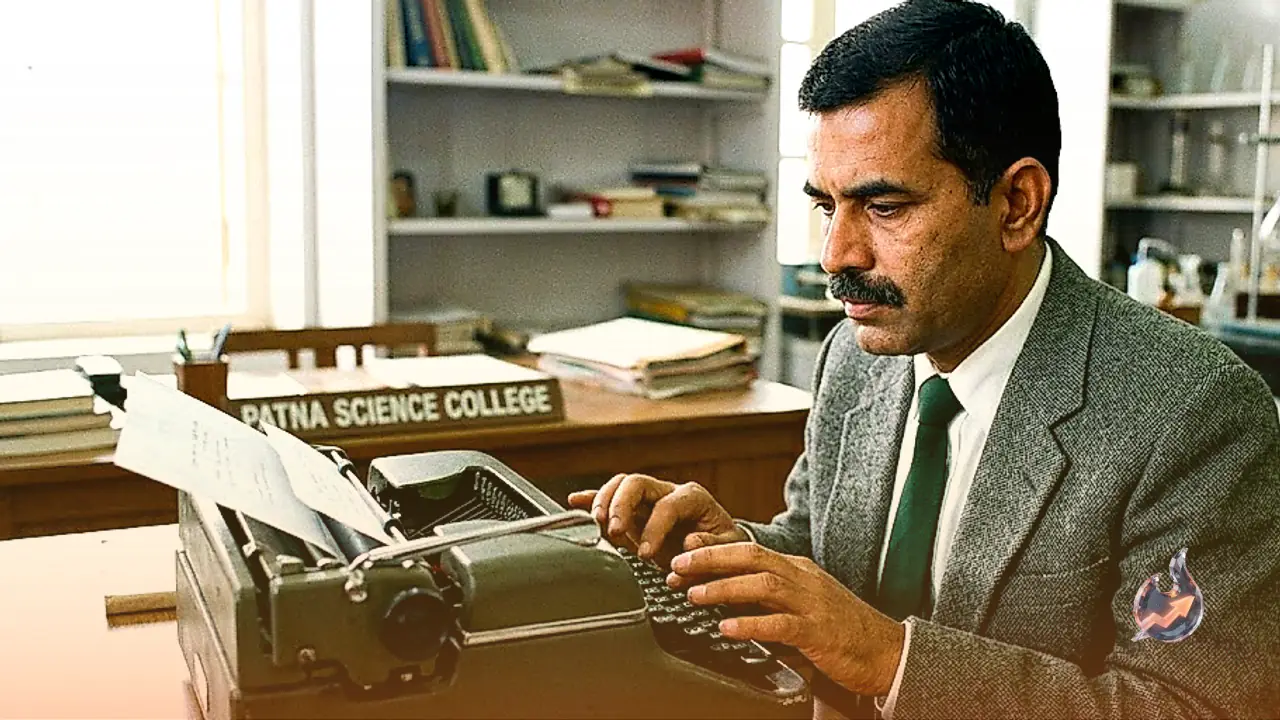

In today's digital era, typing in Devanagari script on computers, tablets, and smartphones has become virtually effortless. With localized keypads, smart autocomplete features, and voice-assisted typing, lengthy text documents in Hindi can be compiled within seconds. However, the scenario was radically different in the mid-twentieth century. Following independence, as the use of Hindi expanded rapidly across government departments, judicial courts, and news agencies, administrative machinery hit a major bottleneck due to the total absence of a dedicated mechanical Hindi typewriter. This critical challenge was solved through a landmark innovation emerging from Patna, which laid the foundation for modern Hindi typing across India.
The Administrative Bottleneck and the Birth of Hindi Keyboard Design
As post-independence policies mandated increased documentation in Hindi across public offices, the physical limitations of existing typewriter machinery presented a formidable barrier. Unlike Latin script, Devanagari comprises a rich and complex structure of vowels, consonants, diacritics (matras), conjunct characters, and half-letter forms. Fitting such an intricate writing system onto a standard mechanical typewriter chassis required a radical rethink of keyboard mechanics. Recognizing this operational crisis, Professor Kripanath Mishra, a scholar in the English Department at Patna Science College, stepped forward to engineer a specialized Hindi keyboard layout. He embarked on years of linguistic analysis, meticulously mapping character usage patterns in administrative and journalistic texts.
Ergonomic Layout of the Mishra Keyboard and 20 Percent Paper Savings
The primary breakthrough of Professor Kripanath Mishra's keyboard design lay in its scientific and ergonomic character distribution. Rather than arranging letters alphabetically or arbitrarily, he positioned keys according to natural finger movement and usage frequency. Devanagari letters and diacritics most frequently employed in government correspondence and daily news publications were assigned to the central home row, where a typist's fingers rest naturally. Conversely, lesser-used characters and secondary symbols were relegated to the upper and lower rows.
This ergonomic alignment yielded extraordinary practical benefits. Typists were able to achieve high typing speeds after surprisingly short training periods. By reducing unnecessary finger stretches, the design significantly minimized typographical errors and physical fatigue. The heightened precision and speed streamlined office workflows, resulting in a documented reduction of roughly 20 percent in paper wastage across institutions—a major financial and material saving at the time. This pioneering configuration gained widespread acclaim as the 'Mishra Keyboard'.
Global Recognition and Production by a German Typewriter Giant
The ingenuity of Professor Kripanath Mishra's Hindi keyboard layout soon attracted international industrial interest. A leading typewriter manufacturing firm in Germany recognized the mechanical efficiency of his design and secured the rights to incorporate the layout into their typewriter production lines. Combining German precision engineering with the Patna professor's ergonomic scheme, these manufactured Hindi typewriters were deployed across government secretariats, courts, and publication houses throughout Hindi-speaking regions of India, transforming administrative operations for decades.
Preserving History at Shrikrishna Science Centre in Patna
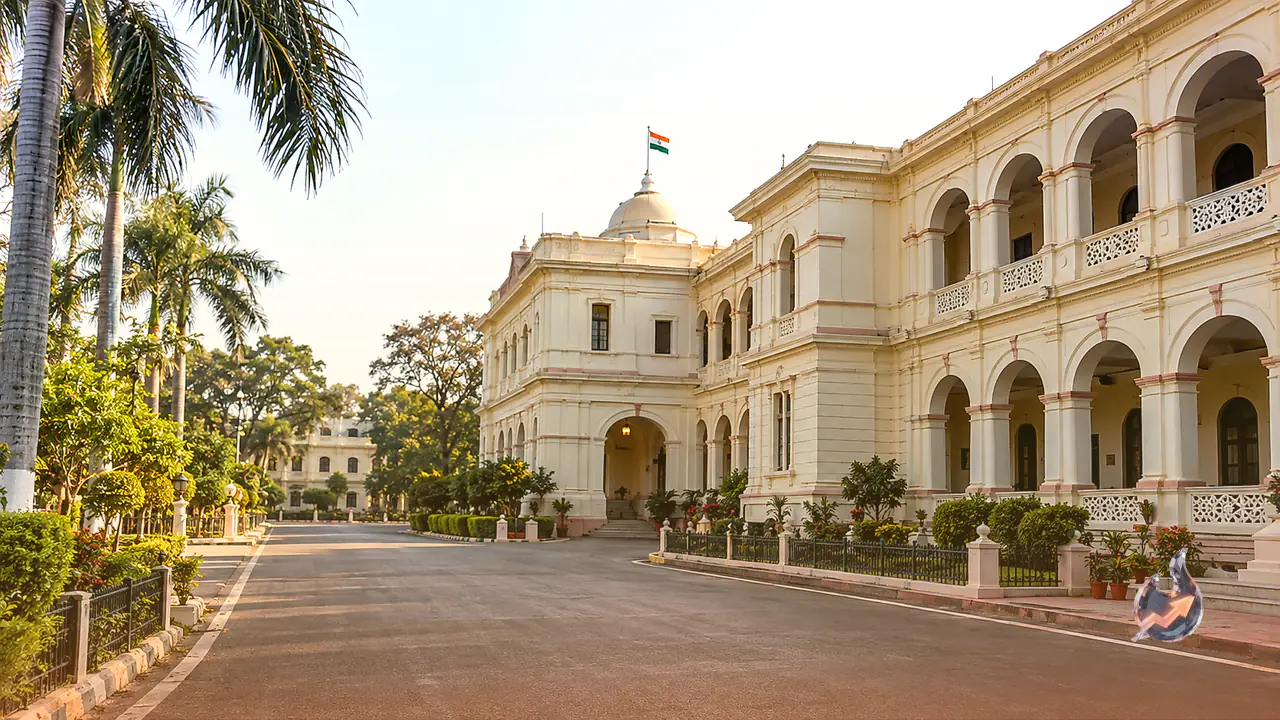
The physical legacy of this technological milestone remains preserved in Patna today. An original model of this historical Hindi typewriter is on public display at the Shrikrishna Science Centre, located at the western end of Gandhi Maidan in Patna. Satish Ranjan, former education officer at the Shrikrishna Science Centre, recalled that following Professor Mishra's demise, his family took proactive steps to donate the historic machine and related archival materials to the museum.
During the official handover, Professor Mishra's family members—including his son, daughter, son-in-law, and other close relatives—visited the center to present the machine and underlying documentation to the then Project Coordinator. According to Satish Ranjan, this authentic artifact remains proudly exhibited inside the Dr. Shrikrishna Singh Gallery at the science center, offering students, researchers, and visitors a tangible link to India's first Hindi typewriter.
The Multifaceted Polymath: Who Was Professor Kripanath Mishra?
The innovator behind the first Hindi typewriter was a scholar of exceptional intellectual breadth. Born in 1905 in Champanagar, located in the Bhagalpur district of Bihar, Professor Kripanath Mishra served as a professor of English at Patna Science College. Yet his academic curiosity spanned well beyond English literature. He possessed an advanced mastery of the German language, which proved instrumental in communicating technical parameters with German typewriter manufacturers.
In addition to his linguistic repertoire, Professor Mishra was a connoisseur of European classical music and a scholar of Hindi and Sanskrit literature. Over his lifetime, he authored several acclaimed books, literary works, and novels, receiving prestigious state and national honors for his contributions to language and literature. Professor Mishra passed away in Patna on 26 December 1971. His creation, the Mishra Keyboard, endures as a foundational chapter in the technological evolution of the Hindi language.