























The district of Azamgarh in Uttar Pradesh holds a remarkably courageous and significant place in the narrative of India's First War of Independence in 1857. During this historic uprising, the flames of rebellion across the Purvanchal region were not merely restricted to military cantonments. Instead, freedom fighters organized a systematic movement to dismantle every visible symbol of British colonial authority. In Azamgarh city, while the Kunwar Singh Udyan and its Shaheed Dwar stand as enduring tributes to the brave martyrs who sacrificed their lives, Wesley Inter College, regarded as the oldest educational institution in the district, remains a silent witness to the turbulent events of 1857. The historic library inside the college campus still carries marks of the uprising that unfolded against British rule.
Targeting Missionary Institutions After Seizing Treasury
During the 1857 revolt, freedom fighters in Azamgarh sought to paralyze the British administration by targeting key assets. Biswajeet Victor, a lecturer serving at Wesley Inter College, explained that the revolutionaries first launched a bold assault on the government treasury in Azamgarh town, successfully taking total control of the imperial funds. Following this major blow to colonial finances, the revolutionaries directed their movement toward Wesley Inter College, which was being run by foreign Christian missionaries at the time. As an institution associated with foreign missionary presence, the campus became a prime target for revolutionaries determined to overthrow colonial influence from the region.
Destruction of Rare Manuscripts and Handcrafted Atlases
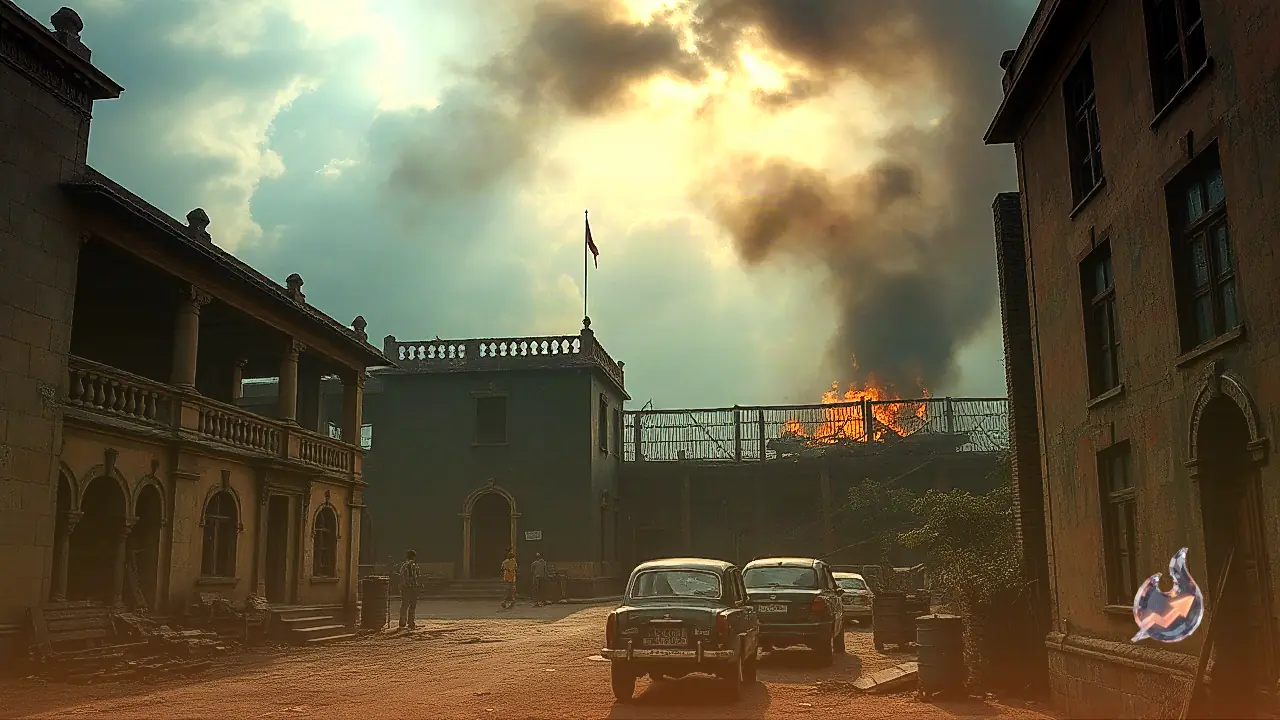
As the uprising intensified, revolutionaries set fire to the library situated in the rear section of the Wesley Inter College campus. The ensuing blaze engulfed not only the library building but also inflicted severe structural damage on several adjacent rooms and the rear facilities of the institution. Biswajeet Victor noted that Wesley Inter College was among the most prominent and premier educational hubs in Azamgarh during that era. Its library housed a vast collection of advanced academic materials, including high-level text books on mathematics, science, and geography. Among the most prized possessions lost to the fire was a rare, handmade colored atlas, which was reduced to ashes alongside countless valuable volumes.
Post-War Restoration and the Threat of Neglect
Once the turmoil of the 1857 revolt subsided, efforts were made to restore the campus facilities and resume educational activities. Repair work was carried out on the damaged sections of the college building, and fresh consignments of important books were procured to replenish the decimated library. However, as decades passed, the historical site suffered from a lack of systematic maintenance and heritage preservation. Over time, parts of the historic campus building deteriorated into a near-dilapidated state, while the replacement literature and remaining archives in the library fell victim to woodborers and termites. Today, the visible structural traces within the campus continue to evoke the legacy of 1857.