





















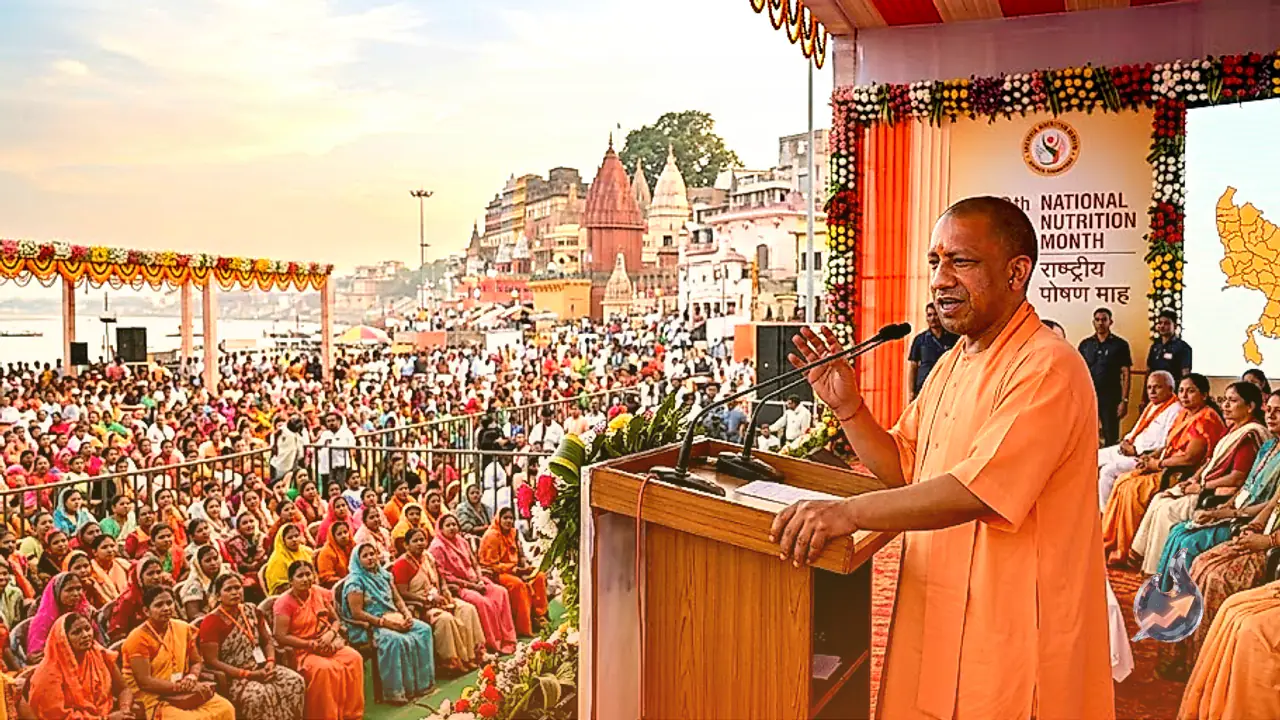

Addressing the inaugural ceremony of the 9th National Nutrition Month in Varanasi, Uttar Pradesh Chief Minister Yogi Adityanath outlined a comprehensive roadmap detailing the large-scale modernization and overhaul of the state's Anganwadi network. Recalling the severe mismanagement, corruption, and dilapidated infrastructure that plagued these grassroots centers prior to 2017, the Chief Minister highlighted how dedicated governance over the past nine and a half years has successfully transformed more than 70,000 Anganwadi centers into modern model facilities. He emphasized that these upgraded centers now serve as benchmark institutions for early childhood care, nutrition distribution, and foundational learning across rural and urban areas.
Pre-2017 Era: Liquor Mafia Handled Nutrition Distribution
Reflecting on the state of affairs before 2017, Chief Minister Yogi Adityanath noted that most Anganwadi centers across Uttar Pradesh were operating out of crumbling structures surrounded by filthy and unhygienic conditions. The centers completely lacked basic amenities for children and frontline workers, and nutritious food was rarely delivered on time. Upon assuming office in 2017, the Chief Minister inquired into the causes of the widespread public complaints and deteriorating state of these centers. Official investigations unveiled a shocking reality: the supply of nutritional supplementary food for vulnerable children and mothers was being operated by a liquor syndicate. The Chief Minister immediately ordered a quality audit. Upon inquiring about the frequency of deliveries, officials acknowledged that food supplies arrived at best once every three months, while the rest of the system was left entirely to chance.
Crumbling Facilities and Low Honorarium for Workers
Detailing the severe hardship faced under the previous administration, the Chief Minister stated that young children visiting Anganwadi centers had to bring their own jute rugs or mats from home to sit on bare floors. The centers had no clean drinking water arrangements, no proper seating infrastructure, and no provision for hot milk or warm meals. While administrative negligence and policy flaws originated at bureaucratic levels in Lucknow, frontline Anganwadi workers bore the brunt of public outrage and verbal abuse. Despite enduring public dissatisfaction and managing difficult working conditions, their monthly compensation remained extremely low. Anganwadi workers were paid a meager honorarium of just ₹3,000 per month, while their assistants received only ₹1,500 per month, making basic livelihood difficult.
Smartphones, Take-Home Ration, and SHG-Led Processing Plants
Chief Minister Yogi Adityanath affirmed that sustained state intervention has produced visible, high-quality transformations across the Anganwadi network for the first time. The state government created a standardized model blueprint, allocating dedicated development budgets for building construction and facility renovation. Today, Anganwadi workers across Uttar Pradesh are equipped with government-issued smartphones, enabling them to upload real-time data onto tracking portals without delay. Furthermore, nutrition delivery mechanisms have been modernized through hot cooked meals served directly at centers, alongside packaged Take-Home Ration (THR) items. To ensure self-reliance and local community involvement, Uttar Pradesh has established 204 THR production plants across the state, which are operated and managed directly by Women Self-Help Groups (SHGs).
Budgetary Priority and Overhaul of Over 70,000 Centers
The Chief Minister highlighted that over the past nine and a half years, more than 70,000 Anganwadi centers have been completely revamped on a priority basis. The administration ensured that funds from the State Finance Commission, Central Finance Commission, and state budgetary allocations were mandatorily channeled into upgrading Anganwadi infrastructure. Priorities included constructing sturdy concrete structures, securing premises with boundary walls, building clean toilets for children, and installing safe drinking water systems. These modernized units now house Bal Vatikas (pre-primary centers), where children learn alphabets and numbers through interactive, play-based educational methods in a welcoming environment.
Surprise Kanpur Inspection and Grassroots Strengthening
Sharing a personal anecdote, Chief Minister Yogi Adityanath recalled an unannounced visit to an Anganwadi center located in a remote village in Kanpur district. Arriving without prior notice, he observed around 20 to 22 children present in the classroom, with the Anganwadi worker teaching them enthusiastically. The Chief Minister stood quietly in a corner to watch the session unfold, noting how children were actively engaging in learning activities. Even with sweets like ladoos placed before them, the children balanced their curiosity with eager participation in play-way lessons. Expressing satisfaction at seeing such vibrant learning environments, the Chief Minister reaffirmed the government's commitment to child welfare. As part of ongoing administrative strengthening, the state government recently handed over formal appointment letters to 739 Anganwadi workers and 15,203 assistants, further bolstering grassroots delivery across Uttar Pradesh.