
















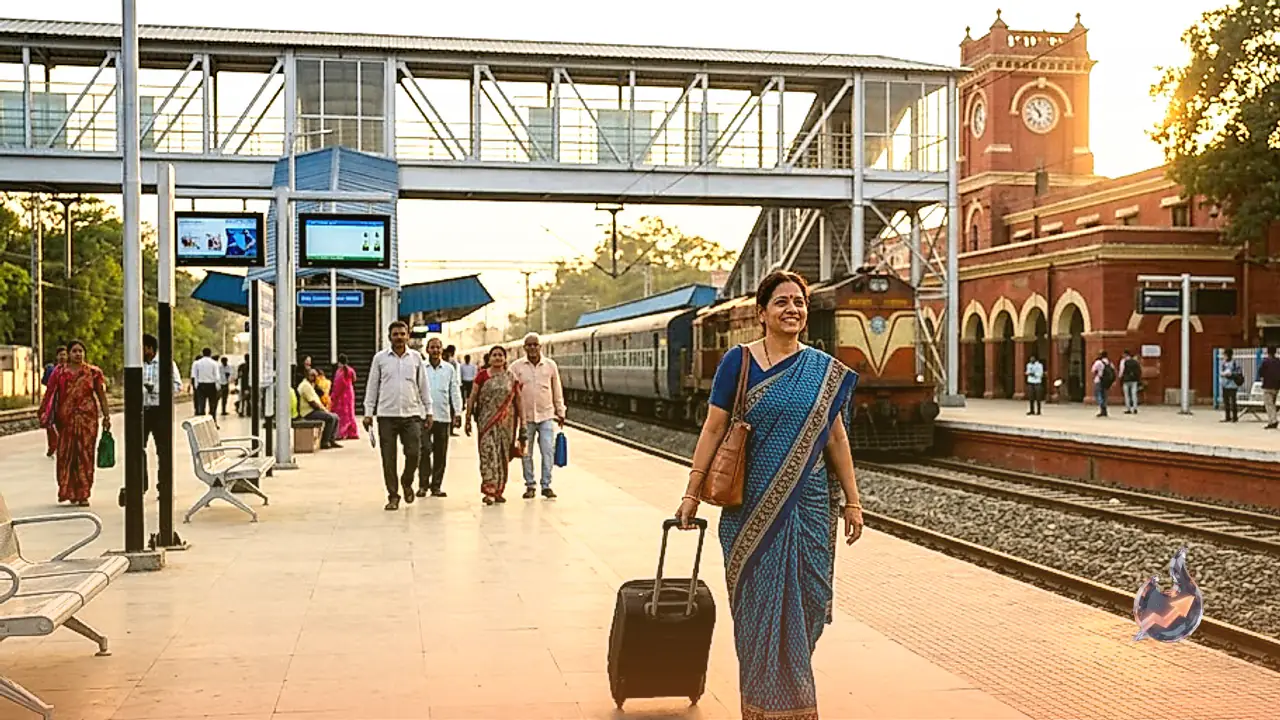

The Indian state of Uttar Pradesh is home to a unique railway junction that boasts an extraordinary historical legacy. Located in the Bareilly district, the Izzatnagar railway station is a historic transit hub that was developed over several decades by three consecutive generations of British officers. Originally starting its journey in the late 19th century, this station has witnessed massive transformations in its operational capacity and infrastructure, culminating in a recent comprehensive modernization project worth Rs 3.60 crore. Today, the facility seamlessly combines its rich colonial-era heritage with state-of-the-art, airport-like amenities to serve the growing needs of thousands of daily passengers.
The Legacy of Three British Generations
The origins of this remarkable railway division date back to 1875, when concerted efforts were made to connect the hilly terrains of Nainital with the plains. During this period, a prominent British railway officer named Alexander Izat was spearheading the development work. In recognition of his massive contributions to the region's transport network, the station was initially named Izatnagar. Alexander Izat was also the visionary responsible for laying down the crucial railway line connecting Bareilly to Lucknow.
The family's association with the railway division did not end with Alexander. Later on, his son, Lieutenant Colonel W.R. Izat, took over the monumental responsibility and worked extensively on the development of the Izzatnagar rail division. The legacy was proudly carried forward by a third generation when his grandson, Sir J.R. Izat, also served and contributed significantly to this specific railway division. Together, these three generations of British officials played a foundational and highly instrumental role in giving the Bareilly-based railway station its current shape and structural prominence.
The Evolution of the Izzatnagar Name
While the station was originally named after Alexander Izat, the pronunciation and spelling naturally evolved in the local dialect over the years. In Hindi, it became widely known and officially recognized as Izzatnagar. According to historical accounts, the name of this particular station was changed three times over the course of its existence before settling on its current widely accepted identity. Today, it operates under the official station code IZN and stands as a major junction in the region.
From Meter Gauge to a Massive Rail Division
The Izzatnagar facility officially achieved the prestigious status of a full-fledged railway division on April 14, 1952, falling under the vast administrative umbrella of the North Eastern Railway zone. In its early days, the division operated exclusively on a meter-gauge network. Due to the massive availability of vacant land in the area when the division came into existence, a dedicated railway workshop was established right on the premises to handle technical operations.
As regional transportation needs grew, major infrastructure upgrades steadily followed. A dedicated loco shed was constructed at the site in 1988, and the much-needed broad-gauge line was finally introduced in the year 2000. Currently, major rail routes like the Kasganj-Bareilly-Izzatnagar line and the Pilibhit-Tanakpur main line pass directly through this junction, making it a critical logistical and passenger artery.
Modern Makeover and Airport-Like Amenities
Decades after its inception, the Izzatnagar railway station has undergone a massive Rs 3.60 crore revitalization project to meet contemporary travel standards. The newly renovated station now boasts airport-like modern facilities designed to maximize passenger comfort and convenience. Travelers are immediately greeted by a grand entrance, and the premises are fully equipped with air-conditioned waiting rooms, escalators, lifts, and a comprehensive CCTV camera surveillance system. A standout attraction at the revamped station is the unique Rail Cafe, which has been creatively repurposed from an old, discarded train coach.
Today, this historic hub is busier and more vibrant than ever. More than 50 trains pass through the Izzatnagar station on a daily basis, smoothly connecting passengers to major metropolitan cities across India, including Mumbai, Delhi, and Kolkata.