






















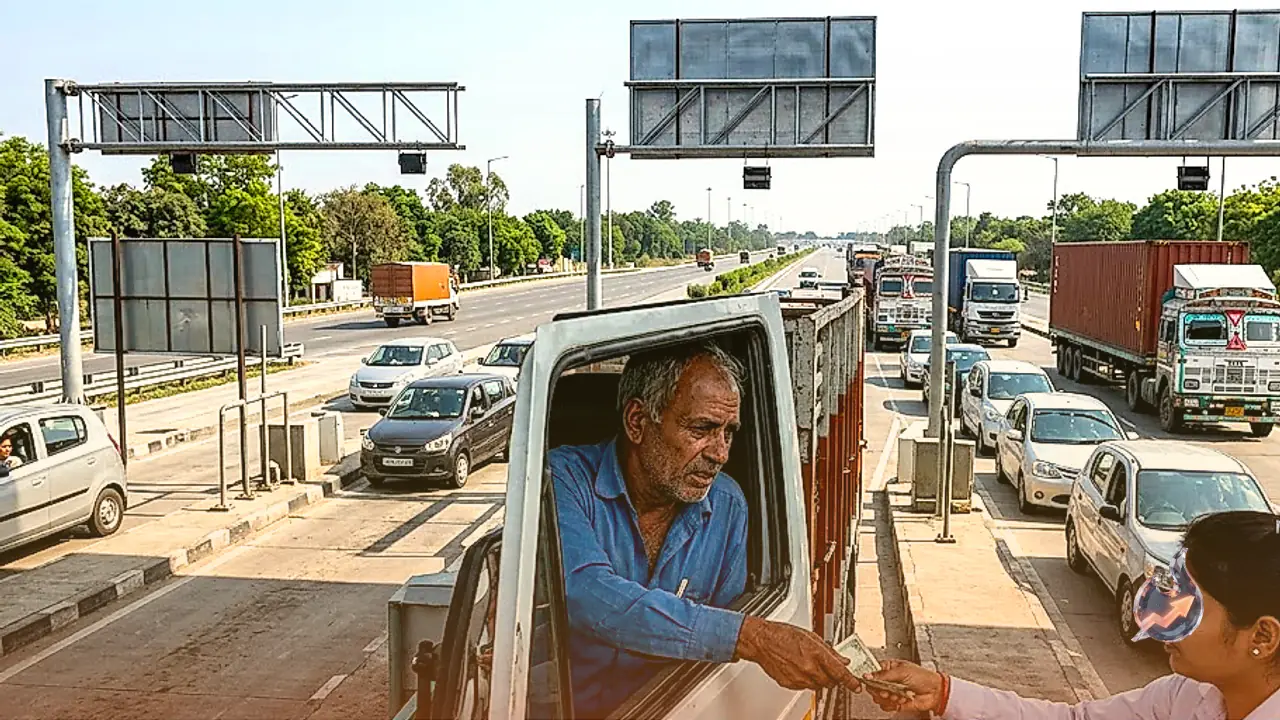

Commuters shuttling between Kanpur and Lucknow are set to pay more from tonight, as the National Highway Authority of India has revised toll charges at the Nawabganj toll plaza on the Kanpur-Lucknow highway, NH-27, located in Unnao district. The higher rates kick in from 12 midnight today.
This marks the second hike in toll charges on NH-27 since the Kanpur-Lucknow Expressway became operational. Under the revised list, every category of vehicle, from small private cars to heavy commercial trucks, will now pay more to use the stretch.
New Toll Rates at Nawabganj Plaza
The revised charges for different vehicle categories at the plaza are as follows.
- Light motor vehicles such as cars, jeeps and vans will now pay 100 rupees, up from 95 rupees.
- Light commercial vehicles and mini buses will pay 160 rupees, up from 155 rupees.
- Two-axle buses or trucks will now pay 340 rupees instead of 330 rupees.
- Three-axle vehicles will pay 370 rupees, up from 360 rupees.
- Heavy vehicles with 4 to 6 axles will pay 535 rupees, up from 520 rupees.
- Vehicles with 7 or more axles have seen the steepest hike, now paying 650 rupees instead of 635 rupees.
Monthly and Annual Passes for Local Residents
NHAI has also offered relief to local residents who use the plaza on a daily basis. A monthly pass for local, non-commercial private vehicles has been fixed at 360 rupees, while an annual pass can be obtained for 3,075 rupees. This spares daily commuters from paying separately at every crossing and keeps their monthly travel cost predictable.
How Toll Rates Are Actually Calculated
The most basic factor in setting a toll rate is the length of the road. NHAI measures the highway on a per-kilometre basis and fixes the base rate accordingly, so the toll depends on how much of the highway stretch a vehicle actually uses.
The next factor is the size and weight of the vehicle, measured through what is called a Passenger Car Unit, or PCU. Light vehicles such as cars, jeeps and vans attract the lowest toll, buses and two-axle trucks fall in the middle, while heavy, multi-axle commercial vehicles with 4, 6 or more axles are charged the most, since their greater weight causes more wear and damage to the road.
The type of road also plays a role in fixing the rate. Four-lane and six-lane highways, or modern expressways, carry a different and higher per-kilometre toll rate compared with ordinary roads.
If a major bridge, tunnel or bypass falls along the route, and its construction cost was 10 crore rupees or more, an additional charge is added to the base rate to recover that cost.
NHAI also reviews toll rates every year on 1 April. This revision is based on the Wholesale Price Index, or WPI, which is why toll charges tend to see a modest increase almost every year.