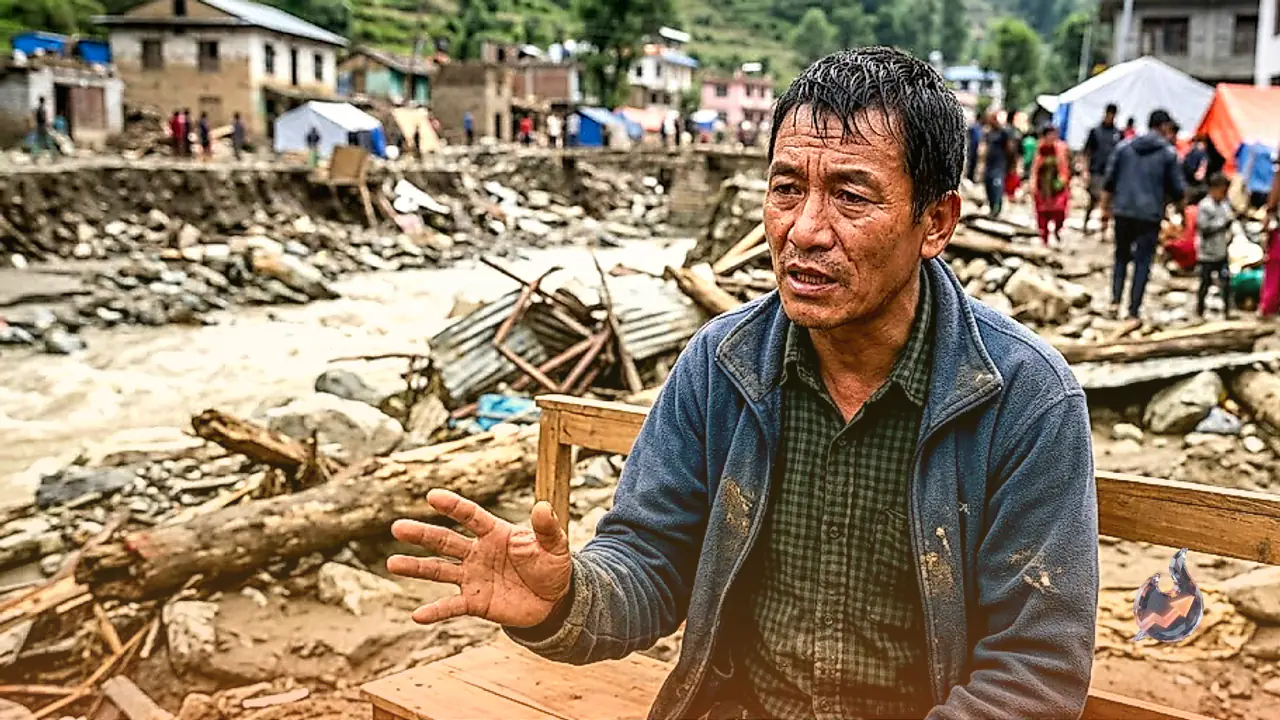



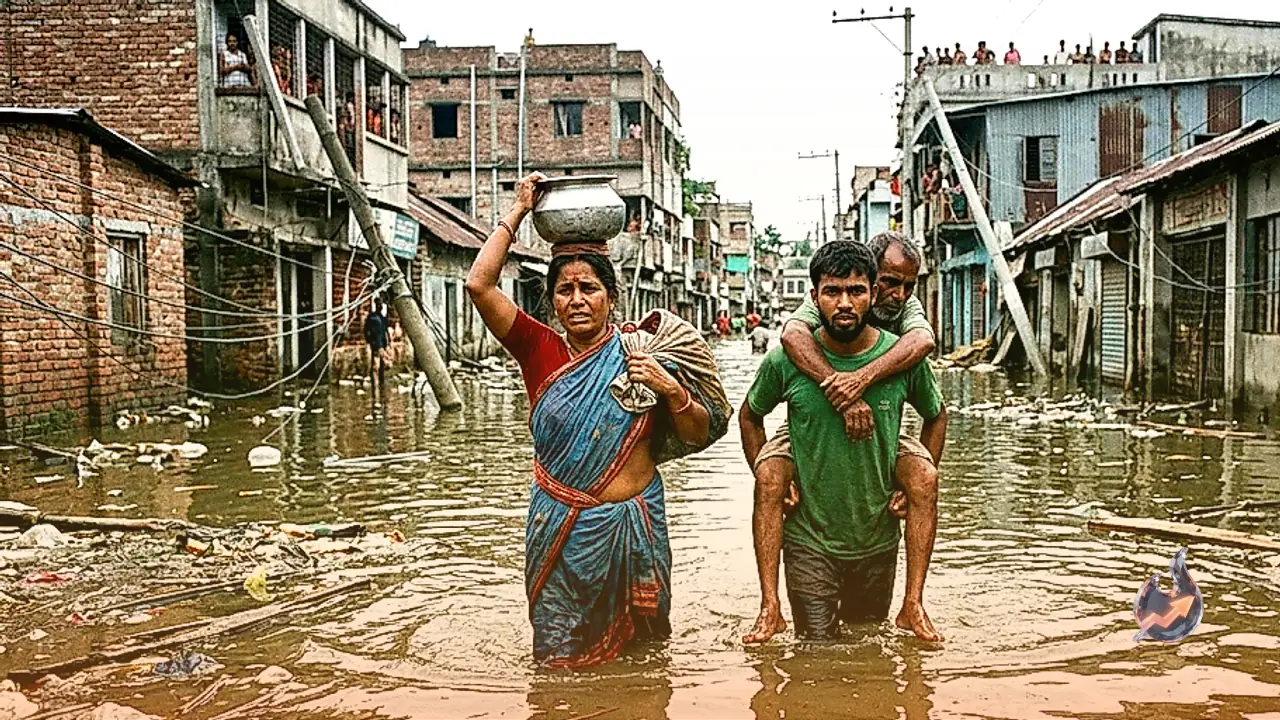




















A severe flash flood has unleashed widespread devastation in neighboring Nepal, pushing the death toll to at least 626 while 4451 individuals have been successfully rescued. Among those rescued are 187 foreign nationals and 114 Indians, while over 24 people remain missing. The massive scale of destruction has directly impacted millions of residents, keeping the threat level elevated across the affected regions.
Cataclysms Etched in History
While modern forecasting and disaster response offer better preparedness today, human history is marked by colossal deluges that completely erased cities, villages, and entire regions. On numerous occasions, rampaging rivers abruptly changed their courses or failing dams unleashed torrents that left populations with virtually no time to escape. These historical disasters claimed millions of lives, with the true crisis often unfolding only after the floodwaters receded, giving way to rampant diseases, starvation, and mass displacement.
The Great Chinese Flood of 1931
Among the deadliest floods in recorded history, the 1931 disaster in China stands out prominently. Continuous torrential rains combined with melting mountain snow in August 1931 caused the Yangtze, the Huang He or Yellow River, and the Huai River to swell simultaneously. The scale of the inundation was so immense that approximately 88000 square kilometers of land were completely submerged, while an additional 21000 square kilometers were partially affected, leaving roughly 80 million people homeless.
Epidemics and Famine Follow the Deluge
The devastation did not stop with the rising waters; the aftermath triggered severe epidemics and a critical shortage of food supplies. Various historical estimates place the total death toll between 850000 and 4 million people. While the National Flood Relief Commission's report for 1931-32 recorded about 140000 deaths strictly due to drowning, factoring in fatalities caused by subsequent diseases and starvation brings the actual toll to manifold higher numbers.
The 1887 Yellow River Overflow
In the year 1887, China's Yellow River assumed a catastrophic form when its river embankments breached during September and October. In a matter of time, nearly 50000 square kilometers of territory went underwater. The disaster was severely compounded by ensuing plagues and famine, with estimates suggesting that between 900000 and 2 million individuals lost their lives. American diplomatic records also corroborated massive human casualties, noting that around 2.5 million people were severely affected in Henan province alone.
Warfare Strategy Triggers 1938 Flood
The flood of 1938 was unique in being both a natural disaster and a deliberate military strategy. During the Second Sino-Japanese War, as advancing Japanese troops pushed deeper into Chinese territory, the Chinese National Army formulated a plan to halt their advance. On June 9, 1938, they breached the embankments of the Yellow River near Kaifeng, causing the water to spread rapidly and submerge approximately 54000 square kilometers of land.
Displacement and Widespread Starvation
The intentional flooding was followed by intensifying famine and disease, which further escalated the human cost. Diverse estimates point to 500000 to 900000 deaths, while some research places the fatality count above 800000. Around 4 million individuals were displaced from their homes, turning the strategic maneuver into a profound humanitarian crisis for the local civilian populace.
The Banqiao Dam Failure of 1975
In August 1975, Typhoon Nina unleashed relentless rainfall over China's Henan province, pushing conditions past the breaking point. Following the extreme downpour, the Banqiao Dam along with 61 other dams collapsed, unleashing a torrent that defied normal flood characteristics. Survivors and reports described the wall of water as standing roughly 10 meters high and spanning several kilometers in width.
Staggering Loss of Life
Official records documented about 26000 deaths directly caused by the floodwaters, followed by an additional 145000 fatalities resulting from subsequent epidemics and starvation. However, alternate independent assessments estimate the overall death toll to have crossed 220000. Over 10 million people were impacted by this catastrophic structural failure, which devastated local communities and infrastructure.
The Catastrophic Bhola Cyclone of 1970
Striking the Bay of Bengal on November 12-13, 1970, the Bhola cyclone ranks among the most lethal tropical cyclones in documented history. The tempest drove a massive storm surge towering roughly 10.5 meters high into coastal regions. At that time, the territory of Bangladesh was designated as East Pakistan, and the storm surge penetrated deep into low-lying coastal settlements.
Overwhelming Devastation
The colossal wall of water swallowed entire villages and communities whole in a matter of hours. According to documentation from the World Meteorological Organization and NOAA, between 300000 and 500000 people perished in this single event, cementing the Bhola cyclone's status as the deadliest cyclone globally. Across all these historical events, a recurring pattern emerges where the receding water does not mark the end of danger, as waterborne illnesses, malnutrition, and widespread epidemics continue to claim countless lives long after the initial impact.