














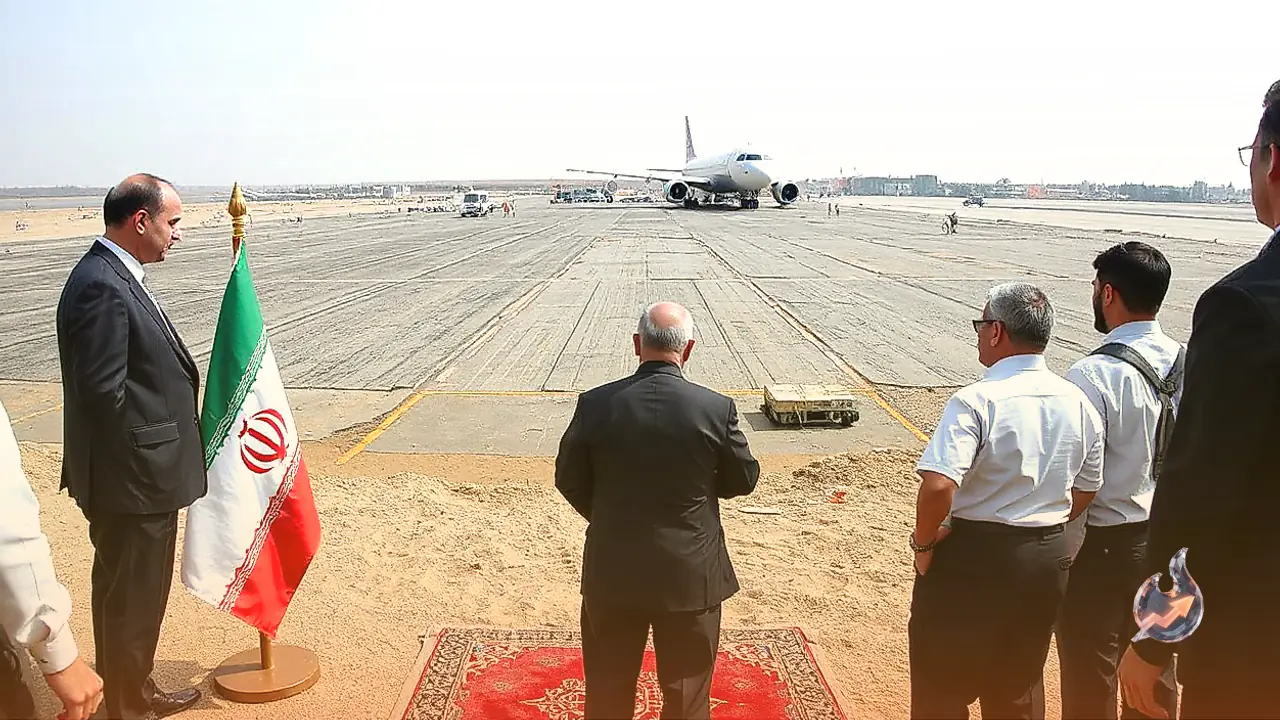

A potential diplomatic breakthrough in the confrontation between Washington and Tehran has surfaced through a newly drafted preliminary framework. Under the proposed terms, Tehran would agree either to downgrade its purity levels or transfer its stockpiles of highly enriched uranium to a third-party country. Additionally, the international shipping route through the Strait of Hormuz would be restored for commercial maritime traffic within seven days of reaching an initial consensus.
Beijing Envisioned as Guarantor in Doha Negotiations
The draft arrangement identifies China as a prospective guarantor to supervise compliance and secure lasting stability for any final pact. The proposal also envisions a diplomatic summit hosted by China to cement the commitments made by both adversaries.
Direct talks between American and Iranian negotiators are slated to take place in Doha rather than Istanbul. Under the reciprocal formula, Iran must address nuclear restrictions and maritime security demands in exchange for relief from American economic embargoes, naval blockades, and related financial penalties. To ensure neither side compromises without verified actions, the framework includes an autonomous inspection system before each stage of implementation is cleared, ensuring every concession is tied to verified execution.
Qatari Mediators Convey Vice President Vance's Letter
Diplomatic efforts to restore a ceasefire accelerated on Friday as a high-level delegation from Qatar arrived in the Iranian capital. Headed by a senior adviser to Qatar's prime minister and foreign minister, the diplomatic mission is coordinating closely with the United States to bridge differences between the conflicting nations.
During their visit to Tehran, the Qatari envoys delivered a formal letter from US Vice President JD Vance directly to Iranian security official Mohsen Rezaei. Officials in Tehran welcomed the correspondence, which outlines a diplomatic off-ramp capable of halting ongoing American strikes.
Donald Trump Highlights Economic Pressures on Tehran
Addressing reporters at the Oval Office amid these backchannel contacts, US President Donald Trump stated that Washington feels no urgency to wrap up the military campaign. Speaking on the ongoing engagement, Trump remarked, "Talks are going on."
Characterizing the confrontation as an unconventional conflict, the US President argued that while Tehran is eager to negotiate, it is suffering deep financial strain, including an inability to distribute salaries to its military personnel and law enforcement officers. Trump also downplayed the financial toll on the United States, asserting that seven months into the campaign, overall American operational costs remain modest and have been completely offset by gains generated elsewhere.
Parallel Diplomatic Channel Involving Turkey
Simultaneously, alternative diplomatic tracks are addressing the regional crisis. Turkish Foreign Minister Hakan Fidan met with US Secretary of State Marco Rubio on the sidelines of the G20 ministerial gathering hosted in the United States. Their talks focused on ongoing negotiations between Washington and Tehran, regional developments, and bilateral affairs.
This discussion followed a phone conference earlier in the week between Turkish President Recep Tayyip Erdogan and Donald Trump. During that exchange, Ankara voiced serious apprehension regarding maritime corridor security and reaffirmed its commitment to supporting diplomatic initiatives aimed at calming regional tensions.