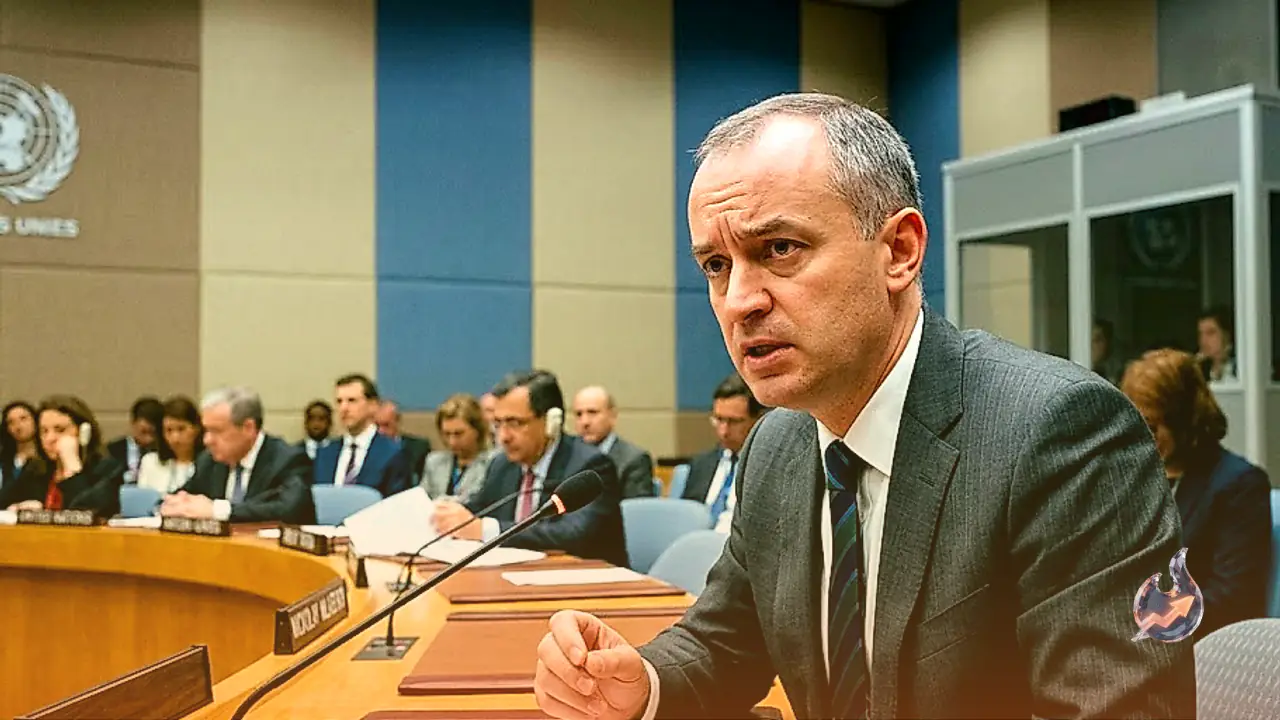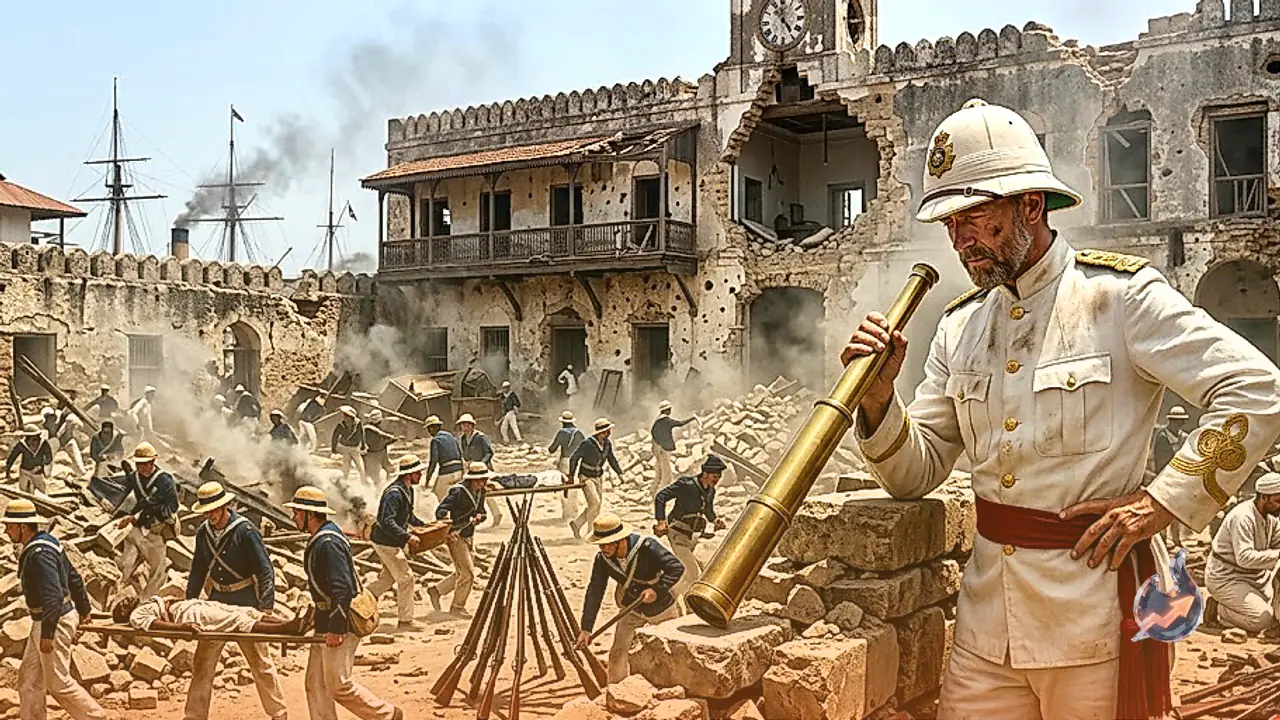





















Ratko Mladić, the former military commander of the Bosnian Serb forces who was widely reviled across the globe as the "Butcher of Bosnia," has died in custody at the age of 84. During the bloody disintegration of Yugoslavia in the 1990s, the barrel-chested general orchestrated a relentless campaign of ethnic cleansing aimed at fulfilling what he saw as a historic destiny to build a Greater Serbia. His actions resulted in the most devastating atrocities on European soil since the defeat of Nazi Germany in World War II, leaving tens of thousands of men, women, and children dead and entire communities completely destroyed.
Throughout the Balkan conflict, Mladić pursued his nationalist goals with single-minded determination and studied brutality. Driven by deep fanaticism, he emerged as a celebrated hero to his nationalist supporters while spreading fear among his victims. He frequently told his troops and followers that their Muslim neighbors were conspiring to impale Serbs, burn them alive, crucify them, and gouge out their eyes. Displaying no remorse even during his eventual war crimes trial in The Hague, where he arrogantly offered a cheerful thumbs-up gesture to relatives of victims in the gallery, Mladić summarized his worldview in a stark warning: "Borders are drawn in blood, and states marked out with graves."
Early Life and Rapid Advancement in the Yugoslav Military
Ratko Mladić was born on 12 March 1942 in the small mountain village of Božanovići, situated near Sarajevo in what was then the German-controlled Independent State of Croatia. Throughout his life, Mladić routinely claimed to have been born a year later in 1943. When he was just two years old, his father, Neđo Mladić, was killed in 1944 while fighting as a partisan leader alongside Josip Broz Tito's communist forces against Nazi-backed Croat nationalists known as the Ustaše.
Raised in the newly established post-war construct of the Socialist Federal Republic of Yugoslavia, Mladić spent his early youth adapting to the social changes of the era. After completing a short apprenticeship as a tinsmith, he decided to pursue a permanent career in the armed forces. He enrolled in the national officer school and graduated in 1965. Demonstrating exceptional ambition, tactical competence, and military discipline, he quickly distinguished himself among his peers. Mladić advanced rapidly through the officer ranks of the Yugoslav People's Army, eventually taking command of major army units stationed in Macedonia and Kosovo.
The Breakdown of Yugoslavia and Escalation into Armed Conflict
The death of Yugoslavia's long-time leader, Marshal Tito, in 1980 initiated the gradual breakdown of the socialist federation, which had long kept a fragile peace among competing nationalisms, regional factions, and historical animosities. When Croatia formally declared its independence from Yugoslavia in June 1991, Mladić was dispatched to the region at the head of Yugoslav army units in an aggressive effort to re-impose federal authority and suppress the secessionist movement.
During these early military operations, Mladić established a reputation for personal courage that often bordered on recklessness. He was an ever-present figure in frontline trenches, frequently accompanying his frontline soldiers and personally leading dangerous expeditions to clear active minefields. This hands-on leadership style earned him intense loyalty from his troops, whose devotion to their commander bordered on religious worship. As the conflict expanded beyond Croatia and spilled over into neighboring Bosnia and Herzegovina, Mladić shifted his command, swapping military uniforms to pledge allegiance to the breakaway Republika Srpska.
Mladić viewed the local Bosniak population through a deeply biased historical framework, regarding Bosnian Muslims not as fellow citizens but as foreign invaders left behind by centuries of Ottoman Turkish occupation. Vowing to right what he framed as a historical injustice against the Serbian people, he set out with ruthless focus to drive out non-Serb populations and establish an ethnically homogenous state.
The Harrowing 1,425-Day Siege of Sarajevo
To implement his territorial ambitions, Mladić initiated the blockade of Sarajevo, the historic Bosnian capital. The city was defended by a rag-tag, multi-ethnic force composed of Bosniaks, Serbs, and Croats who sought to preserve a unified society. Mladić stationed his heavy artillery and armored units on the surrounding hillsides, subjecting the population below to a siege that lasted 1,425 days. It stood as the longest continuous city siege in the violent history of modern warfare, characterized by constant shelling and targeted sniper fire aimed at civilians navigating the streets.
The bombardment reached horrifying proportions on 22 July 1993, when Mladić's gunners launched nearly 4,000 heavy artillery shells into the terrified city in a single day. By the time the blockade was finally lifted, more than 13,000 residents had been killed by shellfire or sniper rounds, and virtually every building in the capital had suffered severe damage or total destruction. In the villages and towns surrounding Sarajevo, legions of men were executed or rounded up and carted off to brutal concentration camps, while thousands of Bosniak women were subjected to systematic rape.
Mladić took evident satisfaction in the immense firepower of his army, frequently transmitting tactical instructions over unencrypted radio frequencies so that his communications would be intercepted and broadcast worldwide. An official communiqué issued from Gen Mladić's headquarters revealed his cruel strategy, instructing artillery commanders: "Shoot at slow intervals until I order you to stop. Target Muslim neighbourhoods where not many Serbs live. Shell them until they are on the edge of madness." In another broadcast instruction as his soldiers targeted an enclave, he screamed: "Burn their brains," commanding his men to obey his orders as if given by God.
Domestic Life in Belgrade and the Suicide of His Daughter Ana
While overseeing brutal operations on the battlefield, Mladić maintained a separate family life in Belgrade, where his wife and two children lived in comfort and safety. During weekend visits away from the front lines, the family gathered to play board games, maintaining a strict household rule that avoided any discussion of political or military affairs. However, this domestic sanctuary collapsed due to events surrounding his 23-year-old daughter, Ana, a top medical student.
Ana had fallen deeply in love with a young doctor who was also an active human rights advocate. Horrified by the accumulating reports of war crimes and atrocities committed under General Mladić's command in Bosnia, the doctor presented Ana with an agonizing ultimatum, telling her that she had to publicly renounce her father or end their relationship permanently. Caught between her deep affection for her partner and her loyalty to her family, Ana entered a profound emotional crisis.
In 1994, while staying at the family home in Belgrade, Ana retrieved her father's favorite handgun from its display case. Moments later, she pulled the trigger and ended her life. Mladić was devastated by her death but utterly refused to accept that she had committed suicide due to his wartime actions. Instead, he clung to wild conspiracy theories, insisting that his political enemies, foreign intelligence agencies, and secret adversaries had engineered the tragedy to break his resolve.
The Srebrenica Genocide: Europe's Darkest Hour Since WWII
Following military setbacks caused by NATO airstrikes and cruise missile strikes against Bosnian Serb military positions around Sarajevo, Mladić turned his focus toward eastern Bosnia. In the summer of 1995, tens of thousands of Bosniak civilians gathered in Srebrenica, a small mountain town that had been officially designated a "safe area" under the protection of the United Nations. Bosniak families had sought shelter there believing international peacekeepers would guarantee their security.
Ignoring the UN mandate, Bosnian Serb troops under Mladić's direct command subjected the town to heavy artillery bombardment and rocket fire. Five days into the assault, Mladić strutted into Srebrenica surrounded by television camera crews. In the town square, he put on a theatrical display for the cameras, handing out sweets to local children, patting them on the head, and reassuring the terrified population that everyone would be safe. The gathered residents were not deceived by the performance.
A small contingent of Dutch UN peacekeepers stationed in the enclave offered no resistance as Mladić's forces began separating Bosniak men and boys from the women and elderly. What followed was the single most heinous act of genocide on European soil since World War II. Mladić's troops executed a meticulously planned operation, rounding up every Bosniak male they could locate. Over the course of several days, approximately 8,000 men and boys, some as young as twelve and others in their late seventies, were bound, blindfolded, marched to remote sites, and shot on an industrial scale before being bulldozed into mass, unmarked graves.
The massacre marked a profound failure for international peacekeeping and stood as the darkest hour in United Nations history. United Nations Secretary-General Kofi Annan later reflected on the tragedy, writing that while primary responsibility rested first and foremost with those who planned and carried out the massacre, the international community had also made serious errors of judgment rooted in a philosophy of impartiality that failed to confront evil.
Fourteen Years as a Fugitive: Sanctuary, Manhunt, and Capture
In the aftermath of the Srebrenica genocide, the United States government placed a $5 million reward on Mladić's head for information leading to his capture. Under intense international pressure, Bosnian Serb President Biljana Plavšić buckled a year later and officially dismissed Mladić from his military post. However, it would take 14 years before the fugitive warlord was brought to stand trial in The Hague.
Mladić retreated to Belgrade, where he enjoyed the full protection and sanctuary of Serbian President Slobodan Milošević. For several years, Mladić lived openly in the Serbian capital, going on deer-hunting trips with close friends, dining at luxury restaurants, and attending professional football matches. To large sections of the Serbian population, he remained a heroic figure who embodied the martial spirit of their nation and reflected past historical glory. President Milošević even established a specialized military security unit dedicated exclusively to Mladić's personal protection.
The net began to tighten in October 2000, when Slobodan Milošević was forced from office following popular protests and later extradited to The Hague. Deprived of official state sanctuary, Mladić fled into hiding that very night. For the next decade, he moved continuously among a network of safe-houses across Serbia. At first, he was accompanied by a loyal team of armed bodyguards, but as international pressure intensified and his security network disintegrated, he relied entirely on close family members for food and shelter.
In July 2008, Serbian authorities captured his former political partner, Radovan Karadžić, who had been living discreetly in Belgrade disguised as a long-bearded faith healer. Karadžić's extradition to the International Court left Mladić as the world's most sought-after war crimes fugitive. Serbian law enforcement finally located Mladić in May 2011 by placing his children under close surveillance. Officers followed them to a remote, squalid farmhouse in the village of Lazarevo, where his children stood inexplicably alone in the courtyard. Nervous about meeting them directly, Mladić was watching from a window. When security forces raided the home, they discovered a disheveled 69-year-old man who had suffered several debilitating strokes living in isolation.
The Hague Trial, Conviction, and Unrepentant End
Mladić was transferred to The Hague to face judgment before the International Criminal Tribunal for the former Yugoslavia (ICTY). The legal proceedings spanned more than 500 courtroom days, during which the court examined nearly 10,000 pieces of evidence and heard testimony from almost 600 witnesses. Key prosecution evidence included video recordings showing Mladić giving direct operational orders to his military commanders immediately prior to the executions at Srebrenica.
The tribunal found Mladić guilty of genocide, crimes against humanity, and violations of the laws and customs of war, sentencing him to life imprisonment. When entering the courtroom for his final verdict, Mladić smiled and flashed a cheerful thumbs-up gesture to the news cameras. However, as the guilty verdicts were delivered, he erupted into a furious rage, screaming that the court's findings were all lies before security officers forcibly dragged him out of the room. Victims and survivors present in the gallery, including Fikret Alić, a survivor famously photographed in an emaciated state behind barbed wire at a Bosnian Serb concentration camp in 1992, expressed profound emotion. Alić stated that justice had been done and the war criminal had finally been convicted.
Despite the relief expressed by survivors, the verdict provoked anger among Serbian nationalists. A prominent politician in Republika Srpska condemned the trial as a biased effort to demonize the Serbian people, demanding that all references to the court proceedings be permanently erased from school history textbooks. In 2024, the tribunal rejected Mladić's formal application to serve the remainder of his life sentence in Serbia, despite health appeals detailing heart attacks and strokes, which had been supported by both Serbia and Russia. Legal accountability continued in the region into January 2026, when an opposition politician in Bosnia was sentenced to three years in prison for illegally glorifying Karadžić and Mladić.
For his nationalist followers, Ratko Mladić was seen as a simple soldier who defended his people. But to Bosniaks and the broader international community, he will forever be remembered as a brutal warlord who disgraced Europe. Today, Muslims and Serbs in Bosnia and Herzegovina live side-by-side in an uneasy cohabitation, as the political and ethnic tensions spawned by the war of the 1990s continue to linger.