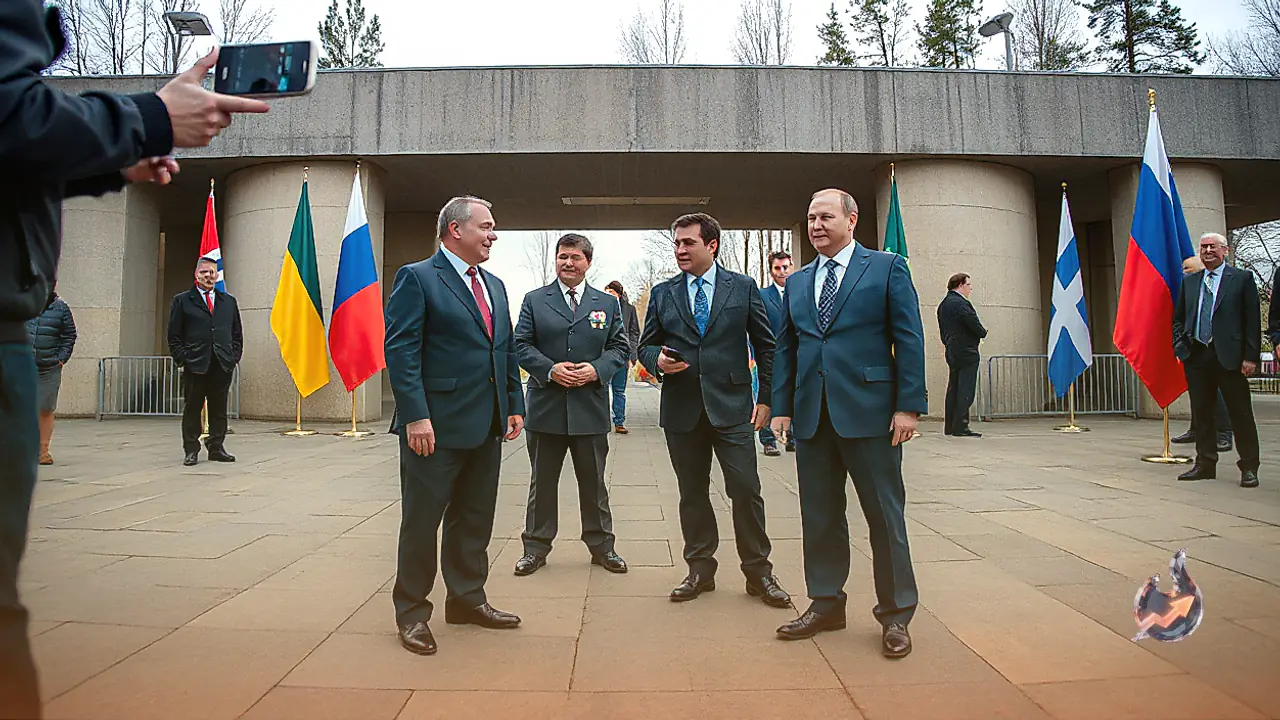
















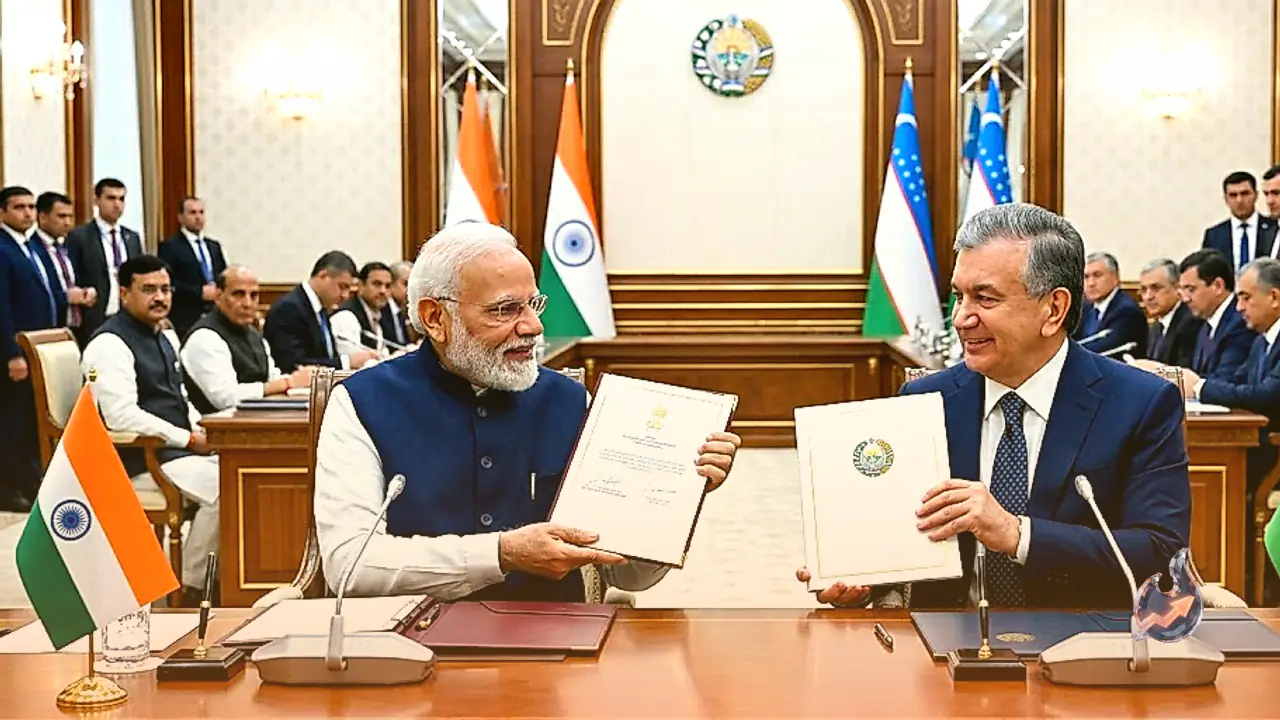

India and Uzbekistan decided on Sunday to elevate their bilateral relations to the level of a comprehensive strategic partnership. Following talks between Prime Minister Narendra Modi and President Shavkat Mirziyoyev, the two nations signed 11 agreements and Memorandums of Understanding while making five major announcements. Both countries have set a target to increase bilateral trade to USD 5 billion by 2030, alongside taking crucial decisions to strengthen long-term cooperation in energy and strategic minerals.
Uranium and Critical Minerals Cooperation
India and Uzbekistan agreed to establish a long-term arrangement for the supply of uranium. In addition, an agreement was signed for cooperation in the fields of critical mineral resources and geology. This is considered significant for India's energy security and its requirements for strategic minerals.
UPI Integration and Digital Payments
A major step has also been taken toward linking India's digital payment system UPI with Uzbekistan's UZQR system. Under this, Indian UPI apps will be able to scan UZQR codes of merchants in Uzbekistan to make payments. This is expected to boost digital connectivity and business transactions between the two countries.
Agreements Across Diverse Sectors
The agreements between the two nations cover several areas, including a cultural exchange program for 2026 to 2030, tourism cooperation, Ayurveda and traditional medicine, environment and climate change, higher education and scientific research, and economic-financial dialogue. Furthermore, cooperation was finalized between the National Archives of India and Uzarchives, as well as between the Sushma Swaraj Institute of Foreign Service and the Uzbek Diplomatic Academy for diplomatic training.
Buddhist Heritage and Regional Partnerships
An agreement in the form of a Letter of Intent was reached for the conservation and restoration of the Fayaz Tepa and Kara Tepa Buddhist sites in Termez, Uzbekistan. This is viewed as an important step in strengthening historical and civilizational ties between India and Central Asia.
India will provide assistance of USD 1 million for afforestation in the Aral Sea region. To promote the study of Hindi, 100 Lal Bahadur Shastri scholarships were announced, and a decision was taken to establish an ICCR Sanskrit Chair at Tashkent State University. Additionally, an agreement was signed to establish a partnership between the state of Gujarat in India and the Samarkand region of Uzbekistan, paving the way for enhanced economic, cultural, and people-to-people ties.