





















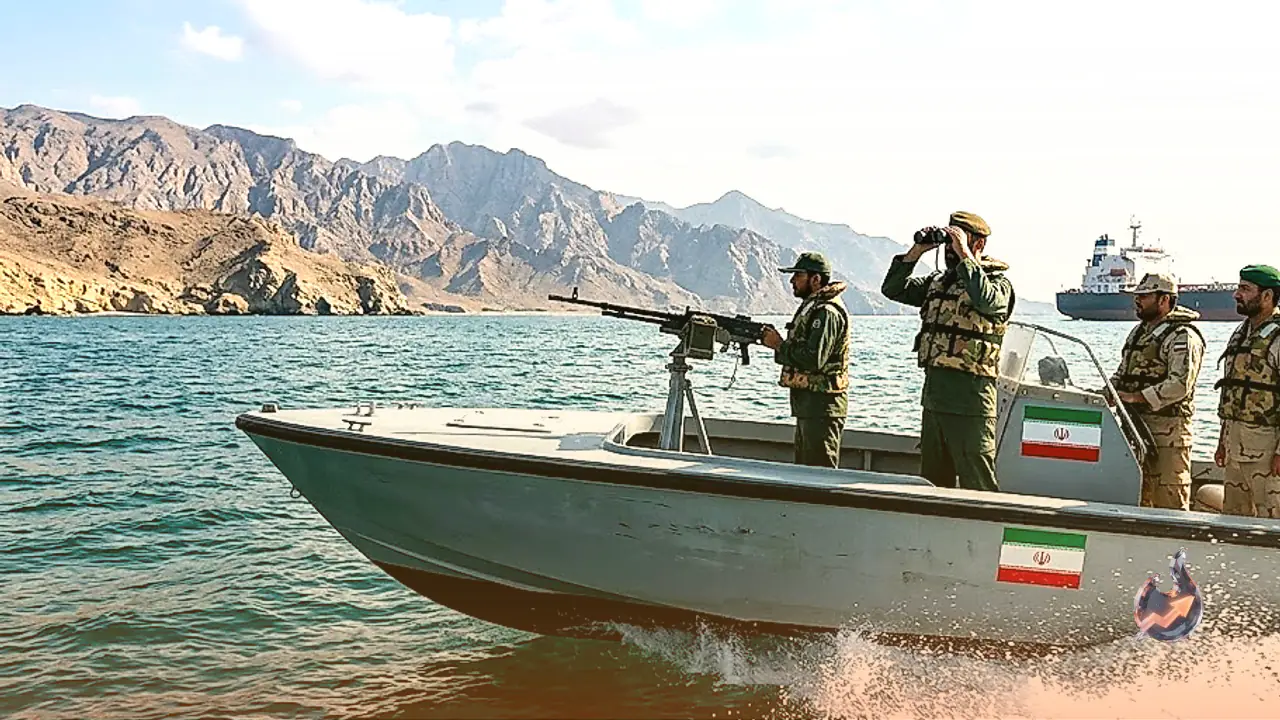

Iran delivered a sharp rejection on Saturday against statements from President Donald Trump regarding the Strait of Hormuz, insisting that the strategic waterway will remain under Tehran's absolute control. Iranian officials made clear that the crucial maritime corridor was, is, and will always belong to Iran. The strong exchange comes after Trump asserted during a public address that the United States would soon incorporate the shipping lane as part of American territory, a claim that Iranian diplomats quickly dismissed as an illusion.
Iranian Officials Reject US Claims of Control
Reacting to the statements, Iran's Deputy Foreign Minister Kazem Gharibabadi issued a detailed response on X to directly counter the narrative coming from Washington. Gharibabadi referenced Trump's assertion that the United States would declare authority over the Strait of Hormuz after defeating Iran. He firmly noted that authority over such a critical international passage cannot be seized through social media posts, aircraft carriers, executive decrees, or political campaign speeches.
Gharibabadi emphasized that Washington must accept what he described as a strategic and heavy defeat. He added that until US leadership confronts this reality and moves past imaginary misconceptions, Iran intends to maintain its active naval blockade across the region. According to the deputy foreign minister, the operation and status of the waterway will continue to be governed strictly on Iran's direct authorization.
Trump Remarks at New York Rally and White House Clarification
The diplomatic back-and-forth originated from remarks made by Donald Trump during a political rally held at a police academy in New York. Speaking to the audience while laughing, Trump suggested that after securing a complete victory over Iran, which he claimed was suffering severe losses, he would quickly move to designate the Strait of Hormuz as a territory of the United States. He defended potential economic impacts, asserting that paying slightly higher prices for vehicle fuel was an acceptable tradeoff to ensure that what he described as a very bad country does not acquire nuclear capabilities.
Following the public fallout from those comments, an unnamed White House official stepped in to clarify the situation. The official stated that Trump's statements during the rally were intended merely as a joke rather than an official policy directive regarding international shipping lanes.
Truth Social Posts and Naval Blockade Assertions
Despite the later clarification, Trump had previously reinforced similar claims on his social media platform, Truth Social. In a Wednesday post, Trump asserted that the United States maintained full control over the Strait of Hormuz and expressed his intention to retain that dominance moving forward. He pointed to American maritime forces in the region, referring to the naval blockade as a wall of steel and claiming that Iran was powerless to counter the American presence.
Tehran Military Command and Diplomatic Response
In response to those claims, military leadership in Tehran strongly refuted any notion of American dominance over the maritime corridor. Ibrahim Zolfaghari, spokesperson for Iran's central military command Khatam-al-Anbiya, delivered a televised statement broadcast on Iranian state television. Zolfaghari characterized American assertions that commercial vessels were navigating the Strait of Hormuz normally under US protection as completely false and fabricated.
Zolfaghari reaffirmed that the Strait of Hormuz remains entirely under the management and operational supervision of the Islamic Republic of Iran. He highlighted that without explicit approval and monitoring from Iran's military apparatus, safe passage for any commercial ship or oil tanker through the strait has not been possible in the past, nor will it be permitted in the future. Joining the military rebuttal, senior Iranian diplomat Abbas Araghchi posted on X that long-standing US intelligence failures have repeatedly led American leaders to miscalculate the true balance of power along the vital maritime transit line.