
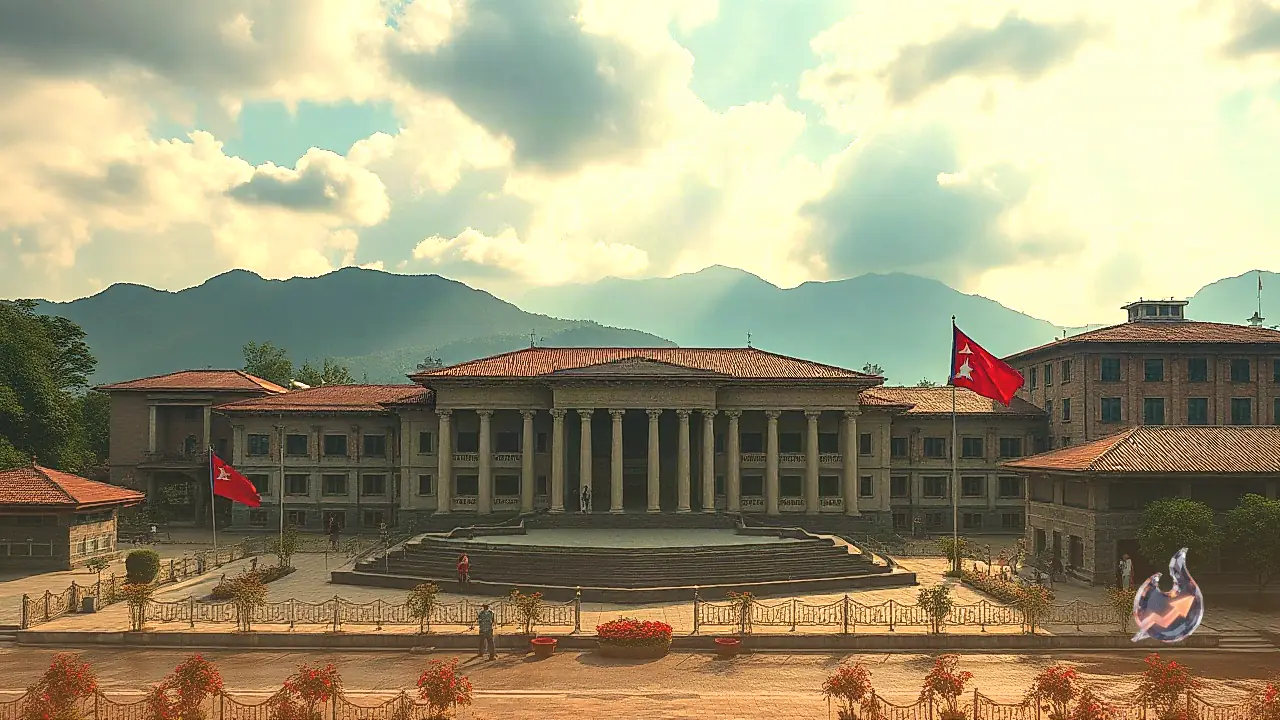






















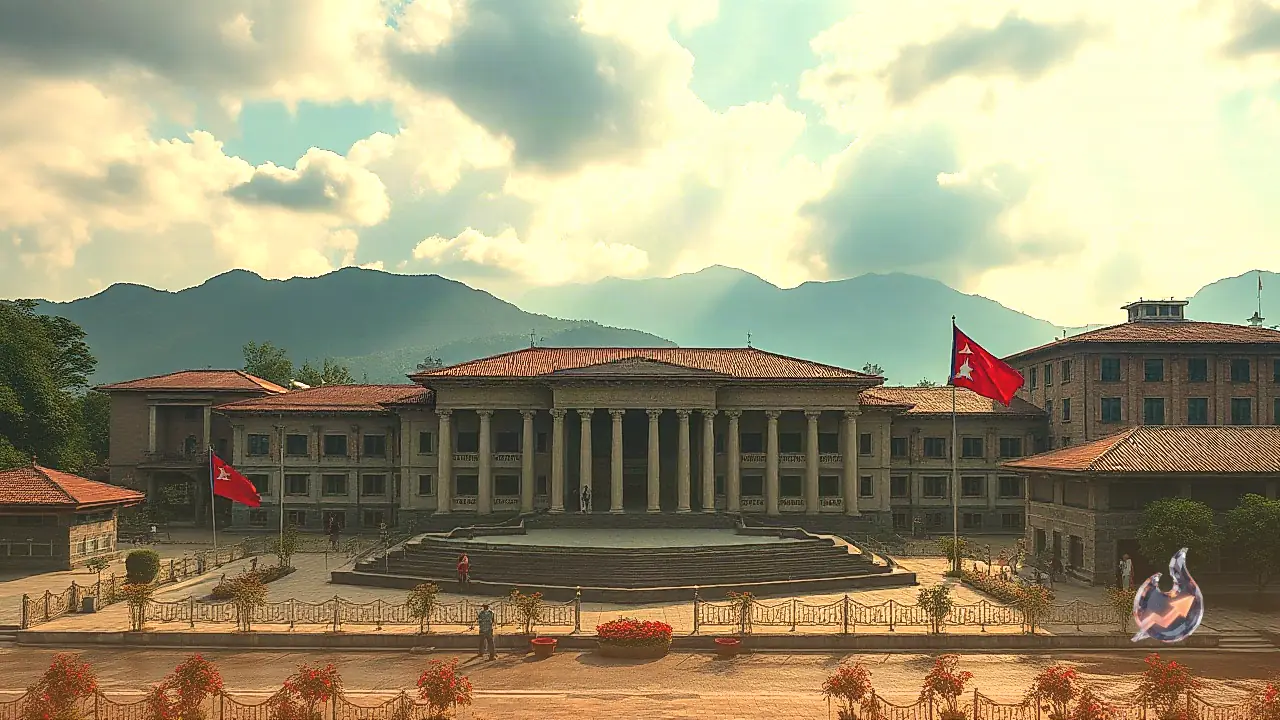

Highlighting the escalating environmental vulnerabilities across the world's highest peaks, Nepal has called for a unified cross-border response at the global stage. Addressing the 81st session of the United Nations General Assembly, Nepal's Prime Minister Balen Shah urged stronger worldwide cooperation to confront extreme weather events. During his speech, he tabled a proposal to institute a Himalayan climate resilience mechanism steered jointly by Nepal, India, and China. Reflecting on the devastation witnessed in the Bhotekoshi-Trishuli river basins, he noted that the tragedy was far from a localized mishap, describing it instead as a stark alarm bell for the entire planet.
Acknowledging Crucial Neighborly Support in Crisis
The prime minister placed on record Nepal's deep appreciation for the swift regional and international mobilisation following the calamitous floods. He reserved special gratitude for neighboring nations that stepped up without hesitation. Shah observed, "Our close neighbors, India and China, helped immediately and generously." In addition to the direct assistance from New Delhi and Beijing, he extended thanks on behalf of the Nepali people to the wider United Nations system, humanitarian agencies, philanthropic groups, and global well-wishers. He underscored that for mountainous countries, climate shocks are no longer simple humanitarian disruptions but represent an existential development emergency.
Calling Out Historical polluters and Demanding Climate Justice
Shifting focus toward global systemic obligations, Shah challenged wealthier economies with the largest historical carbon footprints to shoulder their rightful burden. Invoking the foundational United Nations Framework Convention on Climate Change, he reiterated the principle of common but differentiated responsibilities and respective capabilities. He maintained that nations possessing superior financial and technical resources must lead the mitigation charge. For vulnerable populations, the prime minister argued, climate justice cannot remain a decorative line inside diplomatic resolutions while vulnerable communities remain trapped in endless cycles of rebuilding their damaged pasts rather than securing a sustainable future.
The Vital Role of the Hindu Kush-Himalayan Basin
Stressing the ecological significance of the peaks, Shah reminded the assembly that the Hindu Kush-Himalayas support roughly two billion people. The mountain range functions as a primary life-support structure for the planet, supplying fresh water, rich biodiversity, productive agriculture, and rural livelihoods far beyond the borders of Nepal. He observed that piecemeal data collection and fragmented policies are failing to protect this vast region. Instead, the high-altitude zone needs to transform into an active hub of scientific exchange where shared ecological vulnerabilities are met with unified multilateral initiatives.
A Collaborative Three-Nation Protection Architecture
The proposed Himalayan climate resilience mechanism is designed to unite Nepal, India, and China around technical readiness and early response. Urging a decisive shift toward multilateral collaboration, Shah remarked, "Let the Himalayas become a laboratory for international cooperation rather than a frontier of scattered knowledge." Under this envisioned framework, the three nations would share real-time satellite imagery, systematically monitor fragile glacial lakes, and harmonize automated early warning platforms across watersheds. This cooperation would also standardize cross-border disaster relief operations whenever floods strike. Concluding his remarks, the prime minister noted that Nepal has actively walked the talk on climate action, successfully restoring forest cover across roughly half of its national territory.