


















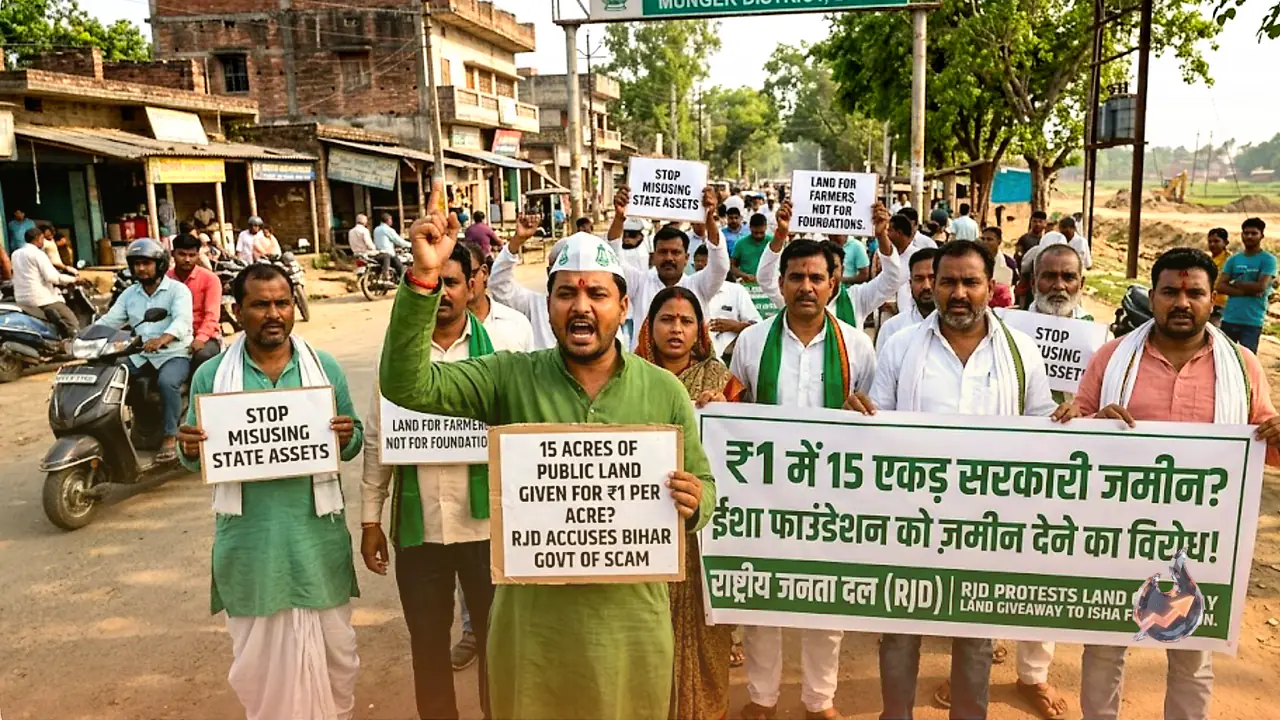

The Bihar government has decided to hand over approximately 15 acres of government land in Teldiha, Munger district, to Isha Foundation on a 99-year lease at a purely symbolic rate of ₹1 per acre per year. The stated purpose behind this arrangement is to promote tourism, yoga, spiritual activities, and local economic development in the region. But the decision has set off a sharp political row, with the opposition refusing to let the matter rest.
RJD Mounts a Sharp Attack
The Rashtriya Janata Dal (RJD) has put the BJP-JDU government squarely in its crosshairs over this land deal, alleging that the state is handing public property to a private organisation in a manner that damages Bihar's interests. The party has questioned why land that the government spent crores of rupees to acquire is now being transferred to a private body at such a negligible price.
RJD has also stressed that in a densely populated state like Bihar, land is an extraordinarily valuable and scarce resource, and decisions of this magnitude must be preceded by broad public discussion. The party has further alleged that the government's management of state-owned assets lacks transparency, and that the administration owes citizens a clear explanation for its choices.
A Question About the Bihar Yoga Vidyalaya
In its statement, RJD raised another pointed concern: Munger already holds a distinctive identity on the global yoga map. The Bihar Yoga Vidyalaya, based in Munger, is an internationally acclaimed institution. If the government is genuinely committed to developing yoga and tourism, the party asked, why has it not focused on strengthening these existing institutions and nurturing the cultural heritage that Munger already possesses? Bringing in a new private project while apparently overlooking established ones struck RJD as a misaligned priority.
The Government's Defence and the Political Standoff
The government has maintained that Isha Foundation's project in Teldiha will generate new employment, draw more visitors to the area, and give a tangible boost to local economic activity. It has asserted that the decision was made with public interest as its guiding principle and sees nothing improper in the arrangement.
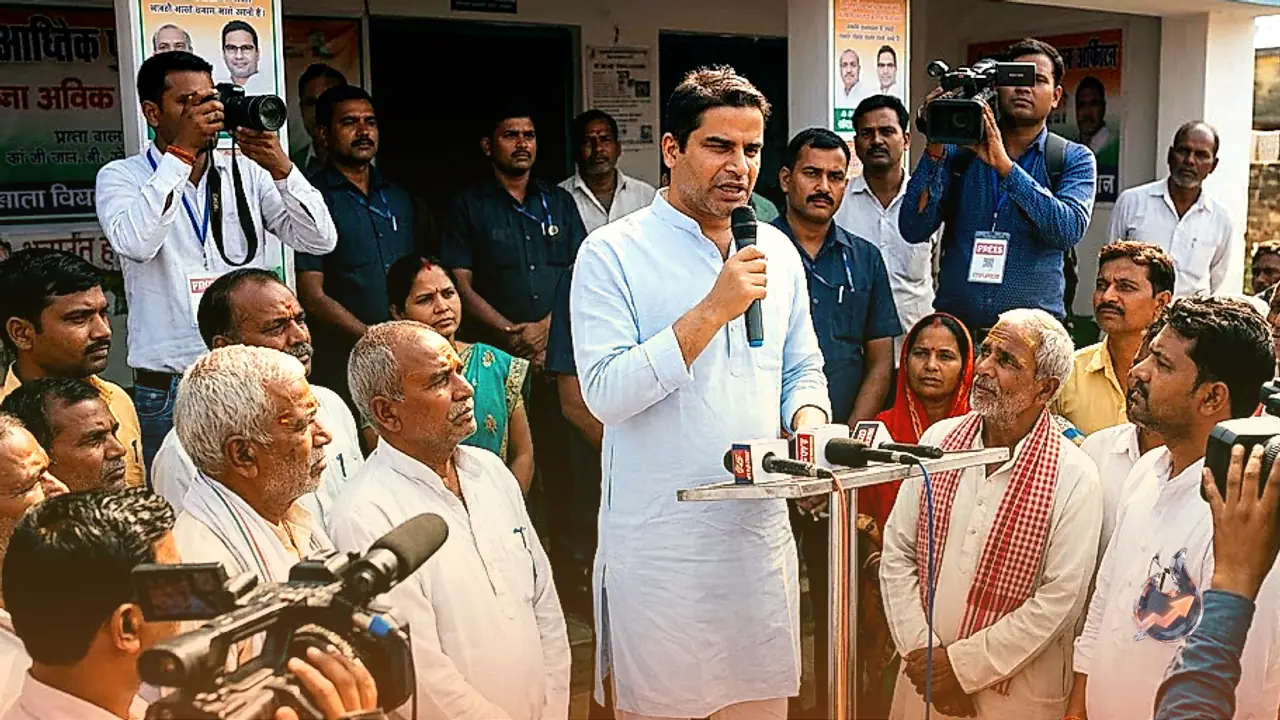
RJD has continued pressing its case, accusing the BJP and JDU of systematically transferring state resources to private entities. Calling this a serious governance matter tied to how Bihar manages its public assets, the party has formally demanded that the government reconsider its decision. At present, both sides remain entrenched: the government frames the lease as a forward-looking step for development and tourism, while the opposition is turning it into a sustained political controversy over the use of public land and the principles that should guide state policy. The political heat around this issue in Bihar shows no sign of easing.