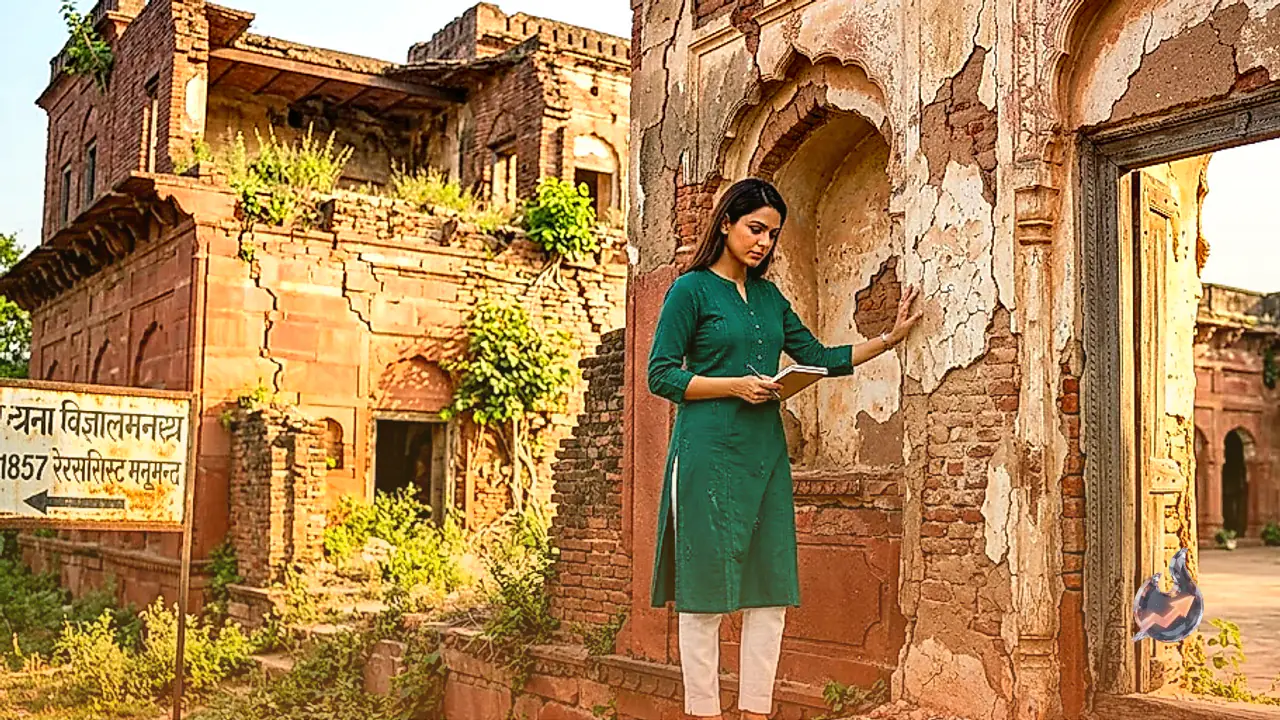
























Nestled near the world-renowned Ellora caves in Maharashtra, an unfinished and vacant mausoleum in Khuldabad tells a forgotten historical narrative linking the Deccan's princely state of Hyderabad to the Ottoman Empire. Though no ruler rests inside its stone walls, the incomplete monument serves as a striking silent witness to mid-twentieth-century global diplomacy and an extraordinary alliance between two legendary royal houses.
A Grand Matrimonial Alliance Between Hyderabad and the Ottomans
The origins of this architectural effort date back to 1931, when the 7th Nizam of Hyderabad, Mir Osman Ali Khan, arranged the marriages of his two sons, Prince Azam Jah and Prince Moazzam Jah, into the family of Turkey's last Ottoman Caliph, Abdulmejid II. Prince Azam Jah married the Caliph's daughter, Princess Durru Shehvar, while Prince Moazzam Jah wedded the Caliph's niece, Princess Niloufer.
This double royal wedding forged a strong familial and cultural connection between Hyderabad's Asaf Jahi dynasty and the Ottoman realm. During this era, Hyderabad was rapidly expanding its footprint as a global hub for art, wealth, and culture, and the Nizam viewed this alliance as a landmark chapter in the state's international prominence.
The Exile of the Caliph and Plans for a Royal Resting Place
Following the abolition of the Ottoman Caliphate in Turkey, Caliph Abdulmejid II was forced into exile. In a grand gesture of respect toward his relative and former leader of the Islamic world, Nizam Mir Osman Ali Khan commissioned the construction of a magnificent tomb in Khuldabad.
The Nizam intended for the Caliph to be buried on Indian soil with full royal honors upon his passing. The ambitious tomb was designed to showcase Hyderabad's elevated standing on the world stage and solidify its enduring historical bond with Turkey.
Wartime Disruptions and Final Burial in Medina
However, geopolitical turmoil reshaped these plans. The outbreak of World War II dramatically altered diplomatic dynamics across Europe and Asia. In 1944, Caliph Abdulmejid II passed away in Paris, France.
Due to wartime complications and delicate international political hurdles, transferring his body to India proved impossible. For nearly ten years, his remains were kept in Paris. Ultimately, a decade after his passing, the last Ottoman Caliph was laid to rest in the historical Jannat al-Baqi cemetery in Medina, Saudi Arabia.
Today, the vacant structure in Khuldabad remains standing amidst the Deccan hills, serving as a monument to visionary international diplomacy and a remarkable era of royal history.