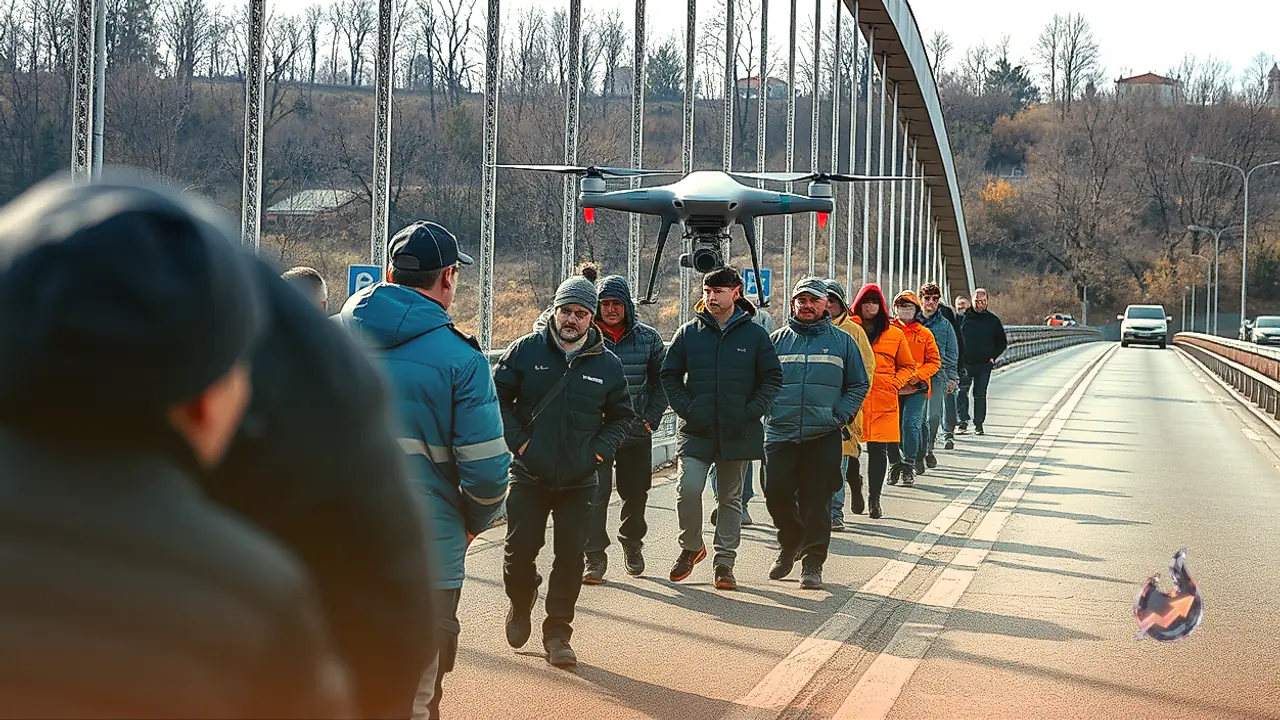























Ukraine's extensive railway network, which has served as the critical backbone of national logistics and civilian transport since the 2022 full-scale invasion, is now confronting an unprecedented wave of precision aerial strikes. While the state rail operator long managed to preserve reliable schedules despite active hostilities, attacks on moving locomotives and transit infrastructure have intensified dramatically. According to company figures, more than half of all locomotive strikes recorded since the outbreak of the war have taken place during this single year, turning routine journeys across peaceful central and western territories into hazardous ordeals marked by abrupt evacuations and protracted delays.
The impact of this expanding aerial campaign is felt daily by ordinary travelers across the country. Yuliia Ponomarenko, a 27-year-old marketing specialist from Kharkiv, was traveling toward Warsaw last month when her journey ground to a sudden halt just miles before the Polish border. Ukrainian border guards rushed through the train corridors urging passengers to abandon the carriages immediately due to heavy active shelling on the track ahead. The train remained stranded for six hours while emergency crews extinguished the fires and cleared the obstructed line. Ponomarenko noted that a minor departure delay earlier in the journey likely prevented their specific carriages from arriving at the strike zone at the moment of impact.
Thousands of Evacuations Reported in a Single Month
Data released by state-owned rail operator Ukrzaliznytsia reveals the sheer operational scale of the disruption. During September alone, Russian drone operations necessitated the emergency evacuation of 5,831 trains across the national network. On average, railway dispatchers were forced to halt and clear approximately 205 trains every day to safeguard passengers from incoming strikes. Consequently, long journeys that once ran on precise timetables now frequently dissolve into extended roadside waits along isolated track sections.
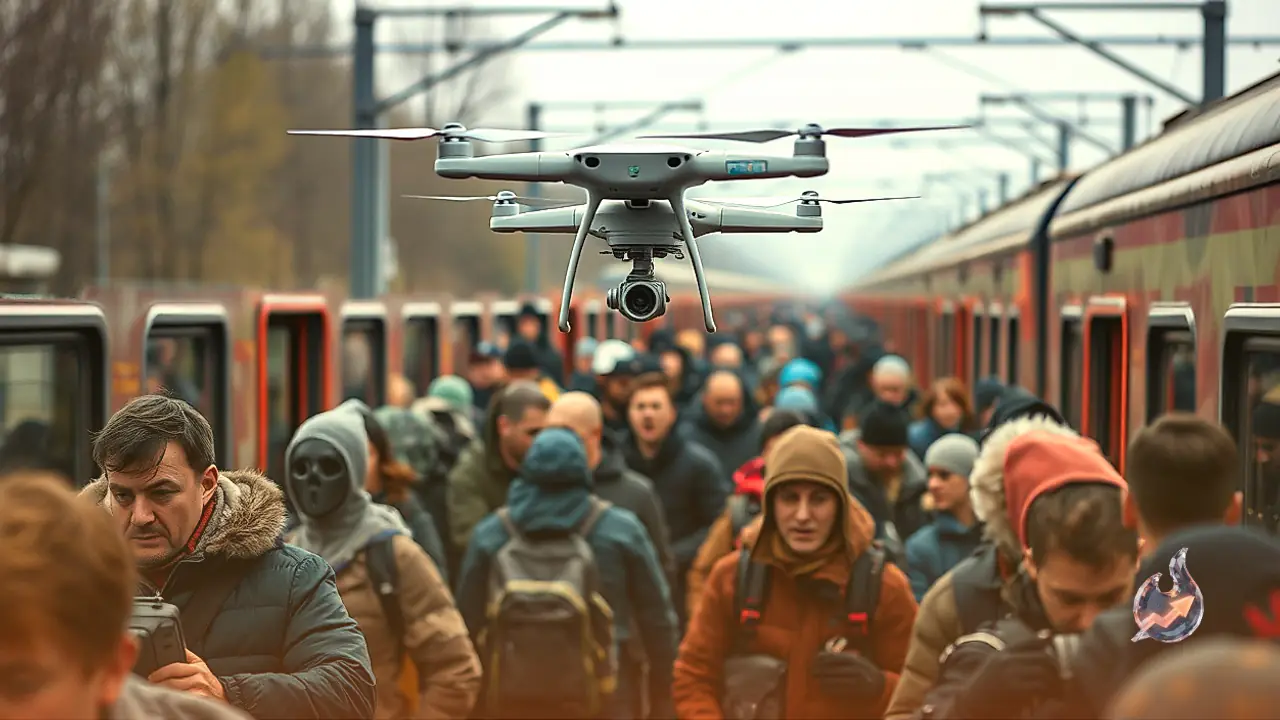
Seventeen-year-old passenger Anastasiia Ryvbalchenko encountered a similar emergency on September 16 while returning toward Kirovohrad from Odesa. At around 4:00 am, passengers were ordered out into the cold darkness after repeated evacuation stops had already disrupted the outward leg of her trip. Approximately 90 minutes after disembarking, an incoming drone struck adjacent terrain with a deafening blast, sending stranded passengers fleeing into nearby woodland for cover. While the train itself escaped structural damage, the sight of subsequent explosions illuminating the horizon prompted Ryvbalchenko to abandon the rail route entirely, continuing her journey on foot until family members could reach her by car. She has since resolved not to use the railway network.
Technological Escalation and Adaptive Defense
Since Russian forces began targeting moving civilian passenger services toward the end of 2025, passengers have grown accustomed to an anxious protocol: disembarking onto open ballast, monitoring real-time tracking feeds on Telegram for updates on loitering munitions, and transmitting messages to relatives regarding prolonged timetable disruptions. For Ukrzaliznytsia, which long prided itself on operational punctuality under wartime conditions, maintaining regular operations has become an intricate balancing act between continuity and passenger survival.
Oleksandr Pertsovskyi, chief executive officer of Ukrzaliznytsia, emphasized that although the network previously surpassed the punctuality metrics of several peaceful European systems, the physical safety of crews and travelers has now superseded all other operational targets. Figures compiled by the operator show that out of 521 locomotives struck since the 2022 invasion, nearly 60% were hit during the current year. Furthermore, recorded strikes on broader railway facilities expanded from 1,206 incidents in 2025 to 1,700 so far this year.
Pertsovskyi characterized the confrontation as an evolving cat-and-mouse contest. Russian units have deployed Shahed drones integrated with cameras, mesh networking systems, and onboard AI image recognition capabilities designed to track and hit moving targets along the tracks. In response, Ukrainian authorities are deploying targeted electronic countermeasures to sever the control and communication links of approaching drones. On the other hand, the Russian Ministry of Defence maintains that its operations do not target civilians, asserting that strikes are strictly directed at transport infrastructure utilized for moving Ukrainian military personnel and armaments.
Subterranean Command and Winter Preparations
To coordinate protective protocols, rail controllers operate out of a secure subterranean bunker in Kyiv known as the Iron Command Centre. Real-time digital mapping displays the positions of all passenger and cargo rolling stock alongside live threat telemetry. Whenever a hostile drone enters monitored airspace, dispatch software projects a 100-kilometer (62-mile) buffer perimeter around the threat vector. Any passenger train operating within that designated circle must be halted and evacuated immediately, with reboarding prohibited until the drone recedes and the train safely clears the defensive boundary.
These operational precautions have played a substantial role in mitigating civilian casualties. Corporate records for 2026 indicate eight railway personnel have lost their lives in the line of duty, including six workers killed when a ballistic missile struck a locomotive maintenance facility in Kyiv. During air raid warnings across the capital, central terminals are routinely cleared, funneling commuters into protective pedestrian subways while platform departures are suspended.
The railway faces an even more demanding operational test with the approach of winter, when ground temperatures routinely plummet to -20C or lower alongside heavy snowfall. Evacuating passenger trains in sub-zero wilderness settings introduces severe hypothermia risks. In collaboration with international aid partners, Ukrzaliznytsia is assembling specialized winter evacuation kits, establishing modular mobile warming stations, and setting up standby bus routes to relieve rail segments subjected to recurrent drone interference. Despite the intensifying campaign against its infrastructure, the rail operator maintains its commitment to keep Ukraine's transit corridors open under all seasonal and combat conditions.