


















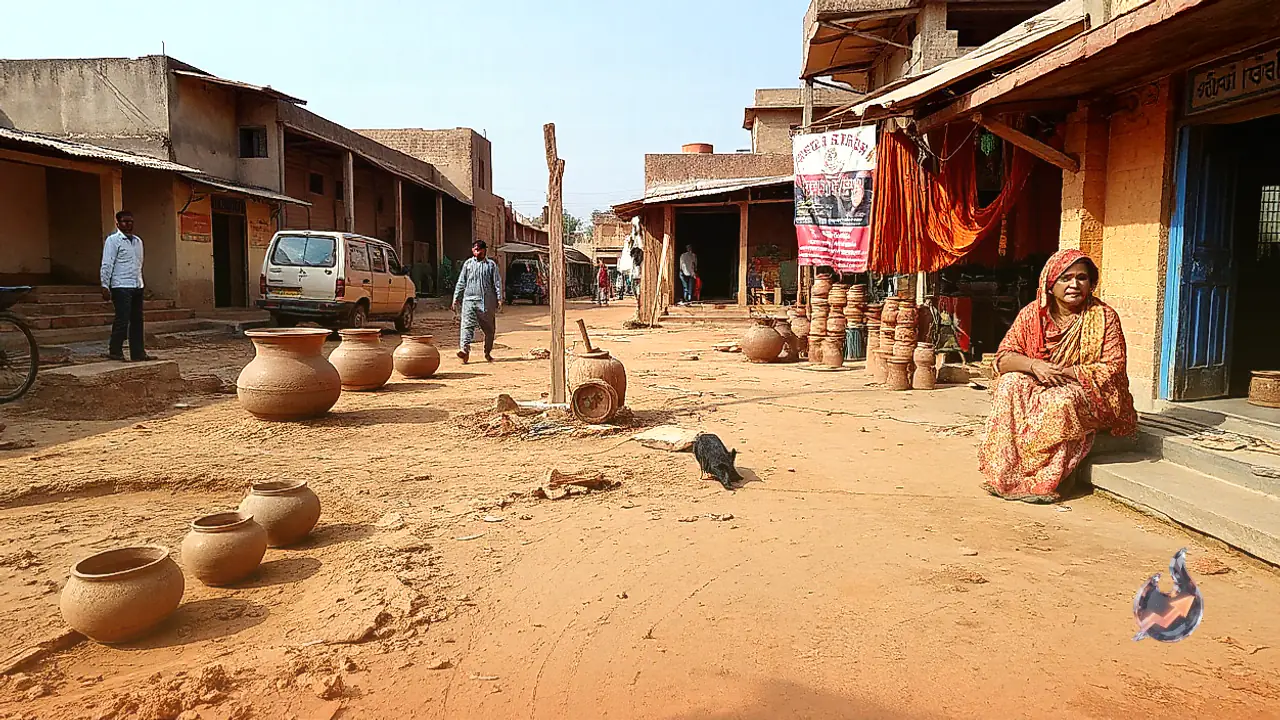

Traditional artisans in Faridabad who craft earthenware for festive rituals are dealing with sharp economic pressure this season. Potters in the region rely heavily on festivals like Karwa Chauth and Ahoi Ashtami to generate substantial revenue by selling clay pots, decorative vessels, and lamps. However, sluggish footfall and reluctant buyers have dampened their business prospects. Crafting items on the wheel, drying them, baking them in kilns, and moving fragile stock to retail markets requires extensive physical labour, yet market returns have failed to cover the mounting production expenses. The steep climb in raw clay costs, coupled with aggressive bargaining from shoppers, has squeezed local producers severely.
Steep Price Cuts Demanded by Buyers
Craftspeople based in the potters' locality of Ballabhgarh report that consumers frequently demand items well below reasonable retail rates. Lado Devi explained that a plain unpainted clay vessel priced at 30 rupees is regularly haggled down to 10 or 20 rupees by prospective customers. Similarly, brightly coloured decorative pots priced at 50 rupees draw counteroffers of only 30 to 40 rupees. Even standard clay lamps sold at a single rupee each face bargaining, with buyers demanding 15 lamps for 10 rupees. Selling finished stock at such low prices leaves vendors unable to recover raw material costs, let alone earn a living wage for the long hours invested.
Costlier Raw Materials and Declining Volumes
Bulbul Gola, a resident of Kumhar Mohalla in Ballabhgarh, noted that commercial activity has dropped substantially compared to the previous year. Sourcing raw clay, preparing the mixture, shaping the items, and running the baking kilns requires significant investment and prolonged labour. While production expenses have surged alongside general inflation, retail demand has failed to keep pace. Even when customers approach the stalls, they insist on steep discounts without acknowledging the intensive craftsmanship involved, leaving artisan households with minimal net income despite intense daily effort.
Market Fragmentation and Shrinking Margins
Usha Devi and Triveni Devi pointed out that street-level peddling has dried up entirely, confining sales almost exclusively to central markets. Furthermore, the pottery trade, once operated primarily by traditional artisan families, has seen outside sellers enter the market to trade ready-made clay wares. This shift has divided consumer footfall and thinned profit margins. Triveni Devi, who both molds clay items by hand and retails procured stock, noted that downward pressure on prices has eroded the viable margins necessary to sustain an ongoing operation.
Younger Generation Shuns the Ancestral Trade
The prolonged squeeze on pottery earnings has sparked deep concerns among local artisans about the survival of their heritage craft. With physical demands remaining high, raw materials growing scarcer and costlier, and financial returns remaining negligible, younger family members are showing reluctance to continue the craft. Artisans fear that unless handcrafted clay goods receive fairer market value, the coming generation will abandon the ancestral trade entirely in pursuit of sustainable livelihood options.