























India's meteorologists are entering the 2026 monsoon season with an anxiety that goes beyond the usual worry about El Niño. The deeper concern is silence: the Indian Ocean, which stepped in as India's guardian in 1997 and neutralised a record El Niño that year, is showing no such intention in 2026. Scientists now fear that without the ocean's assistance, this season could unfold the way 2015 did rather than the way 1997 did.
How El Niño Travels from the Pacific to India's Doorstep
El Niño originates thousands of kilometres from India, in the Pacific Ocean. Under normal conditions, winds blowing across that ocean push warm surface water toward Indonesia and Australia. When those winds weaken, the warm water shifts back toward the coast of South America. That reversal is what meteorologists call El Niño.
India's monsoon depends on the temperature contrast between the land and the surrounding ocean. During summer, the Indian subcontinent heats up rapidly, drawing in moisture-laden winds from the sea that then release rain over the land. El Niño disrupts this mechanism. The atmospheric circulation that generates clouds and humidity shifts over the Pacific instead of building over India. The result is reduced rainfall across the subcontinent. Data covering 1951 to 2022 confirm that in roughly 60 percent of El Niño years, India recorded below-normal monsoon rainfall.
1997: When the Indian Ocean Came to India's Rescue
El Niño does not always have the final say. The Indian Ocean has its own counter-force, a phenomenon called the Indian Ocean Dipole, or IOD. When the IOD is in a positive phase, the western Indian Ocean near the east coast of Africa warms up while the eastern portion near Indonesia stays relatively cool. That temperature gradient pulls greater moisture and stronger winds toward India, effectively tilting the Indian Ocean in India's favour and amplifying the monsoon.
In 1997, both forces were active simultaneously. A record-strength El Niño was developing in the Pacific while an exceptionally powerful positive IOD had taken hold in the Indian Ocean. The two systems clashed, and the Indian Ocean prevailed. El Niño's effect was largely neutralised, and India received monsoon rainfall 2 percent above normal that year, a result almost no forecaster had anticipated.
Why 2015 Turned Out So Differently
Climate scientists frequently compare 1997 and 2015 because both years featured a strong El Niño alongside a positive IOD, yet the outcomes were starkly different. In 1997, India got above-normal rainfall. In 2015, the monsoon contracted to just 86 percent of the long-period average and the country faced near-drought conditions across large parts of the country. The difference came down to relative strength. In 1997, the Indian Ocean was powerful enough to overcome El Niño. In 2015, the positive IOD was not strong enough to stop El Niño from dominating, and El Niño won.
What Makes 2026 So Concerning
The central worry for 2026 is that the Indian Ocean is offering no counter-force at all. The IOD index stood at minus 0.34 degrees Celsius as of May 24, and most climate models project that it will remain neutral at least through winter. That means India this monsoon season lacks the natural shield that worked in its favour in 1997.
At the same time, El Niño is steadily gaining strength. IMD models indicate a weak El Niño in June, escalating to weak-to-moderate intensity through July-August and potentially reaching moderate-to-strong levels by September. On top of this, the pace of the monsoon's advance this year has already been notably slow.
Why September Carries the Greatest Risk
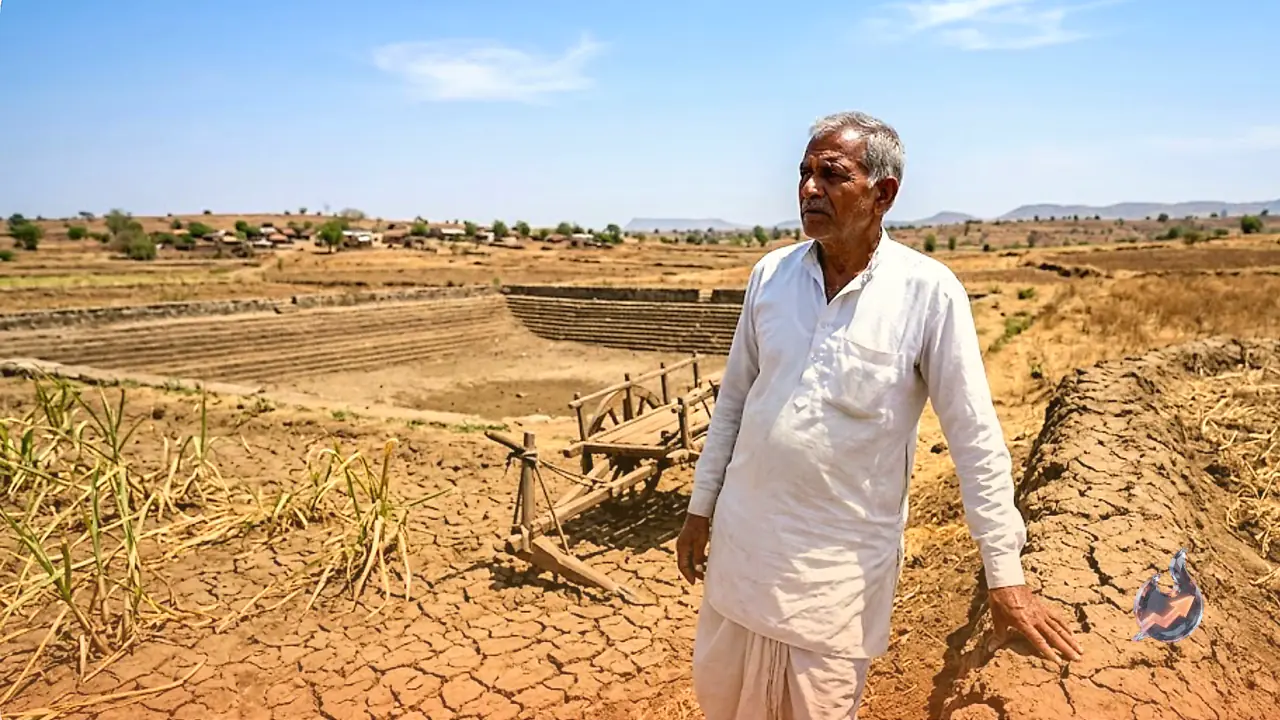
September is the most critical month for Indian agriculture. It is the period when kharif crops including paddy, pulses, cotton and oilseeds enter their grain-filling stage, which farmers consider the most sensitive phase of the entire growing cycle. A rainfall shortfall during these weeks does not merely limit the area under cultivation; it directly reduces the yield of crops already standing in the fields. That is why meteorologists are watching September most closely of all.
IMD's Revised Outlook Adds to the Worry
The India Meteorological Department has already lowered its monsoon forecast for this year. In April, IMD projected rainfall at 92 percent of the long-period average. That estimate has since been revised down to 90 percent, officially placing the 2026 monsoon in the below-normal category. More striking still is the probability figure: the chance of below-normal rainfall this year has climbed to 60 percent, compared with only 16 percent in a typical year. That gap illustrates the unusual scale of risk India faces this season.
Could 2026 Repeat the 2015 Story?
In 1997, when El Niño threatened to devastate India's rains, the Indian Ocean intervened and the crisis passed. In 2026, that same ocean is quiet. No strong positive IOD is developing, and no other atmospheric force appears capable of curbing El Niño's growing intensity. Scientists fear that this year's monsoon could follow the 2015 script rather than the 1997 one, leaving India's farmers and food supply facing a difficult and unpredictable few months ahead.