



















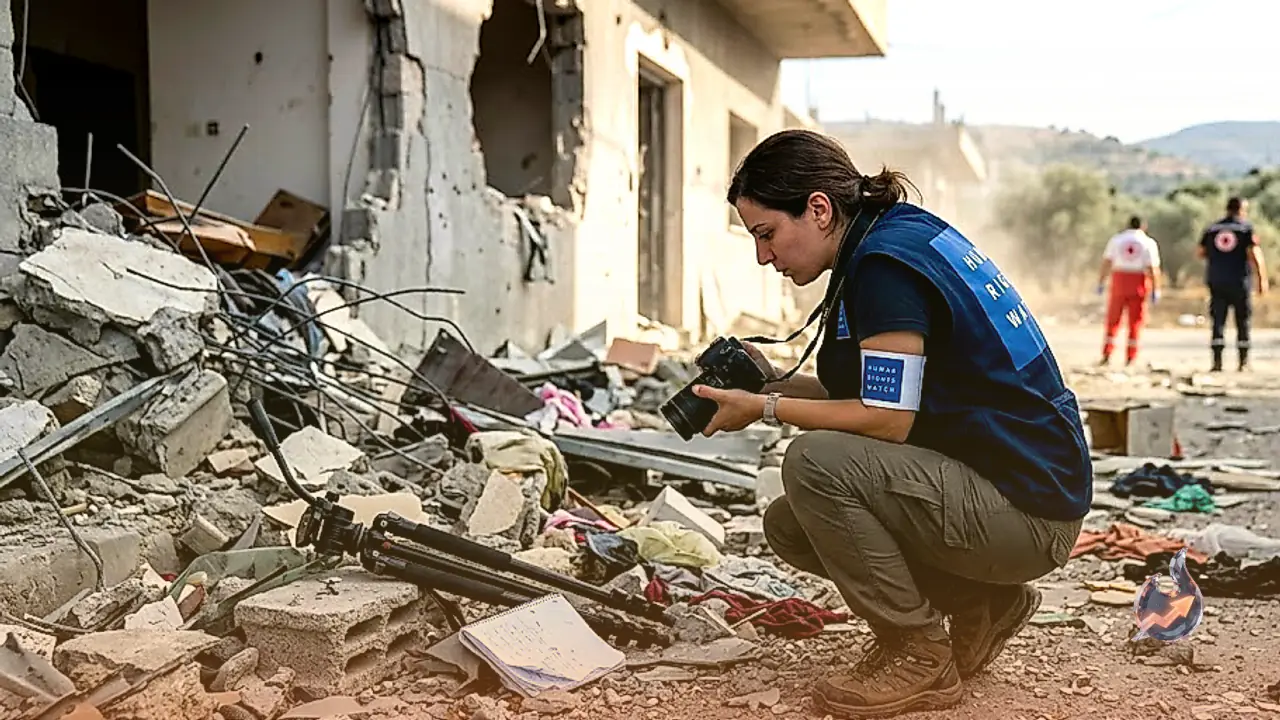

A combined investigation by Human Rights Watch and Amnesty International has determined that an Israeli attack in the southern Lebanese town of al-Tiri on 22 April, which killed al-Akhbar news reporter Amal Khalil and left freelance camera operator Zeinab Faraj severely injured, constitutes an apparent war crime. Based on photographic and video verification, emergency communications, and testimonies from survivors and first responders, the human rights organizations concluded that the journalists were directly targeted while reporting. Both organizations have called for an immediate independent inquiry and urged Lebanon to grant jurisdiction to the International Criminal Court (ICC).
Chronology of the Three Airstrikes in al-Tiri
Reconstructed timelines of the 22 April incident establish that the first strike occurred around 14:30 local time. The munition struck a civilian vehicle traveling directly ahead of the car carrying Amal Khalil and Zeinab Faraj, killing two occupants known to them, Ali Bazzi and Mohammed al-Hourani. The explosion forced the two female journalists to abandon their vehicle and seek shelter near an adjacent building. Recognizing the immediate danger, they contacted the Lebanese Red Cross for emergency assistance.
By 15:00, the UN Peacekeeping Force in Lebanon (UNIFIL) transmitted an official clearance request from the Lebanese Red Cross to the Israeli military, seeking safe passage for paramedic teams to reach the location. Despite this coordination, a second strike occurred between 15:21 and 15:42, hitting the journalists' parked vehicle and injuring Khalil. She and Faraj remained inside the structure for safety until a third strike at approximately 16:25 completely destroyed the building over them.
Surveillance and Close-Range Drone Harassment
Surviving camera operator Zeinab Faraj described how quadcopter drones hovered continuously over their position throughout the ordeal. The unmanned aerial vehicles descended through gaps in the shattered roof, coming within less than a meter of the trapped women. Faraj recalled covering her face in terror, fearing an imminent explosion from the hovering craft. Although the quadcopters did not display visible explosive payloads, their persistent low-altitude hovering created an atmosphere of intense fear.
Official phone records confirm that Khalil remained conscious and in ongoing contact with first responders and relatives while trapped under the structural debris, repeatedly requesting rescue support as condition updates were relayed to emergency teams.
Interrupted Rescue Operations and Medical Findings
A team from the Lebanese Red Cross managed to access al-Tiri shortly after 17:00. However, as paramedics initiated rescue procedures at the destroyed site, they came under fire from a drone-deployed stun grenade combined with small-arms fire. Photographs of the response scene depict damage to the Lebanese Red Cross ambulance consistent with light weapons fire. The immediate danger forced the medical crew to retreat without recovering Khalil.
A medical evaluation from Tebnin Governmental Hospital indicated that Khalil was most likely still alive when emergency personnel were forced to withdraw at approximately 17:53. The hospital report noted that she succumbed to cardiac arrest around 19:00, triggered by massive blood loss from severe head trauma. Her body was ultimately retrieved from the ruins by emergency teams at approximately 23:00.
Military Response and International Legal Protections
In response to inquiries, the Israeli military denied intentionally targeting media personnel, stating that the three strikes were part of an operational sequence aimed at eliminating two Hezbollah operatives. Military representatives expressed regret over civilian injuries and confirmed that an internal review was underway. However, no specific clarification was provided regarding the operational rationale for the second and third strikes targeting the journalists' vehicle and shelter.
Human rights advocates stressed that evidence demonstrates forces knew or ought to have known that the individuals inside the building were civilians. Amnesty International Middle East Director Heba Morayef emphasized that no justification exists under international law for striking civilians taking refuge. Human Rights Watch researcher Ramzi Kaiss noted that despite official assertions of respecting press credentials, physical evidence reveals repeated pattern occurrences of journalists coming under fire in operational zones.
Casualty Data and Calls for Accountability
Under international humanitarian law, deliberate attacks directed against non-combatants and journalists performing professional duties are strictly illegal. Rights bodies warn that the lack of external accountability risks perpetuating further violations in combat areas.
Data compiled by the Committee to Protect Journalists (CPJ) indicates that at least 27 journalists and media workers have been killed globally this year while covering conflicts. Out of these fatalities, 9 occurred in Lebanon and 7 were documented across Israel, the occupied West Bank, and Gaza. The al-Tiri strike has renewed international demands for international legal oversight to protect frontline reporters.