
















Elderly individuals grimace as they hobble along on crutches, while wide-eyed children stare blankly, cradling chickens brought from homes they were forced to leave behind. Thirty-five-year-old Nazia remarks that it feels good to be in her own country, speaking just moments after crossing the border from Pakistan, where she was born, into Afghanistan.
The Torkham crossing, widely known as Zero Point, marks the exact boundary where one difficult chapter ends and another arduous reality begins. Nazia sighs as she heads toward registration counters decorated with black and white Taliban flags, accompanied by two of her children, noting that she has never set foot in Afghanistan before and that many people here lack even basic bread to eat.
Nearly her entire extended family, comprising eight sisters and their respective offspring, has been deported back to Afghanistan this year from either Pakistan or Iran. They form part of the largest cross-border migration movement anywhere in the globe today.
Millions of Afghans have sought refuge or employment across the borders of Pakistan and Iran over decades, and the exodus from Afghanistan has steadily risen since the Taliban assumed control in August 2021. However, most are now being compelled to return as these neighboring nations crack down heavily on undocumented migrants. While Nazia and her relatives lacked official documentation, the United Nations and various human rights organizations emphasize that this security sweep extends far beyond undocumented individuals to target registered Afghans as well, with Pakistan now publicly acknowledging that holders of Proof of Registration cards are no longer exempt.
An Unprecedented Scale of Return
Trucks packed with returnees remain parked in long queues along the highway close to the border, while the total number of people forced back this year from Pakistan and Iran has already hit another million, according to data from the UN Refugee Agency, the UNHCR.
Charlie Goodlake, spokesperson for the UNHCR in Afghanistan, observes that in a little under three years, they have witnessed six million people, a population equivalent to a small country, return to Afghanistan. Standing in the intense heat of a tented settlement near the border, he underscores that recent history holds no precedent for a return movement of this sheer magnitude.
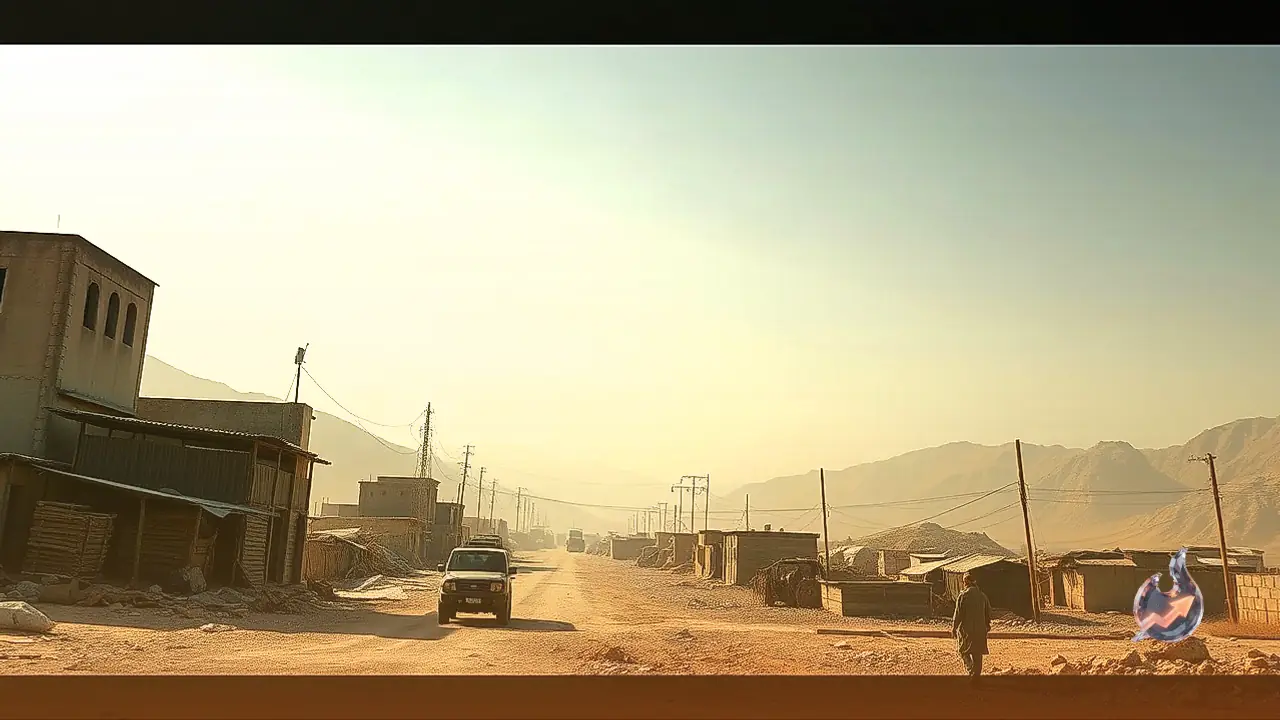
The area presents a desolate landscape of tarpaulin and plastic shelters, many currently tattered and torn, originally erected by the United Nations and other humanitarian organizations to offer temporary refuge for a few days to populations arriving with absolutely nothing.
A significant portion of these returnees has not visited Afghanistan in decades, and individuals like Nazia are experiencing the country for the very first time in their lives.
Sarwar explains that he departed forty-five years ago during the Soviet invasion, and most of his brothers were born in Pakistan. He arrived a few days earlier alongside seven brothers and their respective families, traveling in a convoy of forty people accompanied by their worldly possessions packed into a lumbering Pakistani lorry.
He acknowledges feeling heartbroken when they were forced out of their home after spending such a long time abroad, yet despite the deep pain, he expresses happiness at finally being free from constant harassment by the police in Pakistan.
Every family encountered during the reporting process reported experiencing prejudice and mistreatment from authorities while residing in Pakistan.
Although the Pakistani government has not formally addressed these specific inquiries, a foreign ministry spokesperson stated during a briefing in Islamabad that the government undertakes necessary measures to prevent any instances of harassment or maltreatment against Afghan nationals. The spokesperson added that any such occurrences are sporadic and addressed strictly in accordance with the law.
Both Pakistan and Iran maintain that the time has arrived for Afghans to return, citing security concerns regarding some individuals and describing others as financial burdens on their respective economies.
Expulsions and alleged abuses escalated sharply following a major military flare-up between Pakistan and Afghanistan last October. In February, Human Rights Watch drew attention to frequent door-to-door raids, late-night home searches, and arrests conducted without proper warrants.
In Iran, which reported hosting over four million undocumented Afghans previously, mass deportations accelerated markedly following its twelve-day conflict with Israel and the US in June 2025.
The New York-based Center for Human Rights in Iran accused authorities of exploiting the post-conflict climate to cast generalized suspicion upon Afghan migrants, accusing them of espionage and branding them as potential spies for Israel.
The UN refugee agency continues to emphasize the core humanitarian principle that any repatriation process must remain voluntary, safe, and dignified.
Precarious Futures and Women's Rights
Inside a barren transit tent offering minimal relief from scorching temperatures reaching 41 degrees Celsius, Zarina sits alongside a cluster of anxious women and children.
When questioned about whether they fear for the future of women and girls in a nation where the Taliban has barred females from most aspects of public life, including secondary education and universities, forty-year-old Zarina makes a sweeping gesture toward the children and states that naturally she harbors deep concerns.
Other returnees experience terror rather than mere worry.
A former Afghan security guard, who faced deportation first from Iran and subsequently from Pakistan, explains that he refuses to leave his safe house far from the border, noting that his wife and children are equally terrified to step outside.
He dismisses the amnesty announced by the Taliban government shortly after their takeover, which promised protection and a return to work for former government officials, security personnel, and civil servants, stating that he places no trust in it because numerous colleagues have already been killed. He notes that his own case was registered with the UN, but he was deported before relocation to a safer nation could occur.
Severe financial distress magnifies these hardships, as global cuts in foreign aid hit Afghanistan particularly hard while the Taliban remains burdened by international sanctions linked to terrorism and human rights concerns.
Pakistan confirmed that 16,000 vulnerable Afghans have been granted a temporary exemption from deportation on humanitarian grounds, a development welcomed by the UN. However, independent sources estimate that up to 250,000 Afghans in Pakistan remain at risk of serious harm, including women and girls facing educational bans.
At the foreign ministry compound in Kabul, Taliban Foreign Minister Amir Khan Muttaqi attempts an optimistic tone, admitting that assistance is undoubtedly required and that while returning populations create initial pressure, the movement will ultimately benefit both the individuals and Afghanistan in the long term.
During the initial years following their 2021 takeover, certain ministers downplayed humanitarian challenges by asserting that divine providence would provide. Today, the UN estimates that 21.9 million people, nearly half the total population, require survival assistance this year, with UNICEF reporting that one million children face life-threatening malnutrition.
Goodlake notes that no single nation could manage such a massive crisis independently, while acknowledging the efforts made by the Taliban government to assist arrivals, though he adds that ongoing restrictions on women and girls severely hinder international fundraising efforts.
Muttaqi reiterates the official stance that women's education and similar matters constitute internal domestic issues for Afghans to resolve independently. These severe restrictions on female freedoms remain a primary stumbling block in international relations, leaving Russia as the sole nation to formally recognize their administration five years on.
When questioned regarding diplomatic isolation from Western countries, Muttaqi dismisses the impact by asking what nations lacking diplomatic ties over the past five years have actually achieved, answering his own question with a definitive nothing.
That exact word echoed across every conversation at Zero Point, where families embarking on their difficult journeys home shared the common reality of starting over with almost nothing.