























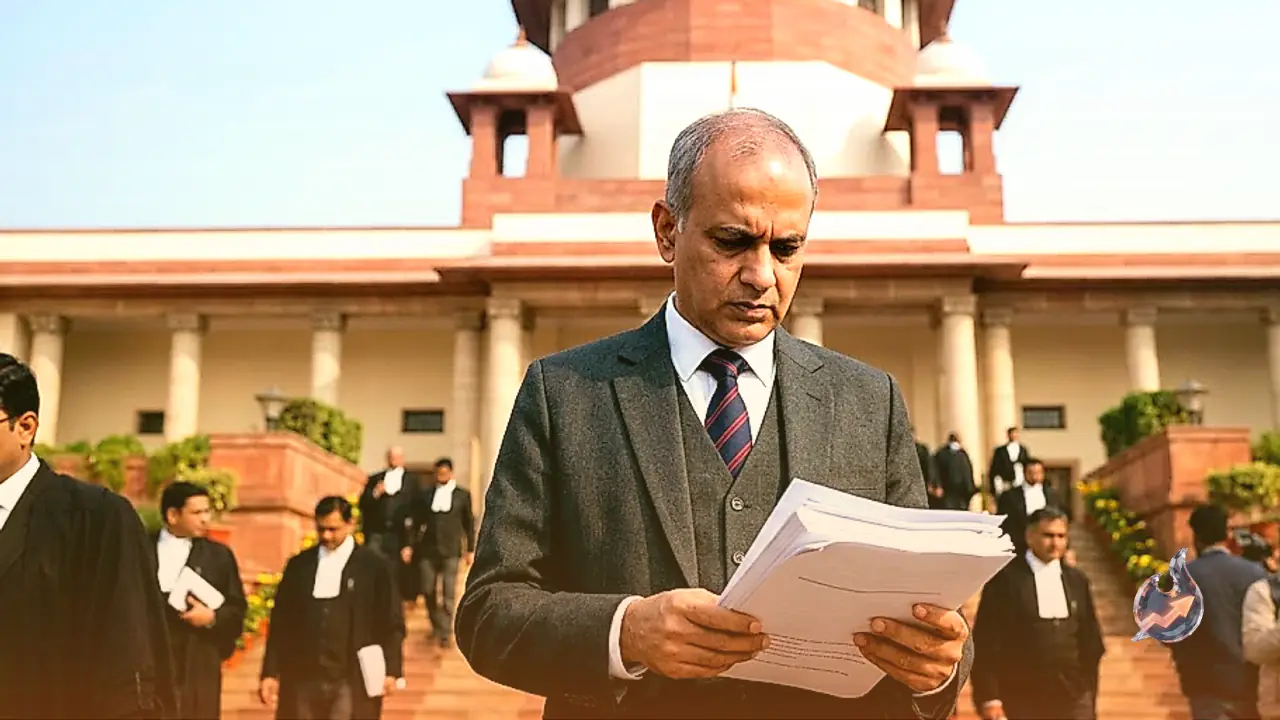

Taking a firm stance to preserve judicial expertise and enhance efficiency across the lower judiciary, the Supreme Court has issued clear directions to state governments regarding the retirement age of district judges. The apex court held that proposals to increase the retirement age of district judiciary officers from 60 to 62 years cannot be summarily turned down merely by citing potential financial burdens on the state exchequer. The court directed all opposing states to move past traditional reservations and re-evaluate the issue independently, practically, and constructively within a strict two-week deadline. Furthermore, the top court clarified that aligning judicial service terms with general civil service cadres is fundamentally flawed, as judicial officers represent a distinct and independent class.
Background of All India Judges Association Case and State Objections
The matter arises from ongoing proceedings in the All India Judges Association case, which seeks to raise the superannuation age of district judiciary members from 60 to 62 years. Previously, the Supreme Court had sought formal responses from all states and their respective High Courts regarding this proposed enhancement. In response, several state governments expressed their inability to support the change, relying primarily on two main grounds. First, state governments contended that extending judge tenures would place an unmanageable financial strain on public funds. Second, states argued that creating a differential retirement age between judicial officers and state civil employees would lead to administrative disparity. However, the Supreme Court bench thoroughly examined both arguments and rejected them as unviable.
Judicial Rationale on Viewing Experienced Judges as Institutional Assets
A three-judge bench comprising Justice Surya Kant, Justice Joymalya Bagchi, and Justice J. Mohana scrutinised the financial anxieties expressed by state administrations. The bench observed that government concerns regarding immediate financial strain were unfounded. The court reasoned that retaining seasoned and skilled judicial officers for an additional two years prevents abrupt vacancies in trial courts. This continuity eliminates the immediate costs associated with conducting fresh recruitment drives, competitive examination cycles, selection procedures, and extensive training programs for newly inducted judicial officers. Consequently, the court noted that retaining experienced judges often proves to be a significantly less burdensome financial option compared to initiating fresh appointments.
Differentiating Judicial Cadres From General Civil Servants
Addressing the states' comparison between judicial officers and general government employees, the Supreme Court firmly rejected the analogy. The bench stated that equating judicial officers with regular civil servants is legally and functionally incorrect. The court highlighted that although formal appointments of judicial officers are executed through state governments, members of the judiciary form an entirely separate, autonomous, and distinct class. Due to the constitutional mandate of judicial independence and the specialized nature of judicial duties, judicial officers cannot be clubbed with routine administrative staff. Therefore, states cannot refuse to raise the judicial retirement age simply because general government staff retire at a lower age.
Two-Week Ultimatum and High Court Concurrence Clarified
The Supreme Court directed all state governments that previously opposed extending the retirement age to immediately review their stance. The bench emphasized that states must make independent determinations without clinging to outdated arguments, granting a strict two-week timeframe to adopt a pragmatic solution. In another vital clarification, the court ruled that even if a state's corresponding High Court has not formally approved the extension, the state government should not use that as a reason to hold back from taking a positive decision. The top court stated that any reservations expressed by High Courts will be evaluated by the Supreme Court at an appropriate juncture, freeing state governments to proceed independently on their end.
Strengthening Justice Delivery and Administrative Stability
Underlining the broader institutional benefit, the bench reiterated that experienced judicial officers constitute invaluable institutional assets for the justice system. Their deep familiarity with legal procedures and judicial experience directly benefit litigants and the broader administration of justice. The court observed that retiring experienced judges abruptly and leaving courts understaffed creates severe administrative backlog and operational strain. Therefore, rejecting the proposal to increase the retirement age to 62 years purely out of speculative financial concerns is unjustified. All dissenting states now have two weeks to re-examine the proposal and submit fresh decisions.