
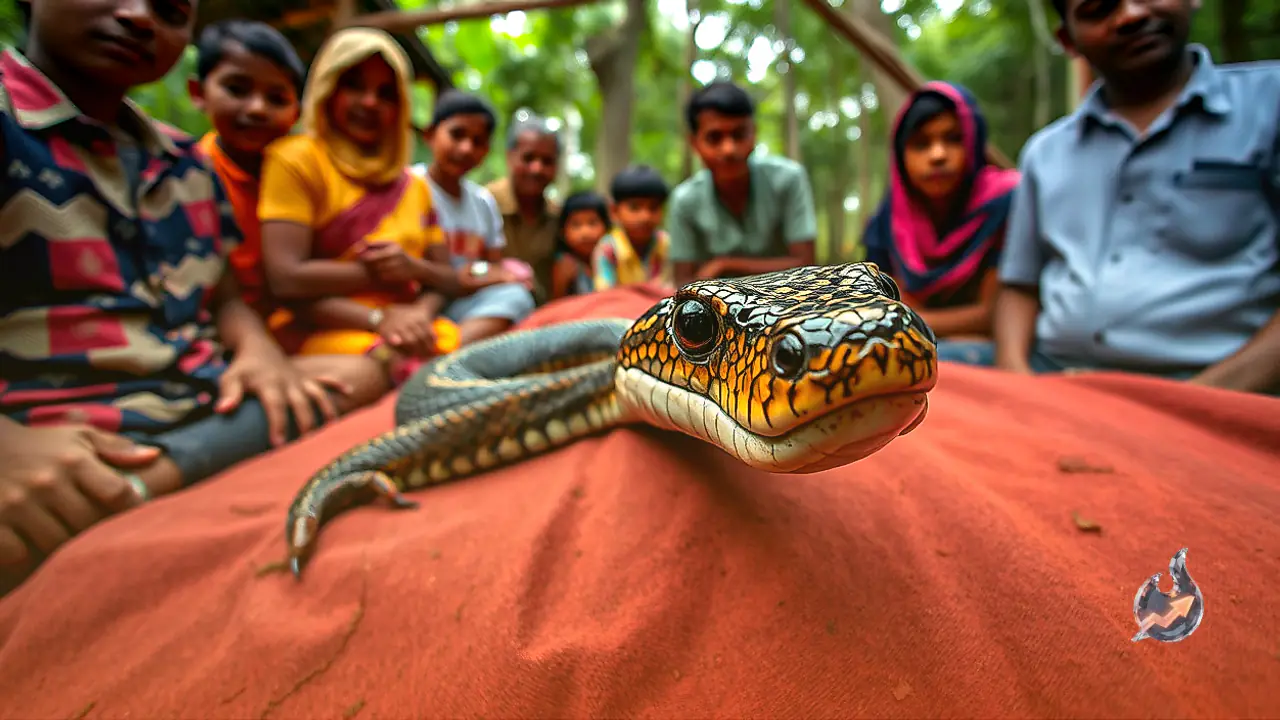






















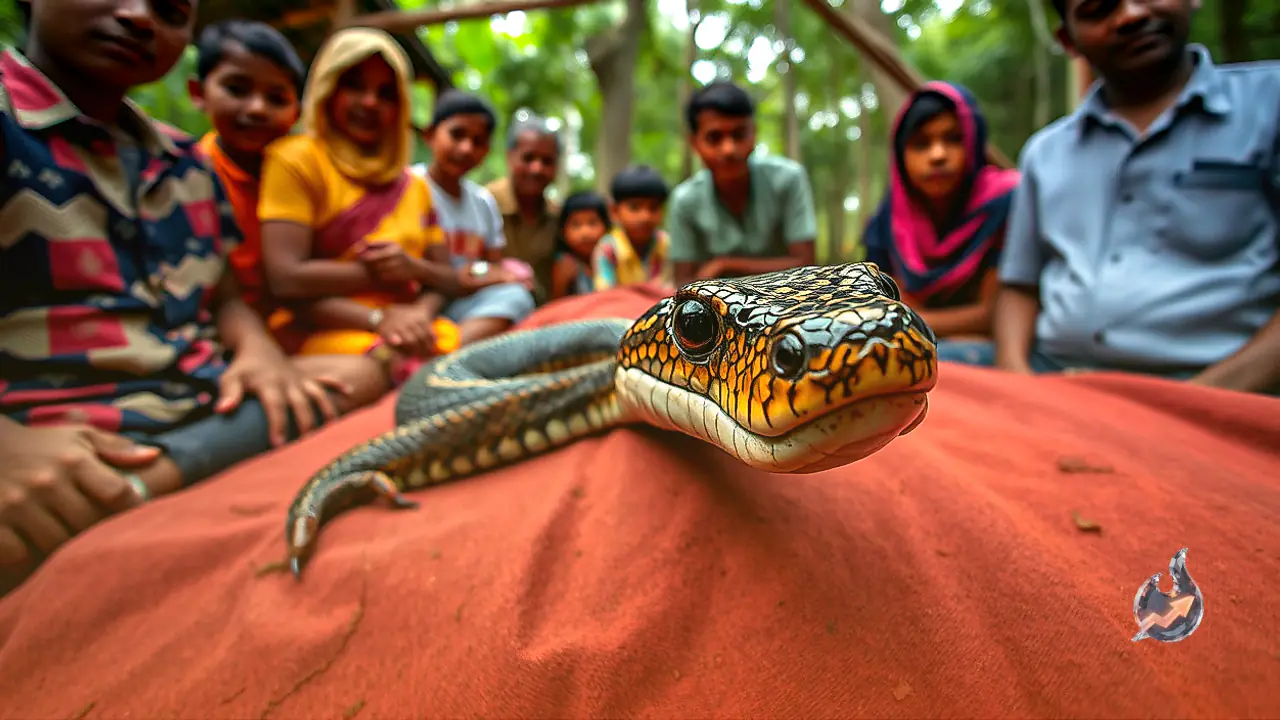

Panic gripped residents of Indok village, situated in the Sariska forest belt of Alwar district, after family members spotted a highly venomous snake climbing onto their sleeping cot inside the house. The reptile was quickly identified as a Common Krait, regarded as one of the most toxic snake species in India. The sight of the lethal creature scaling the furniture sent waves of fear through the household. Acting swiftly and avoiding any rash confrontation, the family immediately reached out to a professional wildlife rescue team for assistance.
Family Spots the Silent Crawler on Their Bed
Members of the family were present inside the home when someone suddenly noticed the snake silently making its way up the frame of the cot. Realizing the extreme peril, the residents acted with caution and avoided disturbing the animal or attempting to handle it on their own. Instead, they placed an urgent call to wildlife rescuers. The trained team arrived at the scene promptly, assessed the layout of the room, and expertly secured the Common Krait without causing harm to either the reptile or the onlookers.
Rehabilitation in the Sariska Wilderness
Following the successful capture, the rescue team transported the snake away from human settlements into the deep woods of the Sariska forest area, where it was safely released into its natural environment. The swift intervention brought immense relief to the terrified family and neighborhood while ensuring that the wild creature survived without injury.
Nocturnal Habits and the Stealthy Nature of the Krait
The Common Krait holds a reputation across India as an exceptionally dangerous venomous species. One of its most defining behavioral traits is its quiet, calm demeanor; it moves with virtually no sound or commotion, making its presence difficult to detect for unsuspecting people nearby. The species is largely nocturnal, spending daylight hours hidden within burrows, deep crevices, or sheltered nooks. Once darkness falls, it ventures out into open spaces in search of food and prey, which often brings it into close proximity to domestic environments.
Physical Characteristics and Visual Identification
In terms of appearance, the Common Krait is recognizable by its glossy black or deep blue-black body marked by narrow, paired white crossbands. Nevertheless, identifying these markings becomes challenging in dim light or darkness. While the snake is generally shy and avoids human interaction whenever possible, an accidental encounter or unintended contact can trigger a defensive, lethal bite.
Essential Nighttime Precautions for Rural Residents
Because the Common Krait actively roams during the night, people living in villages and areas adjacent to forest zones must exercise heightened vigilance. Simple preventive measures, such as thoroughly checking bedding, sleeping cots, and surroundings before going to sleep, can avert dangerous interactions. If a snake is encountered, residents should never attempt to catch or eliminate it themselves, but should instead alert experienced animal rescue teams immediately.