





















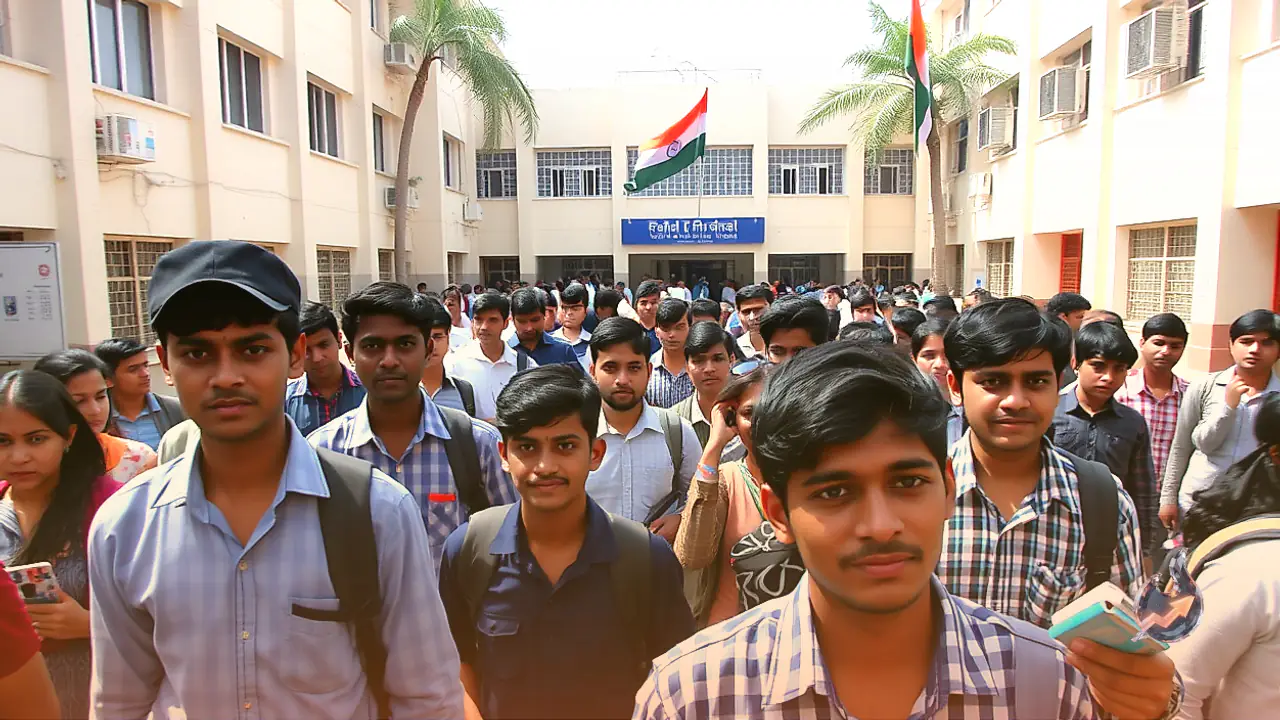

The flourishing network of dummy schools catering to engineering and medical aspirants preparing for entrance exams like JEE and NEET has come under the direct scrutiny of government agencies. The Central Information Commission has raised serious concerns over the widespread practice of dummy admissions in CBSE institutions. The commission has formally recommended that the board conduct surprise inspections across its affiliated schools to prevent violations of the mandatory 75 percent attendance rule and to put an end to the issuance of fraudulent passing certificates.
How the RTI Disclosures Brought the Issue to Light
This entire issue came to the forefront following a Right to Information petition filed against private schools in Bhopal. That petition revealed that students were being allowed to sit for class 10 and 12 examinations without ever attending a single physical class. In reality, lakhs of students drop out of regular schooling due to the grueling schedules of coaching centers, remaining students of a particular school only on paper. This arrangement raises critical questions about its legal validity, the mechanics of the dummy school network, and its long-term impact on the futures of young students.
Understanding Dummy Schools and Non-Attending Status
Dummy schools are officially recognized educational institutions that permit students to appear for board examinations without regular classroom attendance. In common parlance, these are referred to as non-attending schools. While a student resides in a distant educational hub such as Kota, Sikar, or Delhi to pursue coaching, their name remains officially registered on the rolls of a local school. School management accepts fees and routinely marks their attendance on paper, with students visiting the institution only for practical exams or final board tests.
The Legal Standing of Dummy Schools
Dummy schools are classified as entirely illegal entities. The CBSE and various state education boards maintain clear guidelines stipulating that a minimum attendance of 75 percent is compulsory for any student to qualify for board examinations. The dummy setup constitutes a direct violation of the affiliation bylaws established by the boards. Consequently, in recent times, the CBSE has launched surprise checks and cancelled the affiliation of numerous dummy institutions nationwide that operated solely on paper.
Who Opts for Dummy Admissions and How They Study
Students enrolled in classes 11 and 12 who are preparing for competitive tests like JEE and NEET typically opt for dummy school admissions. They operate under the belief that attending regular school results in a waste of time and detracts from their coaching preparation. Their entire academic instruction relies heavily on coaching institutes, online learning applications, or personal tutors. These students manage school textbooks and board syllabi independently alongside their rigorous coaching schedules.
The Advantages of Dummy Culture
From the perspective of students and their parents, the foremost advantage of a dummy school is the significant saving of time. Rather than spending six to eight hours confined to a school, students channel that entire duration into entrance exam preparation. Furthermore, they are relieved from the pressures associated with school projects, morning assemblies, uniforms, and attendance mandates. In several instances, students must enroll in a dummy school within their home state simply to retain their state domicile quotas.
The Detrimental Impact on Mental Health and Holistic Development
Although dummy schools may save time, they inflict severe damage on the mental and social growth of adolescents. At the vulnerable age of 15 or 16, the school environment teaches discipline, teamwork, camaraderie, and emotional resilience. Continuous confinement within coaching centers leaves many students vulnerable to acute loneliness and depression. Moreover, detachment from sports and extracurricular activities stunts their overall personality development, frequently resulting in severe adjustment issues upon entering college.