


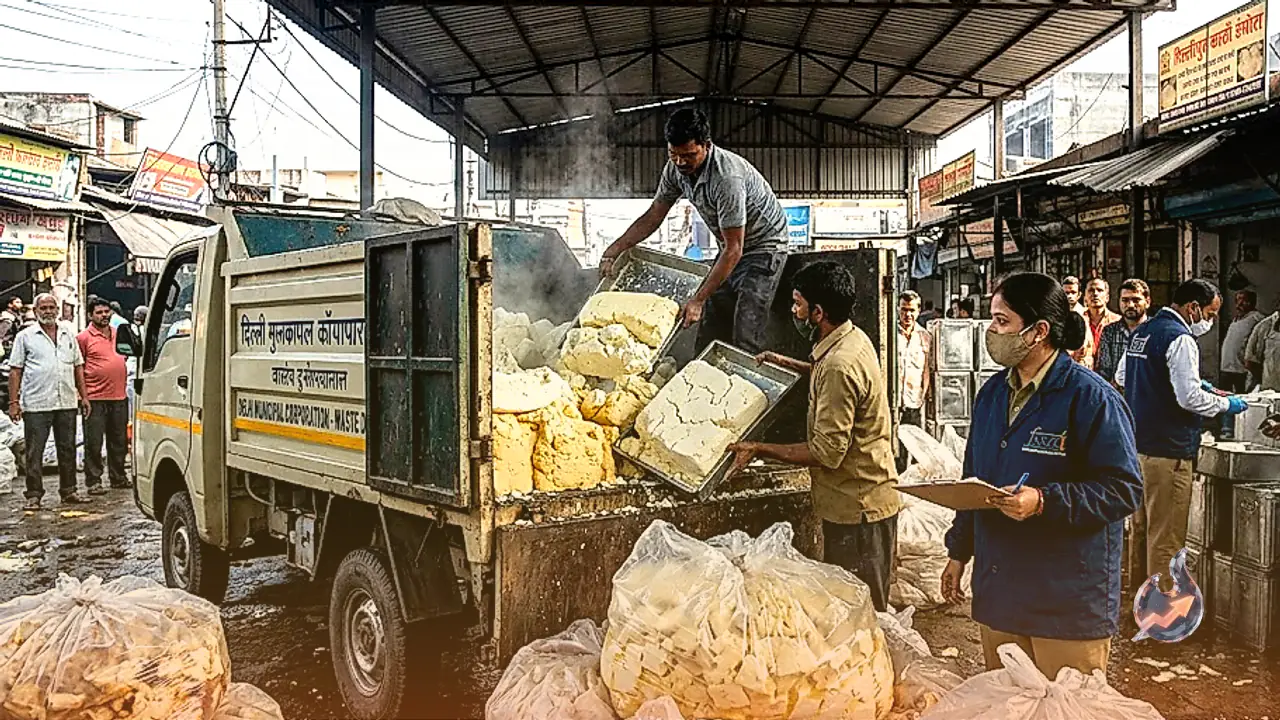















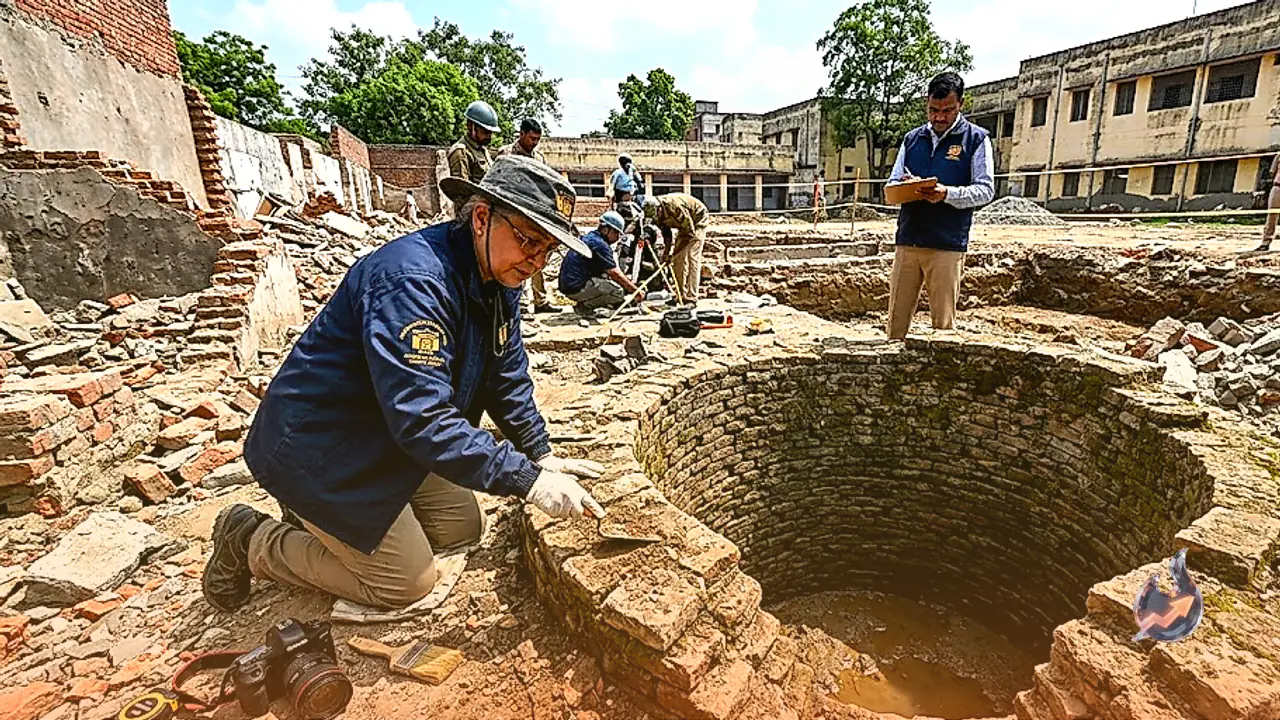

A dispute inside the collectorate premises in Saharanpur, Uttar Pradesh, has taken a new turn after officials found an old well hidden beneath an illegal mosque that was recently demolished on the site. The discovery has triggered fresh debate in the area, and a team from the Archaeological Survey of India, or ASI, has now visited the spot to examine how old the structure really is.
How the Dispute Began
The administration had earlier demolished a mosque standing inside the Saharanpur collectorate complex, calling it an illegal structure. That action sparked a controversy that has continued ever since, with the matter remaining a talking point locally. While clearing the debris after the demolition, officials came across a structure beneath the ground that resembled an old well. Its sudden appearance raised fresh questions about how old it was and what it actually was, prompting the administration to call in experts to examine it.
ASI Team Climbs Down a Ladder to Inspect the Structure
On Monday, an ASI team reached the collectorate premises and began a preliminary examination of the well-like structure. To inspect it closely, officials climbed down into the structure using a ladder and studied its shape and construction from inside. The inspection was led by ASI official Manoj Kumar Yadav, who briefed the media on the initial findings once the examination was complete.
Structure Estimated to Be 200 to 300 Years Old
Yadav said the structure appears to be around 200 to 300 years old, meaning it would have existed well before the mosque itself was built. He was quick to add that finding such old structures is not unusual, and similar ones could well exist at other sites in the region too. At the same time, he made clear that officials cannot yet confirm with certainty that the structure is indeed a well at all. According to him, it could be linked to civilisation from the post-medieval era, though this will only be confirmed once further investigation is carried out.
Excavation Seen as Key to the Full Picture
The ASI official explained that detailed information about the structure will only emerge once it is excavated. He said the excavation itself would have to be carried out by the administration, and that work could begin only after the administration grants its permission. For now, the administration has only sought to establish how old the structure is, information that will guide any decision on what happens next.
Mosque Committee's Mutawalli Responds
The mutawalli of the mosque committee has also issued a statement on the matter, saying that wells inside the mosque had long been used by worshippers for wazu, the ritual washing performed before namaz, and that the well now found was one among them. That account suggests the structure was very much a working part of the mosque's use, even as the ASI's preliminary assessment places its origins earlier than the mosque itself. With the two accounts pointing in different directions, attention now shifts to the excavation and the ASI's final report, which should offer a clearer picture of the well and the dispute surrounding it.