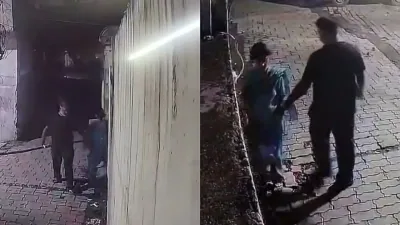





















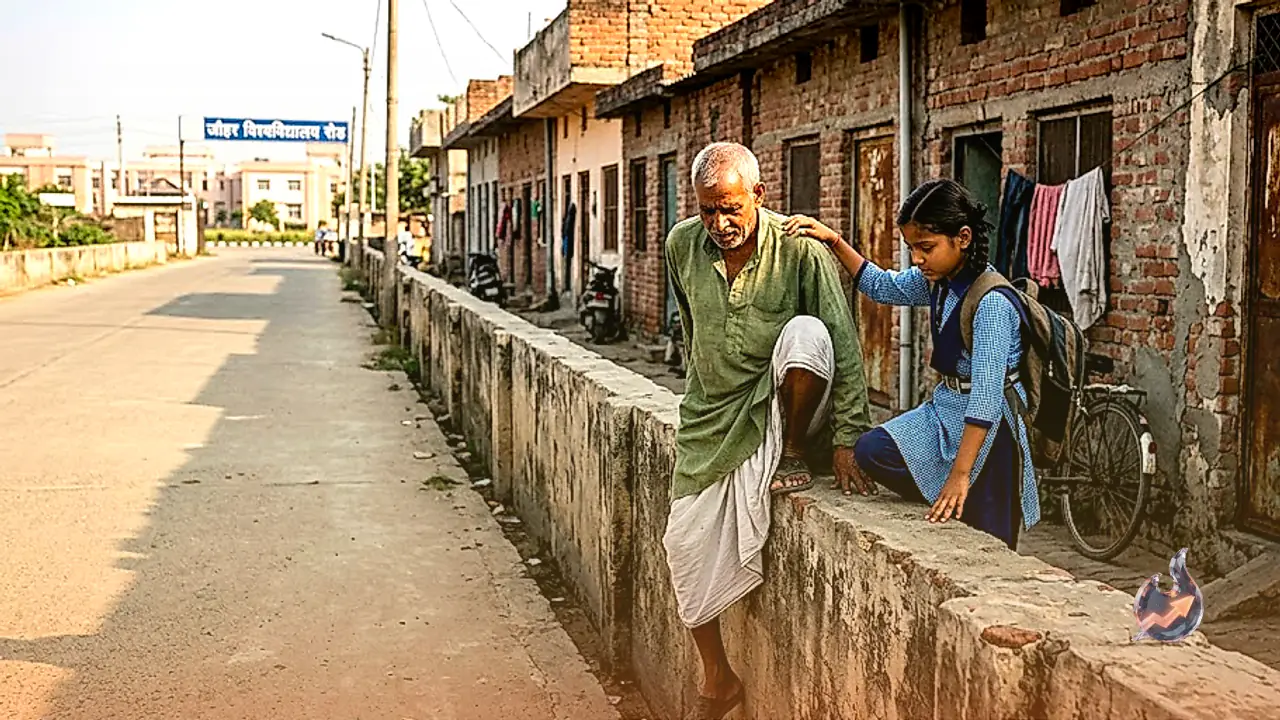

While the ongoing controversies surrounding the 38 buildings of Rampur's Jauhar University continue to capture national headlines, a much older and equally devastating human tragedy has remained hidden in plain sight. For nearly two decades, dozens of families living along the primary road leading to the institution have been practically imprisoned inside their own homes. During the construction of this wide avenue under the Samajwadi Party government, urban planners and civil contractors completely ignored the fundamental rights of the local residents. A solid concrete railing and wall, measuring anywhere from three to three-and-a-half feet in height, was erected directly in front of their doorways. This poorly conceived barrier permanently sealed off their main entrances. Even today, the situation remains unchanged, forcing citizens to physically climb over the barricade every single day just to step out into their own neighbourhood.
Daily Nightmare for Farmers and the Elderly
The majority of the households located along this stretch belong to the farming community, and for them, this wall is not merely an inconvenience but a severe blow to their livelihood. A local resident named Raju shared the collective anguish of the agricultural families, explaining that the barricade was built simultaneously with the university road. Because farming inherently requires the constant movement of heavy machinery, tractors, and loaded carts, the obstructed doorways have made it impossible to bring these essential vehicles anywhere near their houses. Consequently, the farmers are forced to park their equipment at a significant distance, adding immense logistical hurdles to their daily agricultural routines. Raju noted that residents had raised strong objections with the concerned officials when the construction was happening, but their appeals fell on deaf ears.
Beyond the economic impact, the physical toll on the elderly residents has been life-threatening. Seventy-year-old Murti Devi has spent years navigating this dangerous obstacle course just to perform basic daily chores. At her advanced age, having to scale a three-foot concrete wall every day feels like a cruel and unusual punishment. Murti Devi stated that she has slipped and suffered serious injuries on multiple occasions while attempting to cross the barrier. The constant fear of losing her balance and getting hurt haunts her every time she tries to leave her residence. Expressing her profound frustration, she questioned why their access was permanently blocked and why the administration has continuously ignored their plight for twenty years.
School Gates Blocked, Education Paralyzed
The collateral damage of this infrastructure project extended far beyond private homes, severely crippling a local educational institution as well. The Krishna Kabir Junior High School, which has been providing education to the area's children since 1998, found itself caught directly in the crosshairs of the road expansion. Ajay Diwakar, the principal of the institution, detailed the painful ordeal faced by the students and the teaching staff. According to him, when the road construction began, the project alignment swallowed up two to four existing classrooms of the school building. To make matters worse, the construction crew built the exact same obstructing wall straight across the school's primary entrance, making it nearly impossible for young students to enter the premises safely.
The direct consequence of this administrative negligence was disastrous for the local students. The principal highlighted that despite sending numerous complaints and petitions to the relevant authorities, no official intervened to resolve the crisis or provide an alternative access route. The safety hazards and logistical nightmares became so overwhelming that the management was forced to shut the school down completely for a staggering period of about four years. Although the educational facility has since managed to reopen and currently serves approximately 280 children up to the eighth grade, the original architectural obstruction remains intact. The young learners continue to face this daily hurdle, a constant reminder of the flawed planning.
Awaiting Justice and Administrative Action
The timeline of these events exposes a shocking level of apathy within the local administrative machinery. While a massive university was being developed in the name of advancing higher education, the fundamental rights of the ordinary citizens and a small community school standing in its path were ruthlessly trampled upon. The families who protested the construction two decades ago were silenced, and their descendants continue to bear the brunt of that marginalization. Today, the affected residents are still waiting for a basic measure of justice. They hope that the authorities will finally take notice of their situation, demolish the restrictive barrier, and restore their basic right to access their own homes freely.