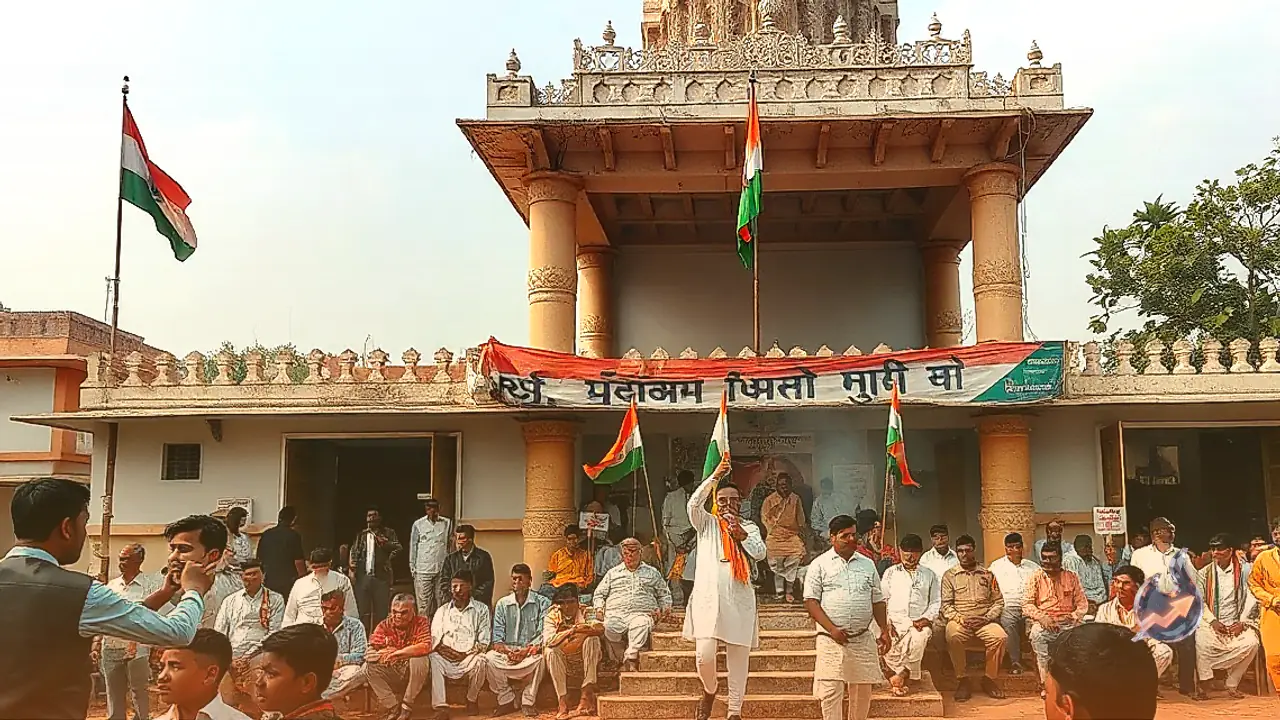
















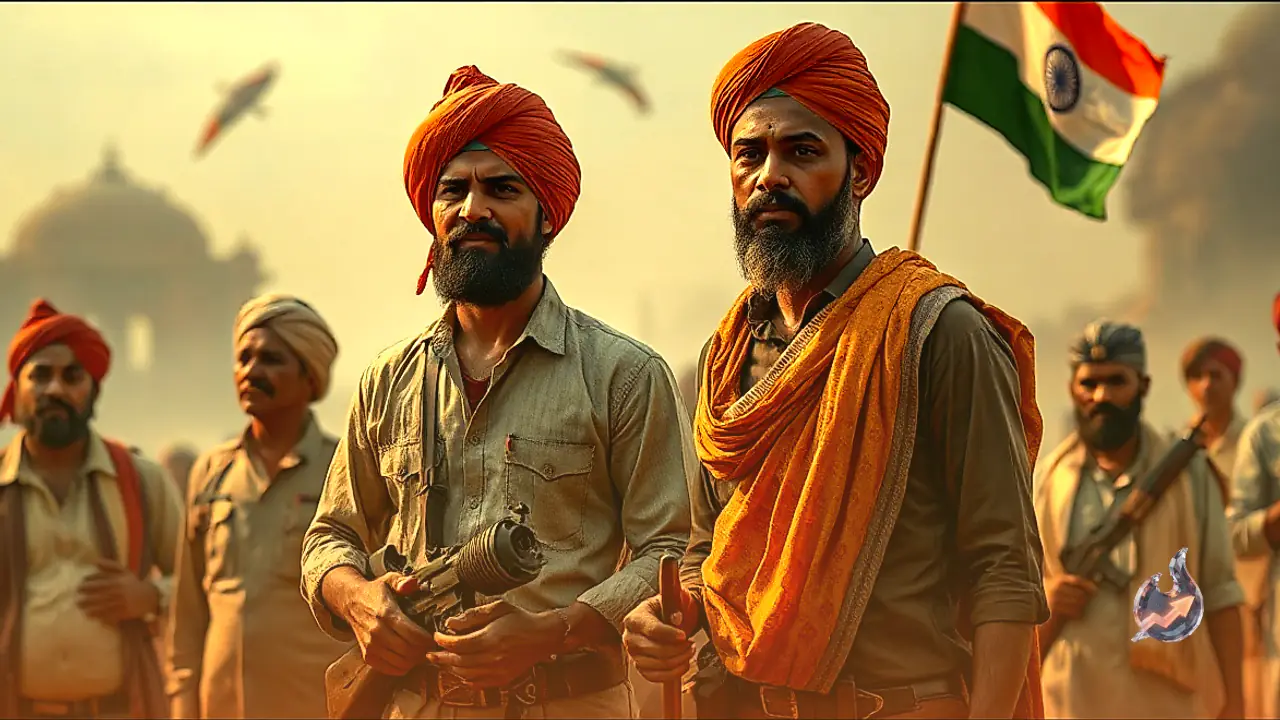

The district of Mirzapur in Uttar Pradesh holds a prominent place in the history of India's independence struggle. During the nationwide movement against British colonial rule, revolutionaries from Mirzapur actively propelled the fight for freedom. These fighters mobilized local citizens and tribal communities, organized secret networks, and staged bold actions ranging from station arson to public demonstrations. The patriotic contributions of five distinguished freedom fighters from Mirzapur continue to be commemorated across the region.
Welcoming Subhash Chandra Bose and Defying Royalty
Sw. Pa. Ravinandan Dubey is recognized as one of the primary freedom fighters of Mirzapur district. Born on September 4, 1901, in Kathwar village of Lalganj, his dedicated service left a lasting mark on the freedom movement. In 1939, he undertook the responsibility of managing arrangements for a major program organized for Subhash Chandra Bose during his visit. Following this event, Ravinandan Dubey immersed himself completely in the struggle for national independence. During the movement, he demonstrated courage by opposing a king associated with British authority who had mocked him. In response to the mockery, Ravinandan Dubey threw a shoe at the king as a protest. Consequently, the king had him arrested and sent to prison.
Cycling Across Districts for Secret Meetings and Protests
Kedarnath Tiwari, a resident of Rampur Atari village in the Patehara block of Mirzapur, played a pivotal role in organizing resistance against British rule. Born in 1902, he led the "Quit Britishers, Save India" campaign across Mirzapur district. To build an organized anti-colonial resistance, he traveled on a bicycle to conduct secret meetings across Sonbhadra, Mirzapur, Varanasi, and Prayagraj. He actively organized public demonstrations against the colonial authorities. Due to his anti-British protests, he was arrested by colonial officials in 1941 and served nine months of imprisonment.
Purvanchal's Lone Tribal Freedom Fighter Sathaule Kol
Sathaule Kol made a unique contribution to the independence struggle by leading and organizing tribal communities against British rule. Moving secretly to avoid detection by colonial authorities, he gathered hundreds of tribal people to ignite the spirit of rebellion. Historical accounts identify Sathaule Kol as the only tribal freedom fighter from the Purvanchal region. Upon discovering his underground activities, British forces arrested him, though he was subsequently released.
Rebellion at Sixteen and the Burning of Pahada Station
Vidyasagar Shukla initiated his rebellion against British administration at the young age of 16. In 1939, he began anti-colonial resistance activities that included distributing notices against the British door-to-door, burning foreign textiles, and erasing identification numbers written on houses. Later, during the Quit India Movement in 1942, Vidyasagar Shukla took on a crucial role in the looting and burning of Pahada railway station. His daring resistance during the national movement remains well remembered by local residents.
Uniting People in Bhadohi and Legacy at Do Muhia Mode
Jhuri Bind rendered significant service to the freedom struggle by organizing communities across Mirzapur and Bhadohi (which was part of Mirzapur district at the time). He brought people together to launch organized resistance against colonial policies, keeping the spirit of rebellion active in the region. To honor his contributions to India's freedom movement, a statue of Jhuri Bind stands at Do Muhia Mode in Mirzapur district.