
















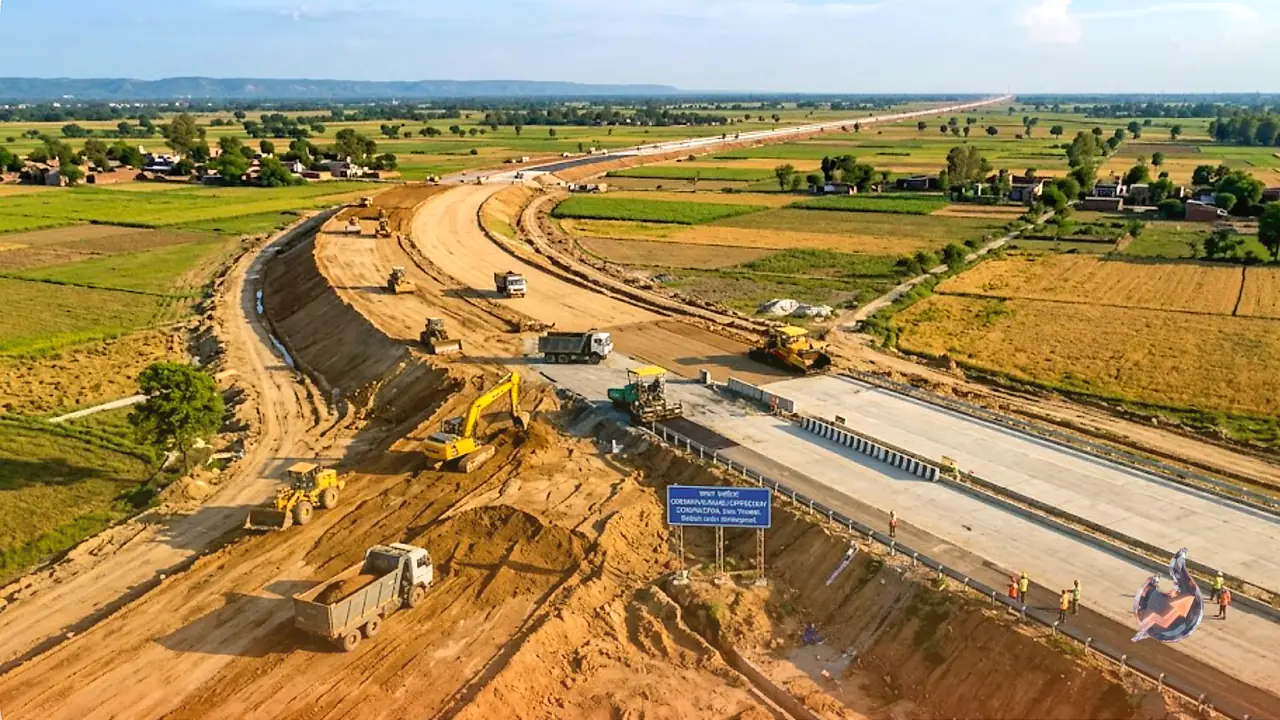

Uttar Pradesh is set to gain another major expressway that could reshape the state's road map. The Yogi government has approved the proposal for a new 700 km greenfield super expressway running from Gorakhpur to Shamli. What makes it striking is the scale: the state's longest expressway so far is the Ganga Expressway between Meerut and Prayagraj, measuring 594 km, but this new corridor will stretch even further.
For the past nine years or so, the state government has been steadily strengthening its road infrastructure, building a wide web of expressways across UP. Several of them are already operational, while work on others is moving fast. The Gorakhpur to Shamli project is the latest addition, and it is expected to give a fresh push to economic growth and traffic flow alike, while also creating new employment opportunities.
A straight line from Purvanchal to western UP
The super expressway will begin at Gorakhpur in eastern Uttar Pradesh and run all the way to Shamli district in the western part of the state. Built entirely on a greenfield alignment, the corridor will stitch together Purvanchal and western UP. It will sharply cut travel time on one hand and give a big boost to logistics, trade and industrial development on the other.
This is a highly ambitious plan for the Yogi government. According to officials, instructions have already been issued to prepare the DPR for the super expressway. It will be developed as an economic corridor featuring modern design, wide lanes and improved safety facilities.
The districts on the route
The route will connect to Shamli by passing through Gorakhpur, Basti, Ayodhya, Lucknow, Hardoi, Shahjahanpur, Moradabad, Muzaffarnagar, Meerut, Bijnor, Amroha, Moradabad, Sambhal, Bareilly, Shahjahanpur, Lakhimpur Kheri, Hardoi, Sitapur, Bahraich, Shravasti, Balrampur, Siddharthnagar, Basti and Sant Kabir Nagar.
Direct access from the Nepal border to Delhi NCR
Once the project is complete, it will create direct access from the Nepal border to Delhi NCR. Its construction will encourage industrial zones, the transport of agricultural produce and tourism. It will also ease much of the heavy pressure currently weighing on the Delhi, Lucknow and Gorakhpur corridor. Thousands of people are expected to find direct and indirect employment during and after the construction.