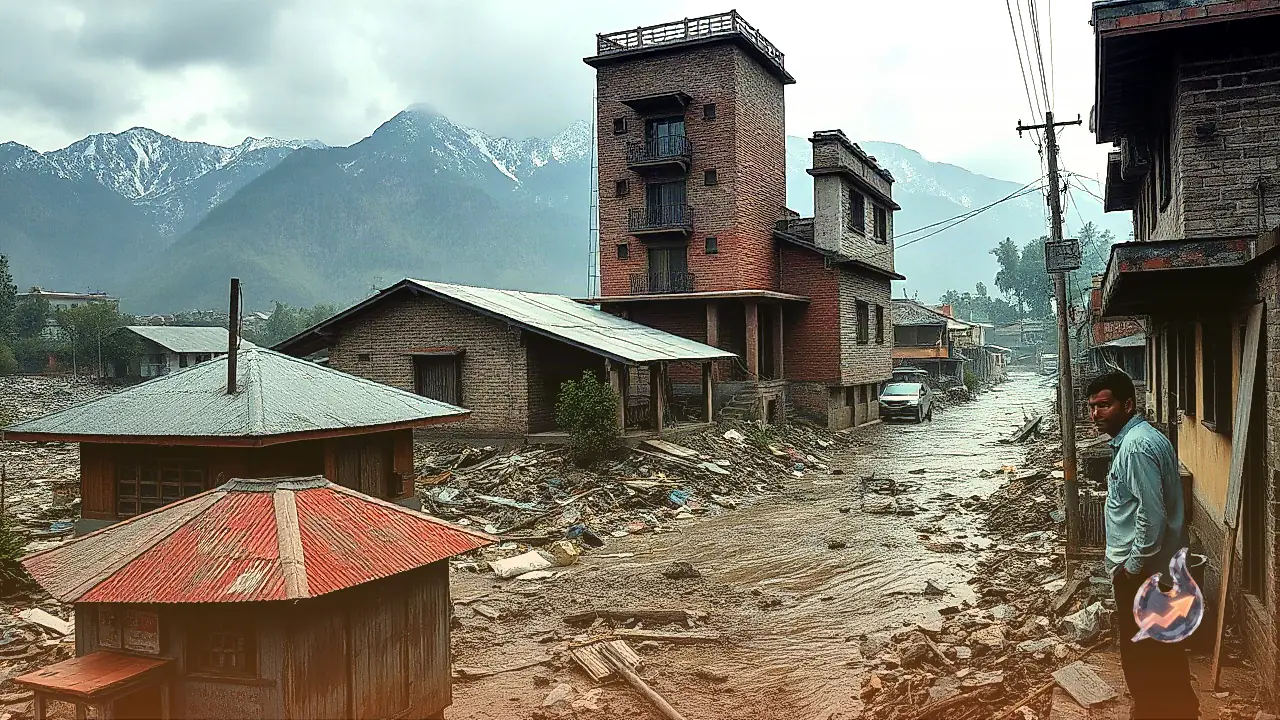



















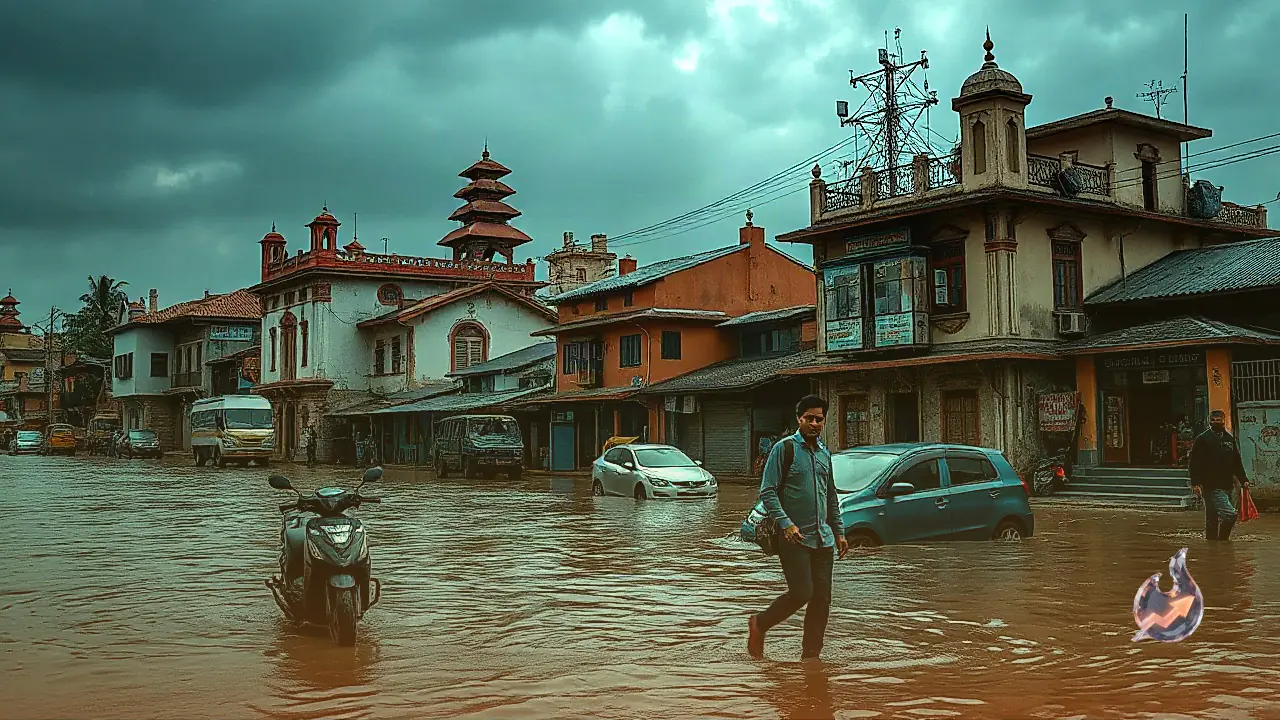

The devastating natural disaster that hit the northern regions of Nepal on August 26 has upended the lives of hundreds of families. Landslides and overflowing rivers destroyed homes and washed away entire road networks. Amid this widespread ruin, the ordeal of Talka Sada, a resident of Saptari district, highlights the painful human cost of natural calamities. His 19-year-old only son, Vinod, has been missing since the flood hit. Driven by the hope of finding him alive, Talka Sada borrowed money at extremely high interest rates to search through hospital wards, mortuaries, and debris-filled mountain tracks. Armed with a few crumpled notes, blistered feet, and an empty stomach, the helpless father refuses to give up his search.
Employment at the Hydropower Plant and Sudden Loss of Contact
Talka Sada resides in the Saptari district of Nepal with his wife, three daughters, and his only son, Vinod. Due to limited local job opportunities, 19-year-old Vinod left home about a month before the disaster in search of work. He traveled to Rasuwa city in Nepal, where he secured employment as a laborer at a local hydroelectric power plant. Talka Sada spoke with his son on the phone just one day before the flood struck, unaware that it might be their final conversation. On August 26, catastrophic floods devastated Rasuwa and surrounding northern districts. The hydropower construction site where Vinod worked was located in one of the hardest-hit zones. Following the disaster, Vinod's mobile phone went completely dead. Four other young co-workers stationed alongside him, aged between 17 and 19 years, also disappeared.
Borrowing Funds Under Exorbitant Interest Terms
Back home in Saptari, Vinod's mother continues to weep, pleading with her husband to bring their son back safely. However, Talka Sada faced extreme financial hardship. Coming from a impoverished background, the family lacked the money required to fund a long journey across the country. Desperate to start the search, Talka Sada arranged a loan from a local moneylender. He wrapped less than 2,000 Nepali rupees in crumpled notes inside a handkerchief and set out with his brother. This small sum came at a brutal financial cost: the loan carries an interest rate of 20 Nepali rupees for every 100 Nepali rupees borrowed. While each passing day pushes him deeper into debt, Talka Sada insisted that financial debt could be managed later, but finding his son was his immediate priority.
Searching Hospitals and Mortuaries Across Kathmandu
To trace Vinod, Talka Sada and his brother boarded a bus from Saptari to the capital city of Kathmandu. Navigating Nepal's rugged mountain roads, the 292-kilometer journey took approximately nine hours to complete. Upon arriving in Kathmandu, the brothers began visiting major medical centers and public hospitals. Many injured survivors and bodies recovered from flood zones had been transported to the capital. At every location, Talka Sada asked if anyone had seen Vinod. They inspected lists of admitted patients and checked records of the deceased. Examining identification photographs posted outside mortuaries proved traumatizing, as many bodies were severely decomposed or dismembered. Despite searching through these facilities, they found no trace of Vinod.
Trekked 60 Kilometers On Foot and Faced Exploitation in Trishuli
Finding no leads in Kathmandu, Talka Sada decided to travel toward the site where his son had been working. The distance from Kathmandu to Nuwakot is roughly 60 kilometers. However, authorities informed them that severe landslides had washed away the roads, leaving no vehicular transport available. Refusing to stop, the father and uncle set out on foot toward Nuwakot. After walking for hours along broken trails, they reached the town of Trishuli. The market area in Trishuli was severely damaged, covered in mud and flood debris. As heavy rain began to fall, they were forced to check into a local lodge overnight. Taking advantage of their vulnerability, the lodge owner charged them 1,500 Nepali rupees for a single night stay and provided only a small portion of rice, which did not satisfy their hunger. This single expense virtually depleted their remaining funds, leaving them without money to continue searching or return home.
Systemic Neglect and the Anguish of Marginalized Communities
Talka Sada and his brother state that they have repeatedly sought help from police checkposts, military camps, and relief agencies. They simply requested access to areas where rescue operations were underway or where recovered bodies were being cataloged. Instead, officials directed them from one administrative office to another without providing meaningful assistance. Talka Sada belongs to the Madhesi community from Nepal's Terai region, specifically the Musahar community, which is among the most socio-economically marginalized groups in the country. The father attributes the lack of official support to their poverty and social vulnerability, leaving them to navigate the disaster on their own.