




















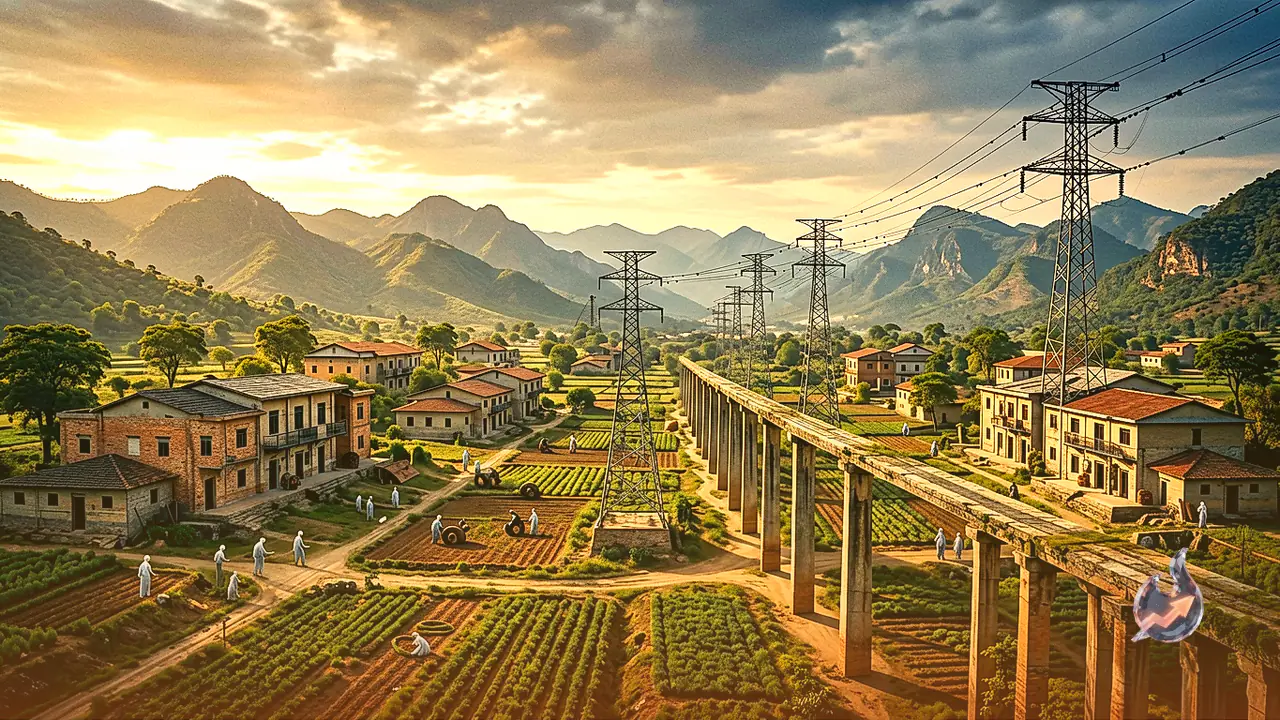

A major initiative to revamp and fortify the power distribution network across Northeast India took center stage during a high-level official meeting convened in New Delhi on Tuesday. Arunachal Pradesh Deputy Chief Minister Chowna Mein directly engaged Union Power Minister Manohar Lal Khattar, calling for sustained central financial assistance to modernise the region's energy infrastructure. The appeal comes at a crucial juncture when the state is expanding its power generation capabilities, making upgraded transmission lines and resilient grid systems an urgent necessity for long-term regional development.
Sustained Central Support Sought for Northeast Grid Modernisation
The collective concerns of the northeastern states were formally presented under the aegis of the North Eastern Regional Power Committee (NERPC). Power ministers representing various states across the region participated in the deliberations alongside Meghalaya Power Minister Metbah Lyngdoh, who currently serves as the chairman of the committee. Together, the delegation urged the Ministry of Power to maintain continuous funding pipelines aimed at implementing advanced system-strengthening measures and modern technical upgrades.
Key among the proposed interventions is the widespread rollout of Supervisory Control and Data Acquisition/Energy Management Systems (SCADA/EMS) alongside Emergency Restoration Systems (ERS). According to Chowna Mein, these high-tech interventions are indispensable for bolstering the operational reliability, security, and overall structural resilience of the northeastern electricity network. He noted that establishing a robust, modernized energy grid will serve as the core foundation for driving the next phase of economic growth, connectivity, and overall infrastructure development across the entire region.
Resolving Local Power Fluctuation Issues in Kimin
Beyond the broader regional framework, Chowna Mein drew specific focus toward urgent localized power challenges within Arunachal Pradesh. He highlighted priority infrastructure projects designed to resolve acute power instability, most notably the establishment of a 132/33 kV substation at Kimin, accompanied by associated Loop In-Loop Out (LILO) transmission lines. The proposal aims to tackle persistent power disruptions that have long impacted residents and commercial activities in the area.
Currently, Kimin and its neighboring localities rely on an existing long 33 kV feeder line that is prone to severe technical limitations, resulting in recurring voltage fluctuations and sudden blackouts. The deputy chief minister emphasized that executing the 132/33 kV substation and LILO line project without delay is vital to overcoming these operational bottlenecks. Once completed, the upgraded facility will ensure a stable, uninterrupted, and regulated flow of electricity to consumers in the district.
Hydropower Capacity Expansion and Transmission Infrastructure
As the minister in charge of both the power and hydropower portfolios in Arunachal Pradesh, Chowna Mein outlined the state's ambitious strategy to tap into its immense hydroelectric potential. With a robust pipeline of upcoming power-generation projects set to come online in the near future, the state is poised to become a key energy provider for the nation. However, tapping this potential requires a proportionate upgrade in power transmission channels.
Chowna Mein pointed out that timely expansion of transmission capacity is critical to guarantee the smooth evacuation of generated power from upcoming hydro stations. Without an upgraded grid network, newly generated electricity cannot be efficiently transferred into the regional grid. Modernizing the transmission infrastructure will not only secure energy independence for Arunachal Pradesh and the wider Northeast but also support the region's transition into an era marked by rapid industrial progress and infrastructure-led economic expansion.