






















Volvo has rolled out significant powertrain and technology updates for its flagship sport utility vehicles, introducing long-range plug-in hybrid variants of both the XC60 and the larger XC90. The key highlight of this release is a massive jump in zero-emission driving distance, designed to handle daily commuting entirely without firing up the internal combustion engine. Under WLTP testing standards, the XC60 achieves an electric-only range of up to 200 km, whereas the three-row XC90 delivers between 160 and 164 km on battery power alone. This represents an improvement of more than two and a half times over the outgoing models.
Underfloor Battery Pack and Charging Logistics
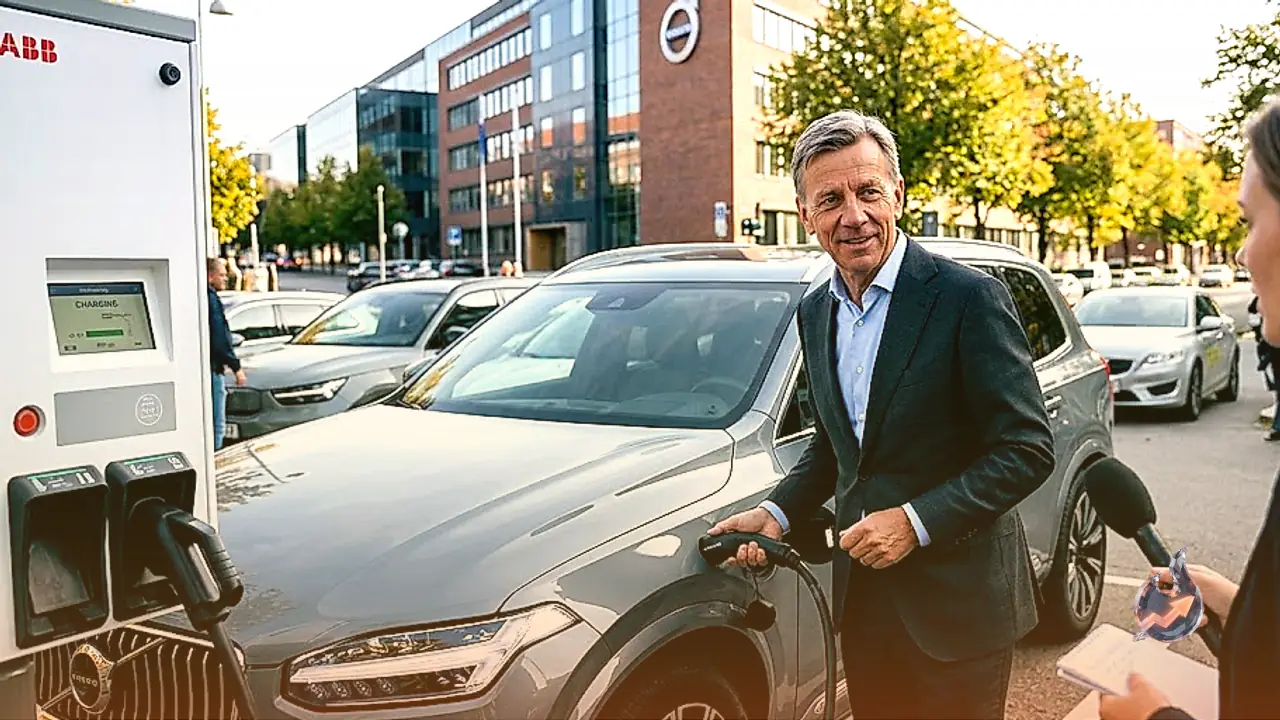
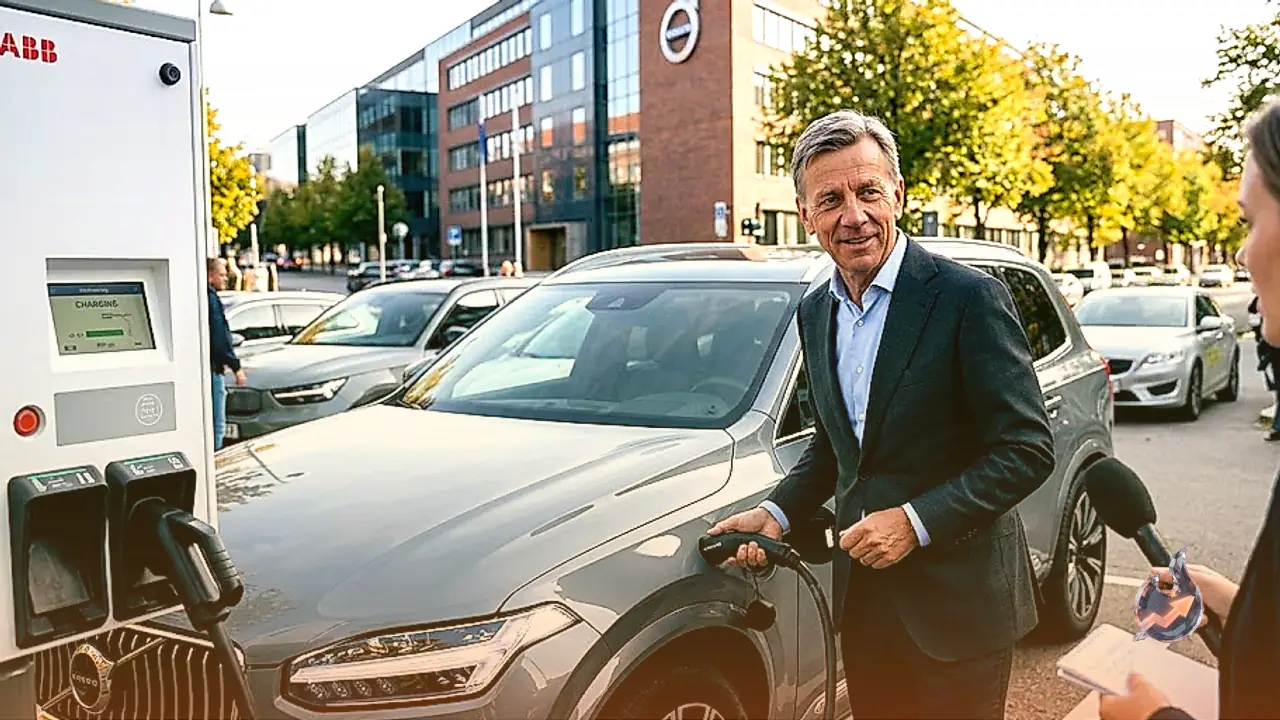
Enabling this extended range is a 41.2 kWh battery pack integrated directly into the vehicle floor, offering an effective usable capacity of 37.9 kWh. Placing the battery low inside the floor ensures interior cabin volume remains uncompromised while simultaneously keeping the centre of gravity low for stable handling. The carmaker views this step as a practical bridge toward comprehensive electrification. Replenishing the battery through a standard home charger requires roughly 4 hours for a full cycle. Order books have already opened across select international markets, with factory assembly slated to commence towards the end of this year. Confirmation regarding local launch timelines for India is expected at a subsequent stage.
Design Revisions and Cabin Refinement
Styling revisions are led by the XC60, which receives noticeable exterior updates. These include a re-profiled front grille, new bonnet, revised front wings, and updated Thor's Hammer matrix LED headlamps. At the rear, the vehicle benefits from refreshed tail lights, a reprofiled tailgate, and a revised lower bumper assembly. Fresh alloy wheel selections spanning 20 to 21 inches along with new exterior shades such as Heather Bronze round off the visual package. In contrast, the larger XC90 retains its established premium exterior profile following its 2024 styling update. Both SUVs will also be offered in a specialised Black Edition specification.
Inside the XC60, passengers are greeted by an overhauled dashboard layout, updated door card designs, genuine wood trim, and ventilated Nappa leather upholstery finished in a Cardamom hue. Subtle indirect ambient lighting enhances the minimalist Scandinavian ambiance. Dominating the centre console is an 11.2-inch portrait-oriented touchscreen running a faster user interface that requires fewer inputs to navigate. The larger XC90 carries over its spacious seven-seat layout alongside optional high-end equipment, including the Bowers and Wilkins premium audio setup.
Google Gemini Integration and Active Driver Assistance
Both hybrid offerings gain an upgraded digital environment running Google Gemini AI voice assistant capabilities, supported by over-the-air software updates and a 360-degree camera suite featuring 3D environmental views. The user experience has been simplified for direct operation on the go. On the safety front, the XC60 incorporates an enhanced sensor suite consisting of additional radar units, visual cameras, and ultrasonic sensors. This hardware drives functions like lane change assist, collision prevention, automatic emergency steering, automated braking, and door-opening cyclist warning systems. The XC90 meets the same rigorous safety benchmarks using an identical suite of protective aids.
Powertrain Specifications, Performance, and Dual-Fuel Range
Propulsion across both models relies on a 2.0-litre turbocharged petrol engine paired with a revised electric motor delivering around 130 kW, with top speed electronically capped at 180 km/h. In the XC60, buyers can select between two configurations: the T6 Long Range producing a combined output of 357 hp, hitting 0 to 100 km/h in 5.7 seconds while yielding up to 200 km of EV range, and the potent T8 variant generating 461 hp, sprinting to 100 km/h in 4.8 seconds with an EV range of 189 km.
The larger XC90 is predominantly configured with the T8 setup, producing roughly 455 hp and accelerating from 0 to 100 km/h in 5.0 to 5.2 seconds while achieving its 160 to 164 km EV rating. When both the battery and fuel tank are full, the XC60 delivers an overall touring range surpassing 1200 km, while the XC90 exceeds 1000 km. Mild-hybrid engine options will continue to be retailed alongside these long-range plug-in models.