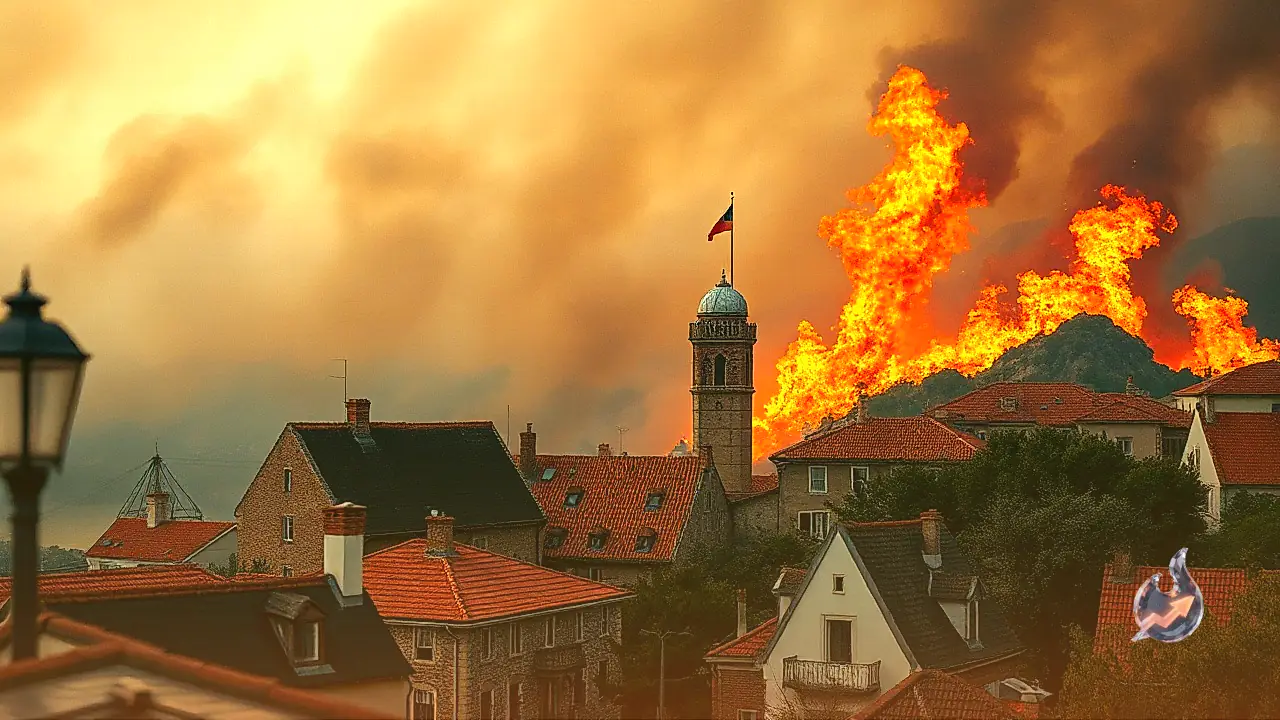

























A catastrophic wildfire tearing through Belgium's largest nature reserve has caused widespread environmental destruction and threatened nearby residential communities. By Saturday afternoon, the intense blaze had consumed approximately one-third of the protected High Fens reserve, prompting emergency officials to order the immediate evacuation of two nearby villages. Situated near Belgium's eastern border with Germany, the reserve's unique ecosystem is suffering severe damage as specialized emergency teams from across Europe deploy water-bombing aircraft and heavy helicopters to assist local ground crews attempting to halt the fire's relentless advance.
Escalating Crisis in the High Fens Reserve
Local authorities in Wallonia confirmed that the disaster remained entirely out of control through Saturday. Nicolas Yernaux, a spokesperson for Wallonia regional authorities, described the blaze as the nation's largest in recent history. Emphasizing the gravity of the situation, Yernaux stated that "There is a risk that the fire could reach homes, but we are deploying all available resources to protect them." To support displaced residents fleeing the advancing flames, local officials opened a nearby gymnasium as an emergency reception shelter offering housing and basic necessities.
Emergency operations face severe operational hurdles caused by the complex topography of the High Fens. The park comprises bog-like terrain, open moorlands, and dense evergreen forests that impede heavy firefighting vehicles and ground crews. Yernaux explained that firefighters were forced to allow specific inaccessible sections of heathland to burn out naturally so emergency resources could be concentrated on high-priority forested zones and structural boundaries.
Frontline Challenges and Shifting Winds
Firefighters on the ground have been working non-stop to create containment lines along vulnerable borders. Gregory Melotte, one of the firefighters battling the inferno, noted that crews successfully checked the fire's momentum as it moved off the lower plains, preventing its entry into dense fir forests. Reflecting on the ongoing operation, Melotte affirmed that "We still succeeded in our mission, but it's not over yet." Changing atmospheric conditions continue to complicate tactical operations, with shifting winds repeatedly altering the direction of the fire and creating unpredictable risks for personnel on the frontline.
European Union Emergency Response Mobilization
Recognizing the severity of the crisis, Belgium formally activated the European Union's civil protection mechanism to solicit specialized international reinforcements. European Commissioner Hadja Lahbib confirmed the emergency dispatch of aerial firefighting assets from multiple member nations, including two Swedish water-bombing planes alongside heavy helicopters supplied by the Czech Republic and the Netherlands. These aerial resources are targeting inaccessible bog zones to damp down hot spots and prevent further spot fires.
Simultaneous Wildfire Surge in Southwestern France
The Belgian emergency mirrors a broader wave of severe wildfires impacting Western Europe. In southwestern France's Landes region, a major forest fire that originally ignited on Thursday unexpectedly reignited on Saturday. Local French authorities deployed over 500 firefighters to battle the resurgence and issued precautionary evacuation orders for approximately 650 residents as smoke and flames threatened surrounding populated areas.
Record Temperatures and Climate Implications
The intensity of these continent-wide wildfires aligns with severe heat conditions recorded across Western Europe throughout the summer. Data released by Copernicus, the European Union's climate monitoring service, confirmed that Western Europe experienced its hottest June-to-July period on record. Prolonged dry spells combined with unprecedented thermal anomalies have created highly flammable conditions across European forests and protected peatlands, escalating wildfire risks across the continent.