





















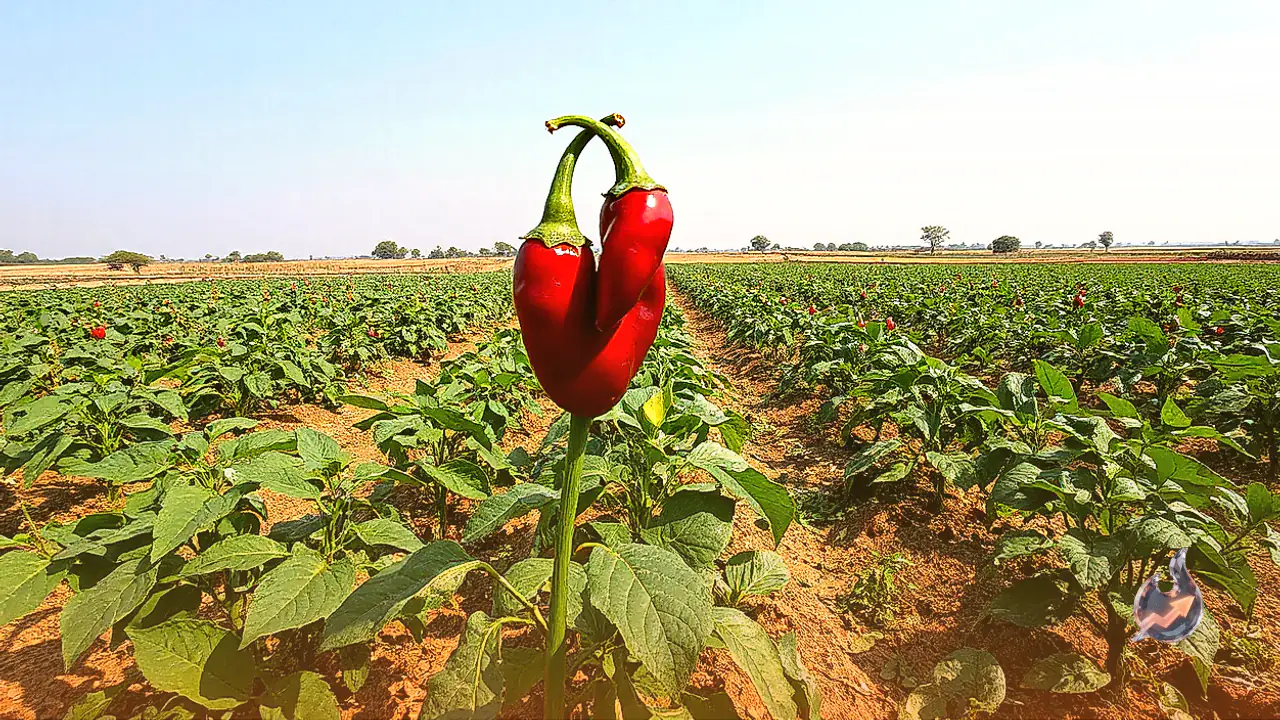

Farmers cultivating chilli crops face serious production risks from three destructive plant diseases. Outbreaks of leaf curl virus, damping off, and wilt disease severely restrict plant growth, curtailing flower and fruit development and triggering notable drops in total harvest yields. According to Kuldeep Kumar, identifying early symptoms promptly and executing timely agricultural interventions remains essential for growers aiming to safeguard their fields.
Leaf Curl Virus Symptoms and Whitefly Control Strategies
Leaf curl virus represents a widespread threat in standing chilli fields, spreading primarily through infestations of the sap-sucking whitefly. Once infected, chilli plants display distinctive upward curling of the foliage, causing leaves to curl tightly into an inverted bowl shape. Alongside this structural deformity, the emerging leaves remain stunted in size, bringing normal vegetative development to an abrupt halt.
In advanced cases, infected plants turn completely dwarfed, severely hampering the physiological process required for flower set and fruit formation. To prevent the virus from spreading across the entire plot, any plant exhibiting early signs must be carefully uprooted and discarded well away from the field area. Concurrently, rigorous monitoring and suppression of the whitefly population are mandatory. Spraying imidacloprid at a concentration of 0.5 grams per litre of water effectively curbs the whitefly vectors and curbs further disease transmission.
Managing Damping Off in Nurseries and Improving Drainage
Within nursery beds, damping off stands out as a critical fungal threat to tender seedlings. The condition stems directly from pathogenic soil-borne fungi thriving under conditions of excessive moisture and poor air circulation. Following seed emergence, the pathogen attacks the basal portion of the stem near the soil line, causing tissue softening, rot, and structural collapse. As a result, seedlings topple over onto the ground and perish, drastically reducing seedling density and leaving growers short of healthy transplants for field establishment.
Preventing damping off demands proactive measures right from bed preparation. Seeds should undergo proper seed treatment before sowing, while nursery seedbeds must be raised approximately 15 centimetres above ground level to ensure efficient drainage and prevent standing water. Furthermore, incorporating biological fungicides like Trichoderma into the soil at recommended dosages suppresses soil pathogens. If nursery plants begin showing signs of infection, applying protective fungicides such as copper oxychloride 50 percent WP or mancozeb helps arrest disease progression.
Recognizing Wilt Disease and Implementing Crop Rotation
Chilli plants established in main fields remain vulnerable to wilt disease. Plants struck by wilt show sudden drooping of leaves while still green, rapidly desiccating and dying off in patches. Uprooting an affected specimen reveals characteristic black lesions, internal vascular discoloration, or outright decay along the root system. To suppress this persistent soil issue, farmers should practice regular crop rotation instead of planting chilli repeatedly in the same soil. Rotating chilli fields with coriander or legume crops interrupts pathogen life cycles and significantly improves long-term soil health.
Direct chemical intervention against wilt involves applying carbendazim at a rate of 2.5 grams per litre of water around the root zone. Administering this root drenching or spray one week after transplanting seedlings provides the most effective protection, minimizing the intensity of the disease. Overall crop health requires continuous surface drainage in both nursery and field beds, the exclusive use of certified disease-free seeds and seedlings, and regular post-transplant field scouting so remedial treatments can be administered the moment initial symptoms emerge.