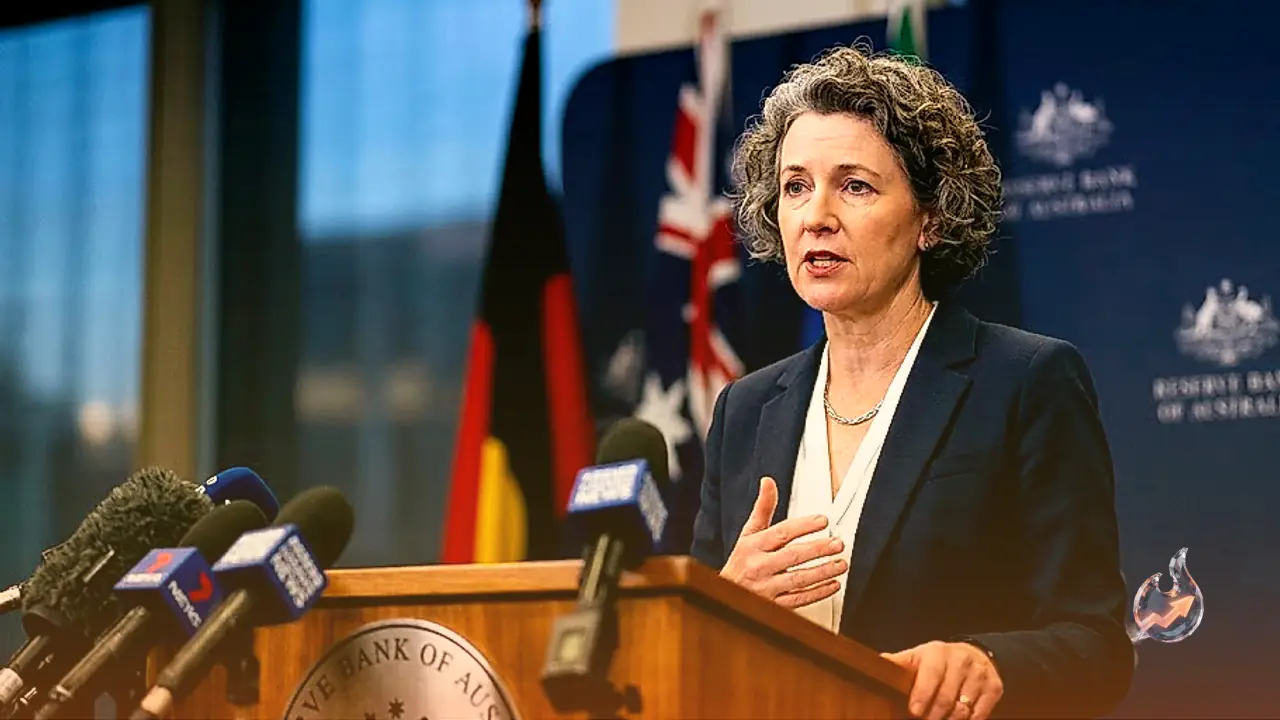

























The Bank of Japan has implemented another step in the steady normalisation of its monetary framework by lifting its short-term interest-rate target from 1.00% to 1.25%. Approved through a 7-2 majority vote, the policy adjustment matched widespread market expectations that had been building over recent weeks. Nevertheless, the emergence of two direct dissents from within the monetary policy board, combined with cautious messaging from bank leadership, left market participants viewing the outcome as less hawkish than anticipated. This interpretation triggered an immediate sell-off in the Japanese Yen, which resumed its decline against the US Dollar during European trading hours, sliding to fresh two-week lows and approaching the 158.00 threshold.
Divided Board and the Case Against Tightening
The policy gathering revealed clear friction regarding the timing and necessity of immediate tightening. Board members Asada and Sato formally voted against raising borrowing costs, arguing that consumer-price inflation remained below the bank's 2% objective. In their assessment, recent economic momentum and price developments had not accelerated sufficiently to justify another rate hike at this juncture. Both dissenting members favored maintaining existing stimulus until domestic price formation showed firmer and more widespread strength.
Conversely, the seven-member majority determined that reducing monetary accommodation was essential to secure the central bank's inflation goal on a sustainable and stable foundation. In the majority's view, retaining highly accommodative conditions for too long risked embedding inflationary pressures, making future price stability considerably harder to preserve. Gradual tightening was therefore deemed the responsible path toward long-term balance.
Persistent Underlying Price Pressures and Wage Transmission
In its official communication, the Bank of Japan highlighted that underlying inflation is moving closer to the 2% threshold, with price pressures displaying greater persistence across the domestic economy. Wholesale inflation has stayed persistently elevated, driven by high crude oil prices, ongoing Yen weakness, and burgeoning demand tied to artificial intelligence technologies. These upstream cost pressures in business-to-business transactions are increasingly being passed through to end-consumer prices.
Furthermore, Japanese companies continue to transfer higher labor compensation into their final selling prices, establishing a firmer wage-price link. This transmission has contributed to steadily rising inflation expectations across households and corporate entities. Policymakers noted that this structural shift in price-setting behavior underpins the necessity of moving interest rates away from ultra-low territory.
Governor Ueda Details Global Headwinds and Policy Limits
Bank of Japan Governor Ueda outlined several prominent threats clouding the economic horizon, pointing specifically to the conflict in the Middle East, volatile crude oil markets, surging AI-related industrial demand, and persistent foreign exchange turbulence. Ueda observed that a second phase of price increases linked to the Middle East crisis was already underway. Consequently, he noted that the central bank would need to act pre-emptively should inflation threaten to overshoot the 2% threshold significantly.
At the same time, policymakers are intent on preventing the broader economic and financial damage that could emerge from overly rapid monetary tightening. Large or consecutive interest-rate hikes will therefore remain reserved strictly for scenarios where the risk of an aggressive inflation overshoot becomes significant. Ueda explicitly clarified that the Bank of Japan does not conduct monetary policy to target specific exchange-rate levels for the Yen, though currency fluctuations remain a critical variable because of their direct influence on import prices and overall inflation.
Addressing the wage trajectory, Ueda emphasized that the upcoming spring wage negotiations in fiscal year 2027 will be pivotal in establishing whether trend inflation can truly stabilize around the 2% benchmark. Throughout this process, he affirmed that the central bank intends to maintain strict operational independence while maintaining appropriate coordination with the national government.
A Measured Path of Normalisation Ahead
While the overall posture of the monetary event leant hawkish, the underlying message was deliberate and measured. The central bank has clearly entered a new phase of policy normalisation, backed by firmer underlying price pressures, corporate wage pass-through, and expanding inflation expectations.
However, Governor Ueda's clear focus on evaluating the cumulative effects of past rate increases, his desire to avoid excessive tightening speed, and the deliberate absence of a fixed forward timetable indicate that subsequent rate adjustments will be gradual. Future moves will remain heavily dependent on incoming economic data, giving policymakers the flexibility to pause and assess broader financial conditions before taking additional action.
The Long Legacy of Monetary Stimulus and the Yen
As the nation's monetary authority, the Bank of Japan operates under a core statutory mandate to issue banknotes and carry out currency and monetary control to guarantee price stability, formally quantified as an inflation target around 2%. To counter entrenched deflationary forces and stimulate economic expansion, the bank launched an ultra-loose monetary regime in 2013 under Quantitative and Qualitative Monetary Easing (QQE), printing currency to purchase government and corporate bonds to flood the financial system with liquidity.
The central bank doubled down on this interventionist approach in 2016 by introducing negative interest rates and initiating yield curve control to manage 10-year government bond yields directly. It was not until March 2024 that the bank finally lifted benchmark borrowing costs, marking its initial departure from more than a decade of extreme accommodation.
This sustained period of massive monetary expansion exerted intense downward pressure on the Yen relative to other major currencies. The currency's depreciation accelerated dramatically between 2022 and 2023, as central banks worldwide raised interest rates aggressively to combat multidecade inflation highs, while Japan remained the world's prominent low-rate outlier. The widening interest-rate differentials dragged the Yen lower, a dynamic that only began to reverse partially in 2024 after the bank abandoned its ultra-loose framework.
Importantly, prolonged Yen weakness alongside spikes in international energy costs pushed Japanese headline inflation above the 2% target. Simultaneously, Japan's rock-bottom borrowing costs helped finance trillions of dollars in global assets over more than a decade, turning the Yen into the world's premier low-cost funding currency for international carry trades. With tightening now progressing, this long-standing global funding dynamic is undergoing a structural shift.
Movements Across Global Currency and Asset Markets
The implications of global monetary divergence were evident across other major financial assets alongside the Bank of Japan's latest interest-rate decision. In the currency sphere, AUD/USD maintained positive momentum for a second consecutive session, holding above 0.7100 during Friday's Asian trading window as retreating US Treasury yields subdued the US Dollar. Hawkish comments from Reserve Bank of Australia Governor Bullock also fueled bets on further Australian rate increases, bolstering the Aussie. Nonetheless, the Federal Reserve's hawkish policy outlook and wider geopolitical frictions limited broader Dollar depreciation, capping the currency pair's rally.
In commodities, Gold prices trended upward for a second straight day, establishing fresh weekly highs during the opening half of Friday's European trading. Precious metal buyers are currently watching for a sustained breakthrough beyond the $4,400 mark to position for extended upside, supported by softening US Treasury yields ahead of upcoming Federal Reserve commentary and mid-tier US macroeconomic releases.
In digital assets, Bitcoin has mounted an impressive recovery from its yearly low of $57,800 recorded in July, rallying roughly 33% and logging two back-to-back monthly gains across July and August. Despite this resurgence, BTC continues to trade approximately 40% below its historical peak, leaving market participants to evaluate whether the recent climb represents the launch of a new bull run or merely an intermediate rebound within an overarching bear market.