






















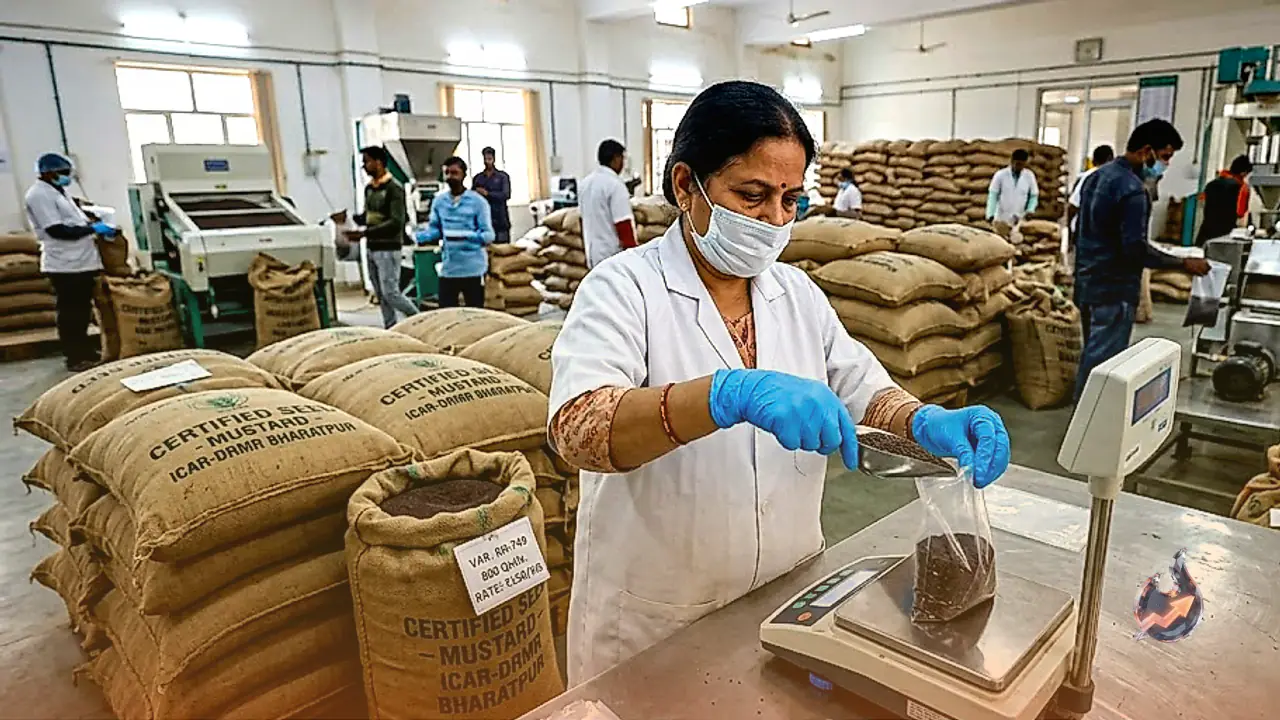

Preparations for the upcoming rabi sowing period have gained momentum across agricultural fields, bringing timely support for mustard growers. The mustard research centre situated in Bharatpur has developed approximately 800 quintals of certified seeds covering 9 improved crop varieties. To protect farmers from inflated retail rates in the open market, this entire inventory is being distributed at an affordable price of 150 rupees per kilogram.
Varieties Tailored for Varied Soil and Weather Conditions
The certified stock prepared by the research facility addresses multiple regional and climatic farming requirements. The collection includes yellow mustard varieties alongside cultivars specifically engineered for delayed sowing schedules and low water availability. Farmers facing limited irrigation resources or seasonal timing constraints can evaluate their specific plot conditions and select the most suitable variety to maximize crop yields.
Distribution on a First Come First Served Basis
According to V.V. Singh, Director of the mustard research centre, researchers conduct rigorous field trials and continuous agricultural assessments based on farmers' practical challenges. Varieties that demonstrate consistent performance and productivity during these evaluations are subsequently multiplied into certified seed lots. The current batch of roughly 800 quintals will be distributed to visiting growers on a first come, first served basis at the fixed price of 150 rupees per kilogram.
Popularity of the Girraj Variety and Quality Assurance
Among the nine developed varieties, the Girraj variety enjoys significant demand among local cultivators. A vast proportion of farmers across Bharatpur and adjoining rural tracts consistently choose this specific variety for their acreage. To preserve seed purity and viability, the research station enforces strict testing protocols, rigorous monitoring, and established regulatory benchmarks. Agricultural specialists note that dependable certified seed establishes vigorous crop emergence and superior harvest output, sparing growers the risk of buying substandard seeds from unreliable traders.