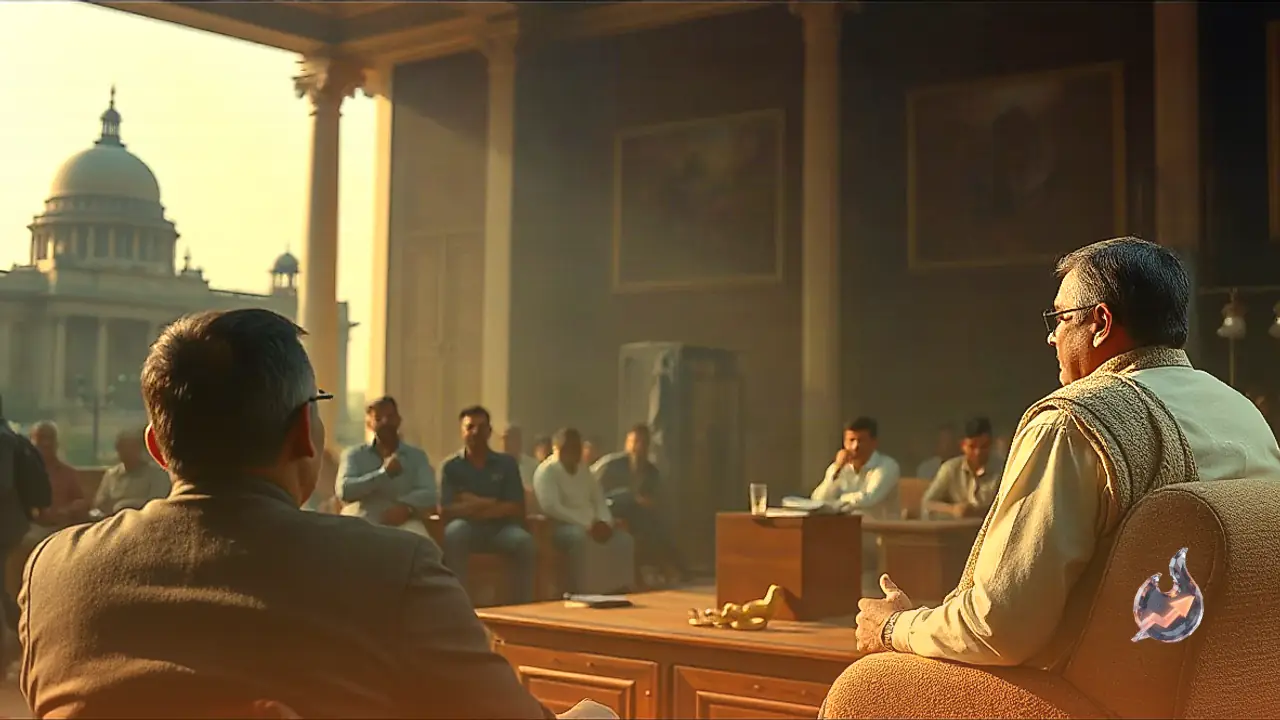


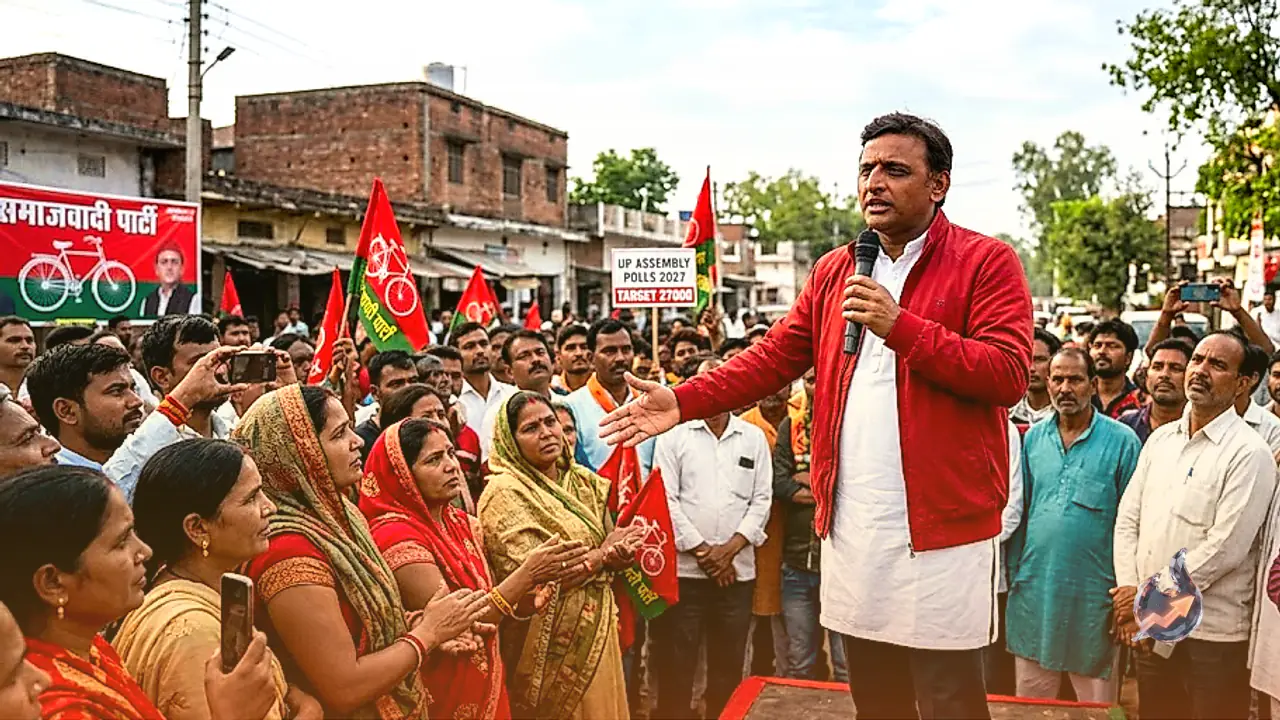















Political maneuvers have begun to take shape well ahead of the crucial 2027 Uttar Pradesh assembly elections. Amid Chief Minister Yogi Adityanath's continuous campaign outreach and Samajwadi Party president Akhilesh Yadav's micro-management plan targeting a 27,000 vote increase per constituency, All India Majlis-e-Ittehadul Muslimeen president Asaduddin Owaisi has made a calculated political move. Addressing a public gathering in Moradabad, Owaisi presented an open alliance proposal to opposition parties opposed to the Bharatiya Janata Party, specifically directing his appeal toward the Samajwadi Party and Congress. He cautioned that if the opposition is serious about preventing the BJP from securing a third consecutive term in Lucknow, they must discard the illusion of going it alone and initiate timely discussions with AIMIM.
Owaisi took direct aim at the working style of key opposition parties, challenging the recurring narrative that accuses his outfit of playing the spoiler. Directly addressing Akhilesh Yadav, Owaisi remarked,
"The Majlis never wants a third BJP government to be formed in Uttar Pradesh. I am ready to join hands and form an alliance."He warned rival leaders that discussions must take place before ballots are cast, saying they should talk right now instead of mourning after election day. Owaisi emphasized that his party's struggle is not merely about securing ministerial berths, but about securing equal respect, genuine representation, and rightful dignity at the decision-making table rather than settling for marginal treatment.
Drawing Lessons From The Bihar Assembly Elections
Reflecting on past opposition strategies, Owaisi pointed to the political miscalculations seen in Bihar. He recounted that AIMIM Bihar state president Akhtarul Iman had sent formal letters to the Rashtriya Janata Dal, Congress, and Left parties requesting an allocation of just 6 seats within their broader anti-BJP bloc. However, the self-proclaimed secular formation rejected the outreach entirely, leading to a split in opposition votes that ultimately shaped the final outcome. Reminding opposition leaders of that episode, Owaisi argued that repeating such exclusionary approaches in Uttar Pradesh would only ease the path for the ruling party.
The Strategic Dilemma Facing Akhilesh Yadav and the PDA Model
This public proposal places Akhilesh Yadav in a complex political quandary. Since the 2024 general elections, the Samajwadi Party has concentrated its messaging around the PDA framework, representing backward classes, Dalits, and minorities. While aligning with AIMIM might appear to consolidate minority voters on paper, on-the-ground political analysts point to significant tactical risks. A formal partnership with Owaisi could hand the BJP potent ammunition to attack the alliance as appeasement politics, potentially alienating non-Yadav Other Backward Classes and general Hindu voters who have gravitated toward the Samajwadi Party. The BJP has already hinted at this narrative by labeling any such overture an appeasement-driven partnership.
Protecting The Traditional Minority Voter Base
The Samajwadi Party has long viewed Uttar Pradesh's estimated 19 to 20 percent Muslim electorate as its foundational and reliable voting bloc. Bringing Owaisi onto a shared stage carries the risk of establishing a parallel Muslim leadership within the state, something regional socialist parties have consistently resisted. Giving AIMIM official entry into the mainstream opposition platform could alter local power dynamics across northern and western districts, ceding vital political territory to an autonomous player.
Three Plausible Political Scenarios Moving Forward
Following Owaisi's overture, political observers outline three distinct trajectories for the opposition in Uttar Pradesh
- Calculated Silence or Formal Rejection by SP: Akhilesh Yadav may opt to ignore or outright turn down the offer, preserving the narrative of a direct bipolar contest between the BJP and the Samajwadi Party to keep minority voters coalesced around his bicycle symbol.
- Vote Fragmentation Across Western Uttar Pradesh: If talks fail to materialize, AIMIM could aggressively field candidates across 30 to 40 Muslim-majority constituencies in Seemanchal-style belts and western Uttar Pradesh, raising the likelihood of a vote split that directly benefits the BJP.
- Backchannel Tactical Understanding: Rather than risking a high-profile formal alliance that invites aggressive counter-polarization, both sides could explore quiet, localized coordination in select pockets to avoid splitting anti-BJP votes.
By making his intentions public from the Moradabad podium, Asaduddin Owaisi has placed the ball squarely in Akhilesh Yadav's court. The Samajwadi leadership now faces the critical task of deciding whether to rely solely on its internal PDA formula or recalibrate its strategy to prevent a damaging division of anti-incumbency votes in 2027.