



















A massive voter list verification drive under the Special Intensive Revision (SIR) in Uttarakhand has triggered administrative clarifications and sharp political debate. Election authorities have confirmed that more than 95,000 Form 7 applications were automatically produced by the electoral management system after records flagged with logical discrepancies remained unverified during official hearings. While poll officials maintain that every step complies strictly with standard operating procedures, opposition leaders allege that the deletion mechanism has been subjected to widespread misuse across key constituencies.
Automated System Generates Over Half of Total Objections
According to the official figures released by the state election apparatus, Uttarakhand registered a total of approximately 1.73 lakh Form 7 submissions during the ongoing SIR exercise. Among these, upwards of 95,000 applications were not filed manually by individual citizens or booth-level workers. Instead, they were generated automatically by the electoral software following the conclusion of discrepancy scrutiny. This indicates that automated system entries accounted for more than half of all name-deletion applications recorded in the state.
Chief Electoral Officer BVRC Purushottam explained that these cases originated from logical inconsistencies identified in voter profiles. When notices were issued and the electors either failed to submit mandatory identity documents or skipped the hearing alongside their family members, the designated Electoral Registration Officers (EROs) and Assistant Electoral Registration Officers (AEROs) marked them as ineligible on the ECI-Net platform. Once this status was updated, the system triggered the automated creation of Form 7 to flag the names for removal from the rolls.
Scrutiny Follows Release of July Draft Roll
The current phase of verification traces back to the publication of the draft voter list on July 14. That preliminary roll saw a reduction of more than 8.26 lakh names when compared with the pre-revision voter count, representing a reduction exceeding 10 percent of the overall electorate.
The draft published on July 14 encompassed around 79 lakh registered electors. However, automated screening through electoral databases flagged nearly 19 lakh entries containing logical discrepancies. In response, the election administration scheduled hearings to give every affected citizen a fair opportunity to verify their records and tender valid documents. Out of those 19 lakh flagged entries, about 95,000 electors were ultimately marked ineligible after they failed to clear the verification hearings, paving the way for system-generated Form 7 processing.
Understanding Logical Discrepancies and Software Alerts
Election officials have emphasized that an alert for a logical discrepancy does not equate to immediate disqualification. The mechanism serves as a software-driven alert within the Election Commission's ERONET platform, designed to detect inconsistencies, typographical deviations, or statistical anomalies within family and demographic data.
These system-generated alerts cover a range of data issues, including major spelling variations in names, abnormal age differences between siblings, implausible gaps between parents and children, or instances where a household record lists more than six children under a single set of parents. The generation of such an alert does not lead to instant deletion. Rather, it mandates an inquiry where the elector is given a formal platform to clarify their details before any administrative action is initiated.
The Hearing Procedure and Documentary Verification
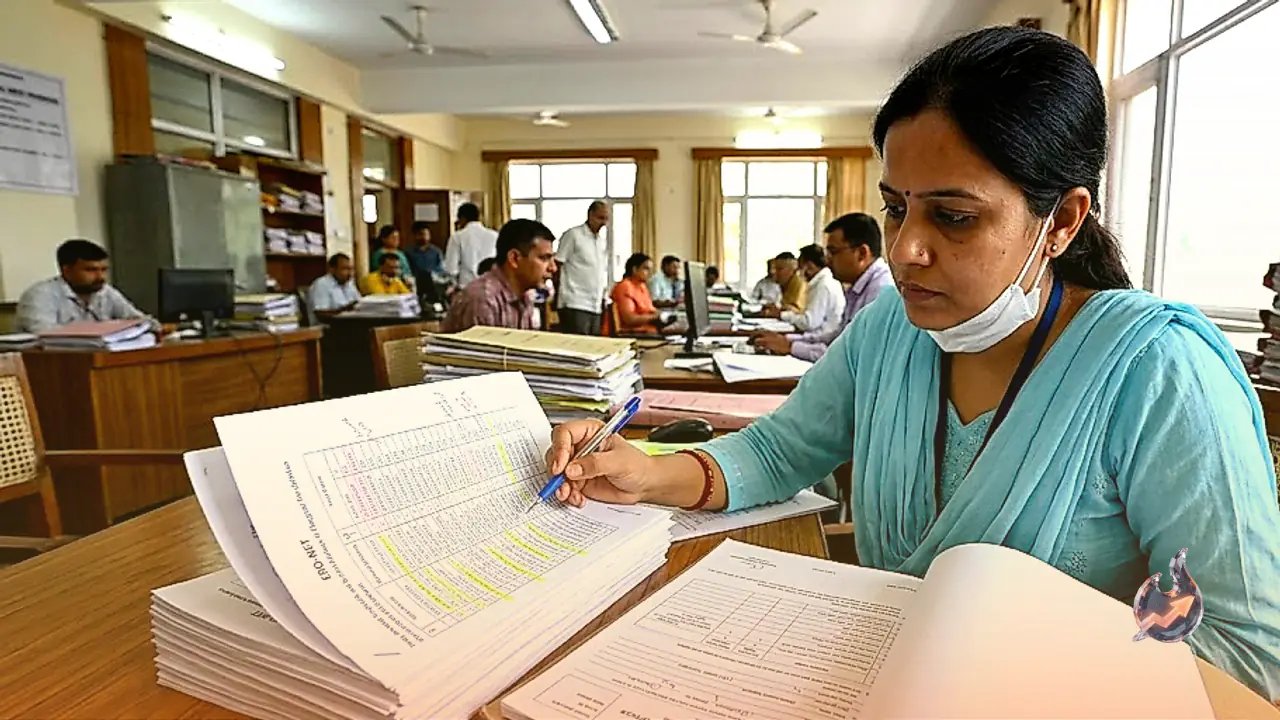
Once a voter receives a notice regarding a logical discrepancy, they are required to appear before the assigned ERO or AERO at a designated date, time, and location. Electors must present acceptable identity, age, or residential proofs to validate their enrollment status.
The specific documents needed depend strictly on the nature of the anomaly flagged by the software. If the presiding registration officers find the produced documents and explanations satisfactory, the issue is formally resolved in favor of the elector, ensuring their enrollment remains active on the rolls. Conversely, if an individual fails to present genuine paperwork, or if neither the voter nor any immediate family member attends the hearing, the officer registers the elector as ineligible on the portal, prompting the system to draft Form 7 for deletion.
Political Questions and Opposition Concerns
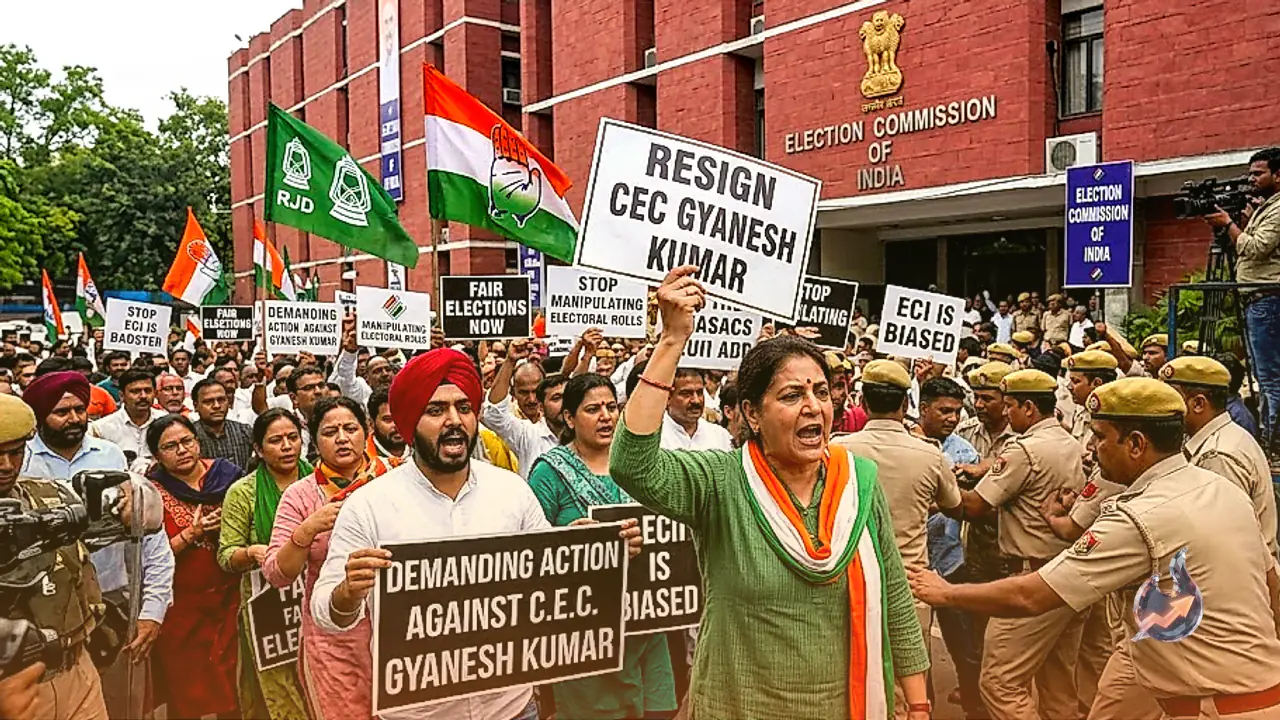
Form 7 is the prescribed statutory document used to object to an entry or request the deletion of a name from the voter list. Legitimate grounds for its use include the death of an elector, duplicate registrations, relocation to another constituency, or legal disqualification. Following the emergence of 1.73 lakh Form 7 entries in Uttarakhand, the process has sparked heated political contention, with the Congress party alleging that the provision is being manipulated to disenfranchise legitimate citizens. The Chief Electoral Officer's office has rebutted these claims, maintaining that the entire SIR operation is completely rule-bound and transparent.
Uttarakhand Pradesh Congress Committee Senior Vice President and AICC member Suryakant Dhasmana voiced serious concern over the concentration of Form 7 submissions across five assembly segments in the Udham Singh Nagar district. These constituencies include Kichha, Gadarpur, Khatima, Nanakmatta, and Rudrapur. The opposition contends that deletion notices have disproportionately targeted areas traditionally viewed as party strongholds.
Specific Grievances Highlighted by Congress Delegation
Former Congress legislator Manoj Rawat, who was part of a delegation that recently met the Chief Electoral Officer, also raised concerns about potential abuse of the system. He asserted that Form 7 was being weaponized without adequate ground checks, citing a case involving party MLA Furqan Ahmad.
According to Rawat, a deletion objection was registered against MLA Furqan Ahmad in the name of an individual whose name bore a close similarity to the legislator's own name. The named individual subsequently submitted a sworn affidavit testifying that he had never submitted any objection against the MLA. Party leaders have urged election authorities to closely scrutinize all objections to prevent wrongful removals from the electoral rolls.