




















In the strategically vital and heavily militarized Chagai district of Balochistan, a fierce armed engagement between Baloch fighters and Pakistani security forces has resulted in massive casualties. The Baloch Liberation Army has officially claimed that an intense overnight battle in the Dasht Goran area left 20 military personnel, including an army captain, dead and several others injured. The armed organization also confirmed the loss of two of its own fighters during the prolonged skirmish, honoring them as martyrs who sacrificed their lives for the regional cause. This major confrontation highlights the escalating armed conflict and the persistent targeting of state forces across the restive territory.
Tactical Blockade and Convoy Ambush in Dasht Goran
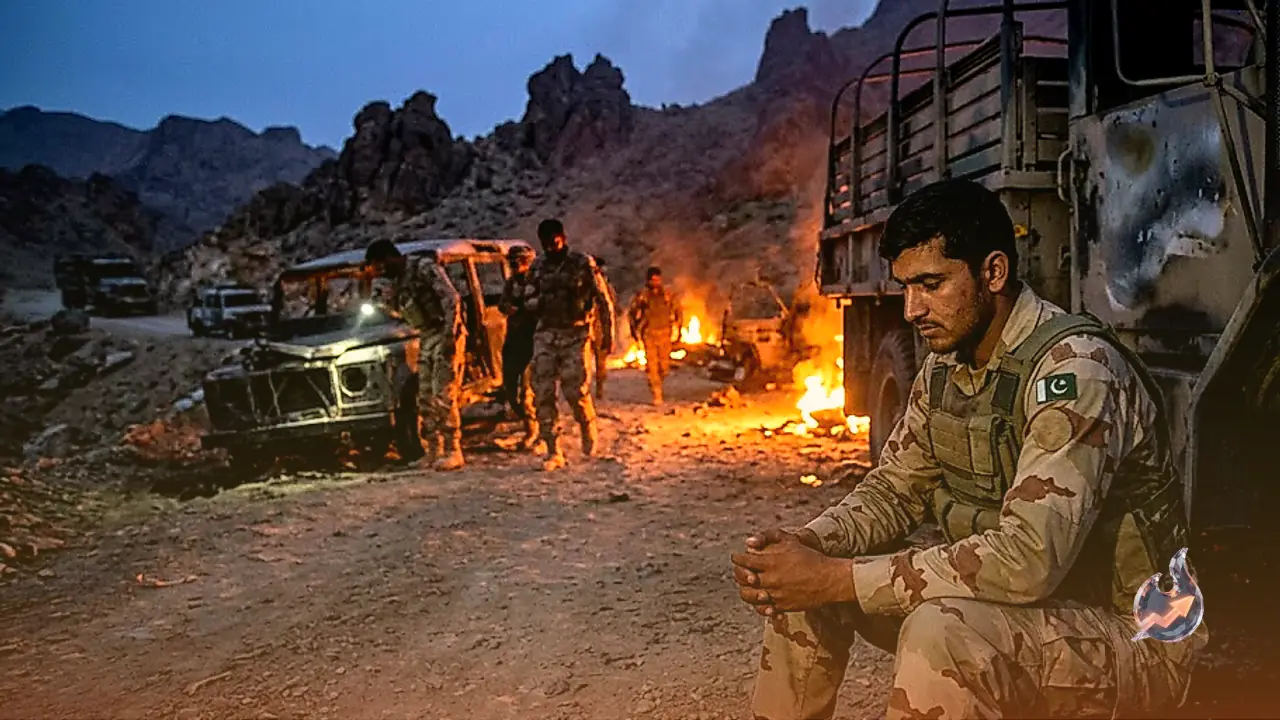
According to an official press release issued by the organization through its spokesperson Azad Baloch, the operation commenced on the evening of August 31. Armed cadres of the group established a strategic blockade and initiated a sudden search operation in the Nadirabad area of Dasht Goran at approximately 6:00 PM. Simultaneously, a military convoy consisting of eight vehicles belonging to the Pakistani armed forces arrived at the location. The insurgent group alleged that local death squad operatives were accompanying the military troops to provide ground intelligence and operational support. As the convoy entered the designated zone, the fighters executed pre-planned tactical positions and launched a coordinated assault from multiple directions.
Strategic Significance of the Chagai District
Geographically and historically, the Chagai district holds immense importance within Balochistan, having gained international notoriety following the underground nuclear tests conducted there in 1998. On May 28, 1998, the state carried out underground nuclear detonations inside the Ras Koh hills of Chagai, followed by another test two days later on May 30. Consequently, the region remains deeply intertwined with the nuclear infrastructure and military prestige of the country. Executing such a large-scale and devastating assault within a heavily guarded nuclear district deals a severe blow to the operational credibility and security apparatus of the state forces.
Heavy Weaponry and Complete Destruction of Vehicles
During the course of the battle, the insurgent fighters successfully cornered four military vehicles belonging to the convoy. The group stated that heavy weaponry and rocket-propelled grenades were utilized to target these transports, leaving them completely decimated and eliminating any possibility of survival for the troops on board. In one specific instance, a fighter used a rocket to completely obliterate a military vehicle, which later required a crane to be hauled away from the site. Local accounts cited by the organization indicated that dozens of ambulances rushed back and forth throughout the night to transport the bodies of dead soldiers from the combat zone to undisclosed locations.
Casualties Including an Army Captain
The armed faction asserted that among the 20 fatalities was an army officer identified as Captain Ubaid. The organization further alleged that the military establishment consistently conceals the true extent of its losses during such engagements, failing to publish accurate figures regarding dead and injured personnel or destroyed military hardware. The fierce exchange of gunfire continued intermittently from 6:30 PM until 4:00 AM the following morning. Despite receiving aerial drone support during the prolonged confrontation, the military forces reportedly suffered heavy setbacks and struggled to contain the multi-pronged assault.
Martyrdom of Organization Fighters
Amidst the heavy casualties, the Baloch Liberation Army acknowledged the deaths of two of its seasoned fighters, identified as Sangat Nasir alias Baba and Sangat Bashir alias Shaukat. According to the release, Sangat Nasir hailed from the Manguchur area of Balochistan and had joined the movement in 2014. With twelve years of active insurgency experience, he played critical roles in several decisive battles across Sorparod, Nagaho, Chagai, and Dalbandin, earning a reputation for exceptional tactical skill and dedication to the organizational cause.
Legacy of the Fallen Fighters
The second fallen fighter, Sangat Bashir alias Shaukat, belonged to the Gazg area of Kalat district and began participating in organizational activities in 2015. He reportedly took part in numerous operations against security forces across Narmak, Nagaho, Chagai, Saroon, and Sorparod. The organization praised his bravery and front-line leadership, stating that his sacrifice will serve as an enduring source of inspiration for the younger generation of Baloch youth. The statement concluded with a firm resolve to continue the armed struggle until the complete withdrawal of state forces from the region is achieved.