





















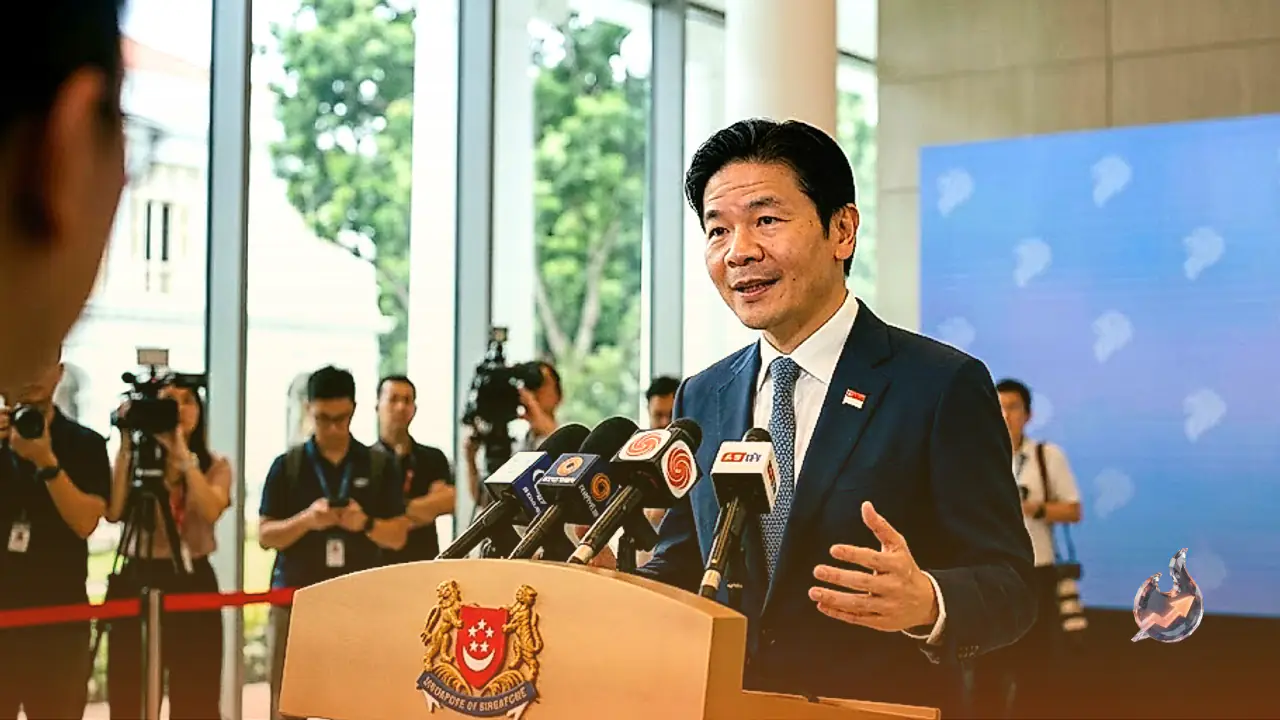

A historic administrative decision has taken place at the highest level of Singapore's government, triggering widespread discussions across global political circles. The Government of Singapore has approved an unprecedented 64 percent increase in the annual salary package for the head of government, Lawrence Wong. With the implementation of this salary revision, he will officially become the highest-paid head of government in the world. However, following immediate public debate and scrutiny from citizens regarding the massive compensation hike, the Prime Minister announced a significant compromise. He clarified that he will donate the entire increased portion of his updated 26.9 crore INR salary framework to charitable causes throughout his 5-year term.
Significant Pay Framework Revision Announced in Singapore
The compensation framework for top administrative positions in Singapore has undergone its first review in a considerable duration. The salary level of the nation's Prime Minister had remained unchanged for the past 15 years. After this decade-and-a-half period, the government conducted a comprehensive evaluation of current economic conditions, administrative workloads, and market benchmarks to finalize a new pay structure. According to official announcements, the revised compensation framework is scheduled to take effect starting 15 October 2026. The primary objective behind this decision is to maintain government efficiency and administrative integrity while supporting the nation's long-term economic strategy.
Detailed Breakdown of the Updated Compensation Package
Under the newly approved salary structure, the annual earnings of Singapore Prime Minister Lawrence Wong will rise from 2.2 million Singapore Dollars to 3.6 million Singapore Dollars. When converted into US Dollars, this updated annual package equals approximately 2.85 million Dollars per year. In terms of Indian currency, the revised annual figure corresponds to roughly 26.9 crore INR. Breaking down this annual package into monthly figures, the Prime Minister is set to receive approximately 300,000 Singapore Dollars each month, which translates to nearly 2.25 crore INR per month. This historical overhaul after 15 years solidifies Singapore's leadership position at the absolute top of global public sector compensation.
How Lawrence Wong's Earnings Compare with Global Heads of State
The updated compensation package for Singapore's Prime Minister significantly surpasses the salaries received by heads of state and leaders of the world's largest economies and major democracies. Global administrative data highlights a stark contrast when placing these figures side by side. For instance, US President Donald Trump receives an annual compensation of 400,000 US Dollars upon holding office, which equals approximately 3.3 crore INR. By comparison, the revised salary for Singapore's Prime Minister will be roughly seven times greater than that of the US President.
Similarly, compensation figures for leaders of other prominent developed nations fall far below Singapore's benchmarks. The Prime Minister of the United Kingdom earns approximately 230,000 US Dollars annually (roughly 1.9 crore INR). In Asia's key financial hub, the Chief Executive of Hong Kong receives an annual salary of around 719,000 US Dollars. Meanwhile, the President of Switzerland earns an estimated 606,000 US Dollars per year. Across all international benchmarks, Lawrence Wong stands out as the highest-earning public official globally.
The Strategic Rationale Behind High Political Salaries in Singapore
The government of Singapore maintains a clear and explicit policy rationale for awarding high compensation to its political leaders despite being a geographically compact nation. Singapore's administrative philosophy holds that managing a modern nation successfully requires attracting top-tier talent from the private sector, including leading legal experts, corporate executives, and experienced entrepreneurs into public service. If public sector compensation lags too far behind commercial industry standards, highly qualified individuals may hesitate to pursue careers in governance.
Furthermore, the government argues that maintaining competitive political salaries acts as a powerful preventative measure against corruption, bribery, and financial impropriety in public office. Providing financial security to leaders helps safeguard institutional transparency. To establish fair salary figures, Singapore uses a benchmark formula based on the median income of the top 1000 highest-earning citizens in the country. This market-aligned mechanism ensures that public sector pay is continuously calibrated against national economic performance.
Income Disparity and Citizen Median Pay Benchmarks
Although Singapore is recognized globally for its high per capita income and robust economy, a substantial gap exists between the median earnings of average citizens and the compensation of top government leaders. According to official data from 2025, the median monthly salary of an average citizen in Singapore stood at approximately 5,775 Singapore Dollars, which equals about 4.31 lakh INR per month. In contrast, the revised compensation framework grants the Prime Minister a monthly income of nearly 2.25 crore INR.
This pronounced income disparity has historically sparked intense debate among Singaporeans regarding political compensation. Citizens often question why government officials should receive packages so far above average income levels. Acknowledging this public sensitivity, Lawrence Wong noted that political compensation remains a delicate issue within the nation. However, he emphasized that offering competitive compensation is indispensable for securing high-calibrated leadership to navigate Singapore's future economic and geopolitical challenges.
Five-Year Charity Pledge to Address Public Concerns
In response to the public discussion and citizen concerns triggered by the 64 percent salary increment, Prime Minister Lawrence Wong announced a major personal commitment. He publicly declared that he will not retain the additional income generated by the salary revision for personal use. Instead, he pledged to donate the entire 64 percent salary hike to various charitable organizations over the next 5 years, covering his full administrative term.
Through this pledge, the Prime Minister sought to ease public tension while defending the structural necessity of the reform. Clarifying his stance, he stated, "This issue is not merely about money, but about securing the highest quality leadership for Singapore." He underscored that selecting and retaining capable leaders remains essential for addressing national governance needs and serving the public interest effectively.
Comprehensive Pay Adjustments Across the Cabinet
The salary restructuring in Singapore extends beyond the Prime Minister's position to encompass the broader ministerial cabinet. Under the revised guidelines, the basic benchmark annual salary for junior ministers has been raised from 1.1 million Singapore Dollars to 1.8 million Singapore Dollars (equivalent to roughly 13.4 crore INR).
However, the government emphasized that cabinet ministers will not receive the full 1.8 million Singapore Dollars immediately. Initial adjustments will be capped at a maximum increase of 9 percent, depending on individual performance, portfolio responsibilities, and administrative duties. Government projections estimate that by the conclusion of the current term, the average annual salary for most cabinet ministers will reach approximately 1.35 million Singapore Dollars (around 10.1 crore INR).