























Amid ongoing diplomatic efforts to restore peace in the Gaza Strip, Israeli Prime Minister Benjamin Netanyahu has rejected U.S. President Donald Trump's 15-point peace plan. Netanyahu made it unequivocally clear that the Israeli military will not withdraw from Gaza until the Hamas organization completely lays down its arms. This firm stance comes at a critical juncture when international mediators are pushing hard for a lasting ceasefire.
Netanyahu's Cabinet Stance
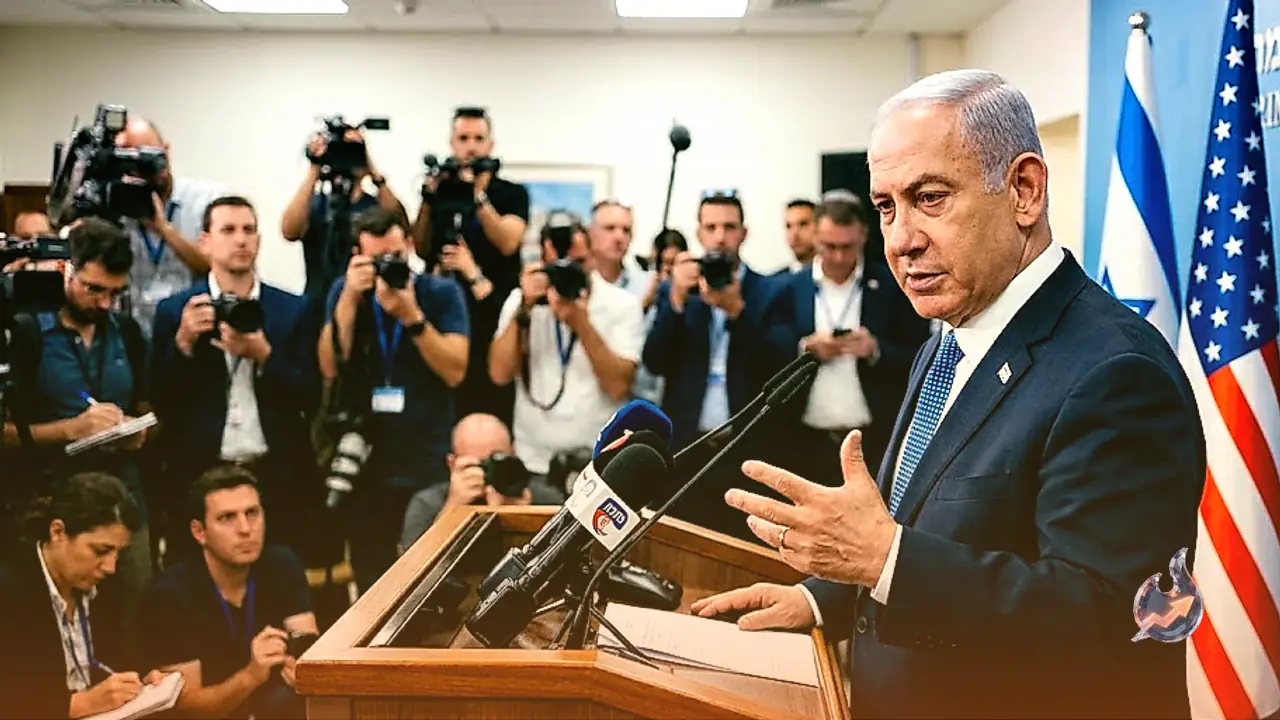
Speaking at the start of a cabinet meeting on Sunday, Benjamin Netanyahu laid out his government's position without ambiguity. He formally announced that Israel does not accept the document containing the 15-point peace plan. According to him, a partial surrender of weapons by Hamas is entirely insufficient. Israel demands the complete eradication of Hamas's heavy weaponry, light arms, and overall military infrastructure before any meaningful progress can be made.
Domestic Politics and the U.S. Perspective
U.S. officials believe that Netanyahu's defiant posture is closely tied to domestic political pressures and electoral compulsions within Israel. A U.S. official remarked that Washington fully understands Netanyahu's political necessities and remains unconcerned, provided that the Israeli leader continues to act in alignment with American expectations on key operational matters.
Curbing Military Operations and Mediator Focus
The United States is particularly keen on ensuring that Israeli military assaults in Gaza remain restricted. According to U.S. officials, Israel has recently scaled back its strikes and started pulling its forces back from the yellow line. With this tactical shift, the primary focus of the United States and international mediators has now squarely shifted toward Hamas, compelling the group to surrender its weapons.
Washington's Priorities and Crisis Aversion
Consequently, Netanyahu's disagreement with Trump's framework has not escalated into a major crisis for the U.S. administration. Washington's immediate preoccupation remains focused on keeping hostilities low in Gaza and effectively disarming Hamas through sustained diplomatic and regional pressure.
Details of Trump's 15-Point Peace Plan
Donald Trump's comprehensive proposal aims to permanently end the war in Gaza and establish a brand-new administrative framework for the territory. The blueprint mandates that Hamas surrender all its weapons and dismantle its military network, including underground tunnels. In return, the Israeli military is required to withdraw from Gaza. The plan also emphasizes delivering vital humanitarian aid to the war-ravaged region and launching international reconstruction efforts. Additionally, it proposes handing over the governance of Gaza to a newly formed administration of technocratic Palestinian experts.
Hamas's Response and Netanyahu's Statement on a Palestinian State
In a surprising twist, despite Netanyahu's stiff opposition, Hamas has accepted Trump's 15-point peace plan. The group stated that it is prepared to engage in constructive and responsible talks to implement the second phase of the ceasefire. Hamas appealed to international mediators and the peace council to compel all parties to respect the agreement and prevent any actions that could undermine the truce. Meanwhile, hardening his stance on the long-term political horizon, Netanyahu declared that as long as he serves as Israel's prime minister, a Palestinian state will not be established in Gaza or the West Bank.