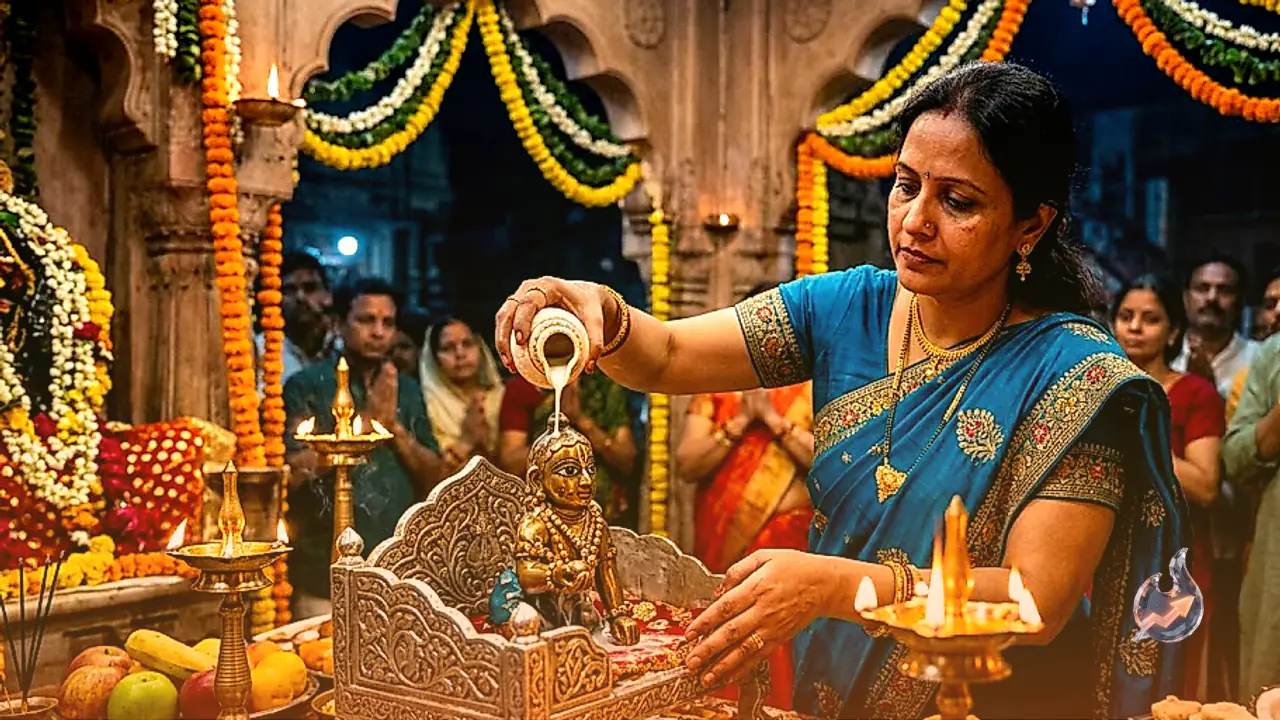

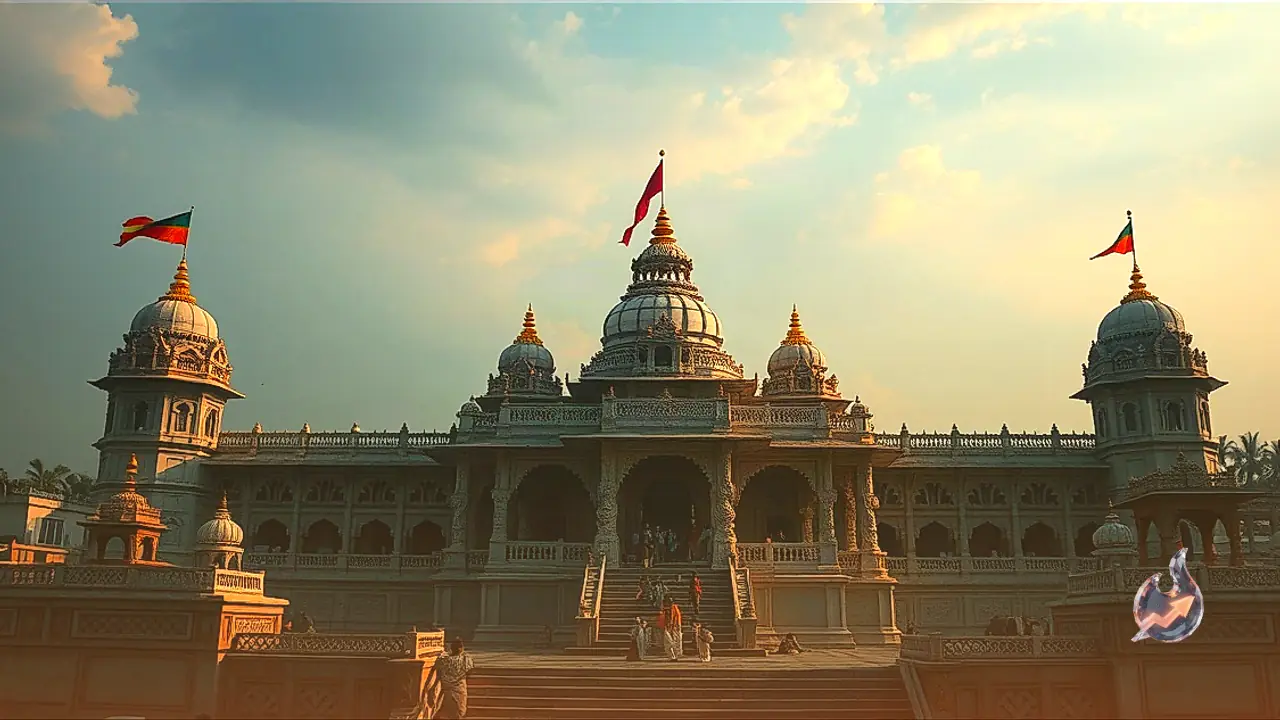















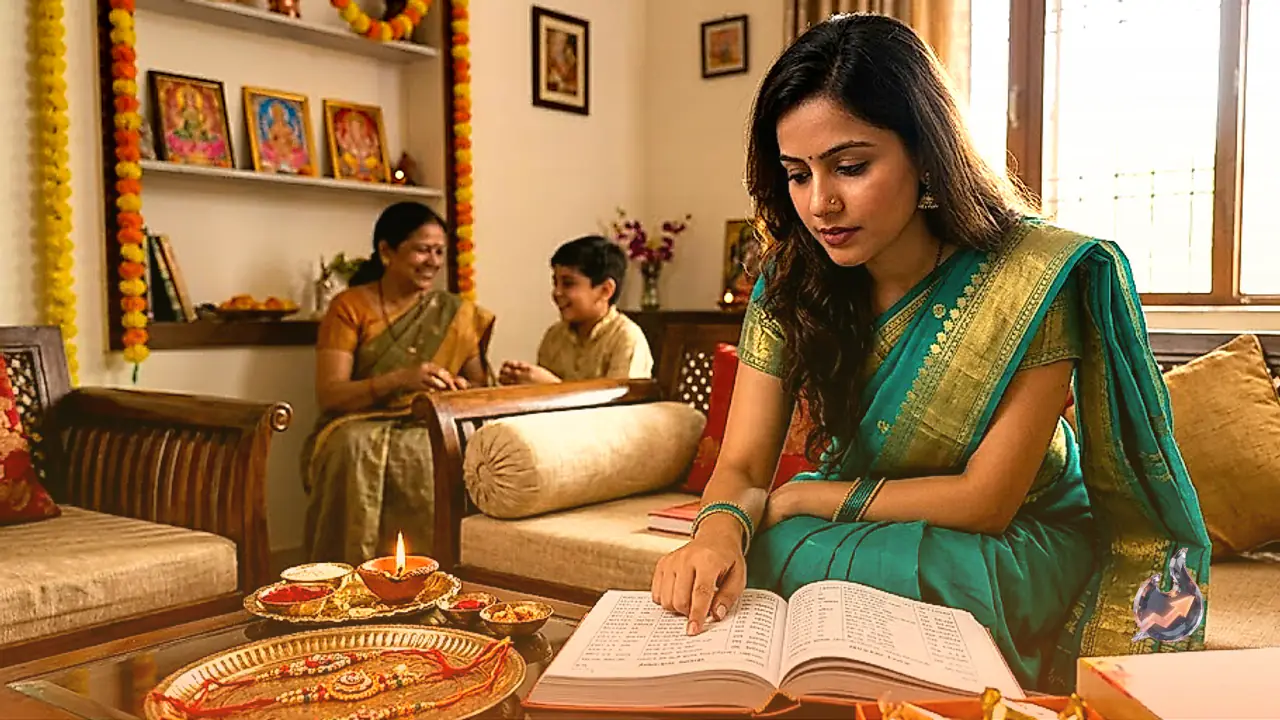

The sacred festival of Raksha Bandhan symbolizes the enduring bond of love, commitment, and protection between brothers and sisters. On this auspicious occasion, sisters tie a ceremonial thread, known as Rakhi, around their brothers' wrists while praying for their longevity, prosperity, health, and happiness. In Vedic traditions, consulting the panchang for auspicious timings, or Muhurat, before performing any sacred ritual is considered essential. Consequently, evaluating the presence of Bhadra Kaal during Raksha Bandhan holds great significance. According to religious beliefs, tying Rakhi during Bhadra is believed to bring adverse outcomes, making it customary to pause all auspicious ceremonies while this period remains active. Ancient texts provide detailed descriptions regarding the origins of Bhadra, her formidable characteristics, and her astrological placement within the Hindu calendar.
Mythological Origins and Form of Bhadra
According to ancient scriptures, Bhadra was born to the Sun deity Surya Dev and his wife Chhaya, making her the sister of Shani Dev, the deity of justice. Religious texts depict Bhadra with a dark complexion, long flowing hair, large formidable teeth, and a fierce, terrifying physical appearance. From her birth, she possessed an extremely aggressive and tempestuous temperament. Right after her creation, Bhadra began disrupting sacred rituals, yagnas, and auspicious ceremonies. Witnessing her destructive behavior, Surya Dev grew deeply concerned about her future and her marriage. However, owing to her fearsome appearance and hostile nature, prospective suitors, including celestial beings and sages, declined marriage proposals. Overwhelmed by worry for his daughter, Surya Dev eventually sought the guidance of Lord Brahma, the creator of the universe.
Brahma's Mandate and Bhadra's Place in the Panchang
Upon listening to the concerns of Surya Dev, Lord Brahma established a structured domain to channel Bhadra's energy within the cosmic timeline. Lord Brahma designated her position within the Vishti Karana of the Hindu Panchang and outlined specific schedules for her movement across the three realms: Earth, Heaven, and the Underworld. Furthermore, Lord Brahma ordained that if anyone conducted auspicious ceremonies during her active period without acknowledging her presence, Bhadra would be permitted to cause obstacles in their endeavors. Through this divine decree, Bhadra became permanently integrated into the Hindu astrological system as the Vishti Karana.
Astronomical Calculations of the Panchang and Karanas
The Hindu Panchang relies on five fundamental components: Tithi (lunar day), Vaar (day of the week), Nakshatra (lunar mansion), Yoga, and Karana. In astrological terms, a Karana represents half of a Tithi, meaning each lunar day consists of two Karanas. The panchang incorporates a total of 11 Karanas, divided into two distinct categories. The first category comprises 7 movable (Char) Karanas: Bava, Balava, Kaulava, Taitila, Gara, Vanija, and Vishti. The second category consists of 4 fixed (Sthir) Karanas: Shakuni, Chatushpada, Naga, and Kinstughna. Among these 11 elements, the Vishti Karana is identified specifically as Bhadra. Astrological calculations dictate precise phases during lunar fortnights when Bhadra becomes active.
Active Tithis of Bhadra and the Legend of Ravana
According to astrological principles, Bhadra prevails during the first half of Ashtami and Purnima, as well as the second half of Chaturthi and Ekadashi during the Shukla Paksha (bright fortnight). Conversely, during the Krishna Paksha (dark fortnight), she is active in the second half of Tritiya and Dashami, and the first half of Saptami and Chaturdashi. When Bhadra resides on Earth, that period is deemed entirely unfavorable for sacred undertakings. Due to her fierce influence, rituals such as marriages, housewarming ceremonies, tonsure rituals, and tying Rakhi are strictly prohibited during Bhadra Kaal. Classical lore references that Surpanakha tied a Rakhi to her brother Ravana during Bhadra Kaal, which ultimately led to the complete downfall and destruction of Ravana and his kingdom.
No Bhadra Obstacle for Raksha Bandhan 2026
In the year 2026, the festival of Raksha Bandhan will be celebrated on Friday, August 28. According to astrological calculations and panchang estimates, the shadow of Bhadra will cause no disruption to the festivities this year. On August 28, 2026, Bhadra Kaal will conclude prior to sunrise. As a result, the entire day will remain completely free from the negative influences of Bhadra. The available astronomical schedule confirms that the morning auspicious hours on August 28, 2026, will be entirely unhindered, allowing sisters to tie Rakhi on their brothers' wrists with complete peace of mind.