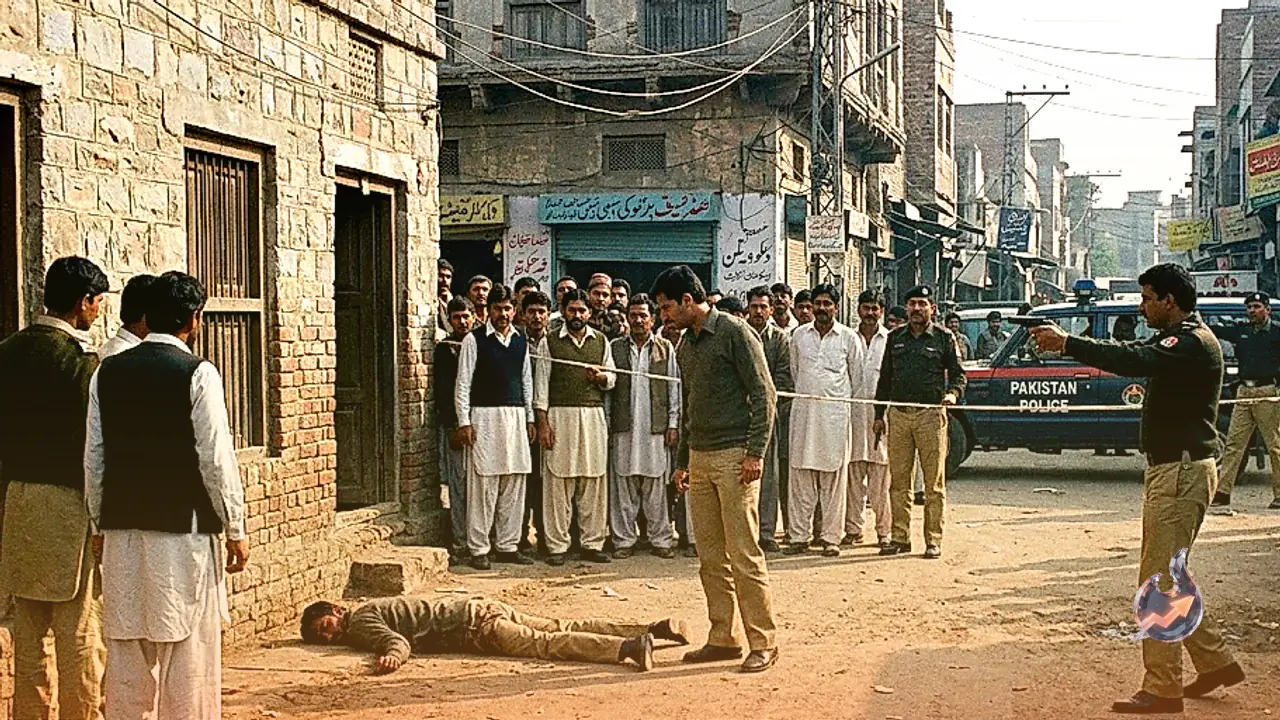
























It was still dark over Paris on the morning of 15 October 1917 when the heavy tread of boots broke the silence inside Saint-Lazare Prison. The clock had barely touched 4 am. Eighteen French officers, torches burning in their hands, moved in tight formation up to the second floor and halted outside Cell No. 12. As one of them reached for the door, a nun who served as the prison warden raised her hand. "Please wait here," she told them. "I'll bring her out myself."
Inside, the warden struck a match and lit the oil lamp on a small table. On an iron bed lay a woman of about forty or forty-one, her loose curls spilling across the pillow. The nun brushed the hair from her face and shook her gently, but the sleeping woman did not stir. A second nun was called in from the corridor, and together they woke her. At last the woman stretched, rubbed her large dark eyes and looked up drowsily.
The warden's voice caught in her throat. "Your mercy petition has been rejected," she said. "The death warrant has been issued. Your execution is scheduled for today, right now." Not a flicker of fear crossed the woman's face. She sat up on the bed and asked simply whether they meant to take her at once, then answered her own question. "That's alright. Take me. I'm ready."
Dressed for the firing squad as if for a gala
The warden glanced at the clock and told her she had half an hour, and that she was free to write a message for anyone she wished to leave behind. What the woman did next stunned the room. She prepared herself not like a prisoner walking to her death, but like a star about to appear before royalty. She pulled on silk stockings, stepped into high-heeled shoes, wrapped herself in a costly long fur coat and set a large hat upon her head. Then she arranged her hair with care, turned to the nun beside her, smiled, and asked how she looked. The nun could only stare.
Standing five feet nine inches tall, dusky-skinned, with large black eyes, curly hair and a slender frame, this was the woman all of Europe had once adored. She asked for her lawyer, Édouard Clunet, to be summoned. When he arrived he was trembling, his eyes wet, the guilt of having failed to save her written plainly on his face. She read his feelings at once. "Don't blame yourself," she told him gently, adding that she held no grievance against him or against life, and asking only that someone bring her a cigar.
The cigar came without delay. She drew on it slowly, unhurried, as though seated in the green room of a great theatre before a performance. The clock ticked on to 4:45 am. Heavy-hearted, the warden asked whether she had a last wish. "Yes," the woman replied, smiling. She wanted paper and a pen, because she meant to write a letter.
Two final letters
A diary and a pen were brought to her, and she wrote two letters. The first was to her daughter, Louise. The second was to her lover, a Russian captain named Vladimir Maslov. When she had finished, the warden took both letters and placed them in the hands of her lawyer.
The Brazilian novelist Paulo Coelho, in his novel The Spy, describes what followed. By 5:15 am the woman had walked out of her cell. She was led downstairs and seated inside a sky-blue military car that carried only four people, herself, her lawyer and the two nuns. The vehicle rolled through the empty, fog-covered streets of a sleeping Paris and, a short while later, reached Fort de Vincennes on the city's outskirts.
"I want to face death with my eyes open"
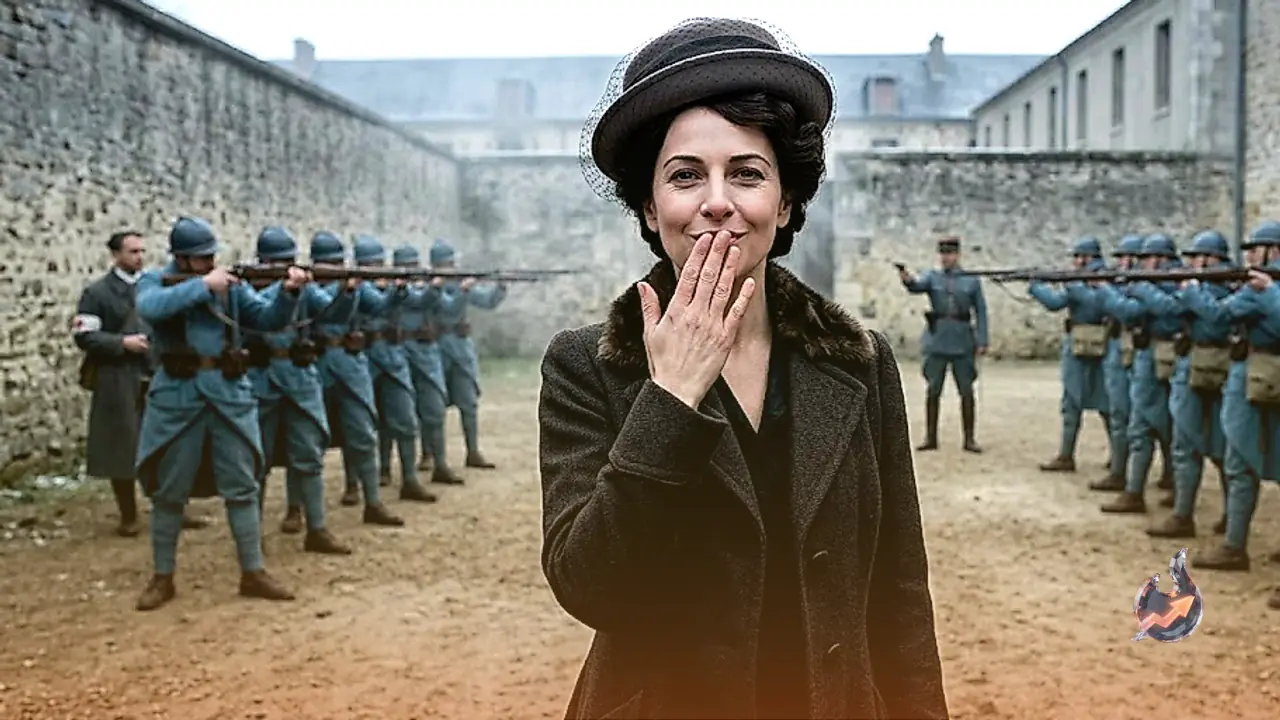
More than a hundred armed soldiers drawn from all three branches of France's military had ringed the execution ground. At its centre stood a single wooden post. The woman climbed out of the car and walked to it without help. When a soldier came forward with a rope to bind her, she refused. He insisted, and only then did she relent, agreeing to let them tie a single hand. Her left hand was fastened to the post.
Another soldier stepped up holding a black blindfold and moved to cover her eyes. She stopped him sharply. "Stop. I don't need any blindfold," she said. "I want to face death with my eyes open." The soldier drew back. Twenty paces ahead of her waited a firing squad of twelve French soldiers, rifles raised and trained on her body. The commander lifted his gleaming sword, the signal for the men to make ready.
At exactly 5:30 am a great bell tolled, its sound rolling across the whole ground. In France they called it the Death Bell. In those last seconds the woman looked at the soldiers before her and at her weeping lawyer, and she smiled. Then she blew them a flying kiss. The commander's voice cut the air: "Fire!" Twelve rifles went off as one, and the volley shook the ground. Three bullets tore into her body and she dropped where she stood. A soldier ran forward, drew his pistol and fired point-blank into her head. Her skull shattered.
A body no one claimed
After the execution not a single person stepped forward to claim her. Her body was handed to a Paris medical college, where students used it for anatomical dissection. Her severed head was preserved in an anatomy museum, and then, one day in the 1990s, even that was stolen and never recovered.
The woman lying dead on that fog-soaked ground had once been an exotic dancer who slowly shed her clothes as she performed. In the first years of the twentieth century, Europe's political leaders, actors, army generals and rich businessmen had poured thousands of dollars into a single evening of her company. She carried another identity too, that of the most glamorous spy in the world. And after France's defeat in the First World War, the nation had turned thirsty for her blood. So who was she, and how did a dancer become a spy? To understand that, we have to go back in time.
A rich man's favourite daughter in Leeuwarden
The story begins in the Dutch city of Leeuwarden, where a girl was born on 7 August 1876 and named Margaretha Zelle. She was the eldest of four children. Her father, Adam Zelle, ran a shop that sold clothing and tailoring supplies, and a few years later he moved into the oil business. Fortune favoured him, and he rose to become one of the wealthiest men in the city.
As the firstborn, Margaretha was showered with the most affection. Her father put her in the most expensive school in town. She wore silk, played with costly toys and lived far more grandly than the children around her. For a few years life was golden. Then, in 1885, everything began to turn.
Adam Zelle started suffering heavy losses in business. Most of what he earned went straight to paying off his debts. By 1889 things had grown so dire that the bank declared him bankrupt, and he became tangled in a string of cases over debt and fraud. Soon the family could barely afford food. The children's schooling stopped. They were forced to leave the city and squeeze into a small, cramped apartment.
As the money vanished, the strain between Margaretha's parents grew unbearable. Arguments, shouting and violence became a daily routine, and in 1890 the couple divorced. Margaretha chose to stay with her mother, but that shelter did not last. Only a few months later her mother died. At fourteen she was alone and penniless. Relatives took her in for a while, but before long they too turned their backs on her, and the simplest question of all, how to find enough money to survive, became her greatest struggle.
The teacher and the scandal
Margaretha did not look like most Dutch girls. She had dusky skin and already stood close to five feet nine inches tall, at a time when the average Dutch girl barely reached five feet. She was lively and loved to talk, another reason many relatives preferred to keep their distance from her.
By 1892 she was sixteen and had moved to the city of Leiden. Around then a training school advertised openings for young men and women to teach small children. Margaretha applied straight away, sat the interview and was chosen. When she was not teaching, she spent most of her spare time reading in the school library. During these months she grew close to the school's headmaster, a man thirty-five years older than she was, and their working relationship slowly turned into something intensely personal.
The British journalist Mary W. Craig, in her book A Tangled Web: Mata Hari, notes that Margaretha and the headmaster were physically involved, but that it has never been settled whether she truly cared for him, whether he took advantage of her fragile circumstances, or whether the two were simply drawn together because each answered a need in the other.
It did not take long for rumours of the affair to spread through the school. As the scandal swelled, the management dismissed Margaretha from her post in 1893, while the headmaster faced no consequences at all. At seventeen she was cornered, poverty on one side, public disgrace on the other, and no one in the city willing to be seen with her.
An advertisement for a wife
Then came 1894, and a newspaper advertisement. Captain Rudolf John MacLeod of the Dutch Colonial Army was searching for a wife. He was posted in Indonesia and had come home to the Netherlands on leave. Margaretha went to meet the captain, who was twenty years older than she was, and the soldier took a liking to her at their very first meeting. Quietly, she let herself believe that her money troubles were finally over, and imagined herself travelling the world on the arm of a distinguished officer. On 11 July 1895 the two were married.
After the wedding Captain Rudolf took her to Indonesia, where they had two children, a son and a daughter. At first everything seemed fine. Then the truth of the marriage revealed itself. Her husband was a heavy drinker, short-tempered and violent. He beat her often and carried on affairs with other women. One day their young son suddenly died, and it later emerged that he had been poisoned. After the boy's death the marriage collapsed completely, and in 1902 the couple separated. Using his money and influence, her husband also took custody of their daughter.
Margaretha sank into depression and drifted from place to place for months. During this time she began spending her days with local tribal women in Indonesia. She learned the Malay language and studied traditional and religious dances, watching closely how the women there worshipped their gods through the expressive movement of the body.
Paris, and an offer she first refused
In 1903 Margaretha left Indonesia for Paris. In those days many of the city's leading painters hired nude and semi-nude models for their work, and Margaretha stepped into the same trade, taking a new name, Lady MacLeod. One day a painter noticed the sadness that clung to her and asked why she always seemed so troubled and withdrawn. Her eyes filled with tears. "I need money," she said, explaining that she had come to this work hoping to earn a living but that nothing here had worked out either. After a pause she added that she had lost everything, her home, her son, her daughter, and perhaps even herself.
The painter drew up a chair, sat facing her and said softly that he had an excellent offer, one that would make money pour in. When she asked what kind of offer, he looked straight at her and told her she was exceptionally beautiful, and that instead of hiding her body under clothes she should cover it with colourful feathers and pearls and become a model, promising she would find steady work in Paris and could name her own price.
Margaretha rose at once. If his proposal meant undressing in public, she said, then he should hear her clearly, she could never do anything so degrading, and she walked away. The painter called after her that she could earn as much money as she wished. She could not sleep that night and cried for hours, turning the same thought over and over: that accepting the offer would make every one of her problems vanish overnight and would even let her raise her daughter herself, and yet asking whether she could truly gamble away her dignity for it.
The senior British journalist Julie Wheelwright has written that, after days of inner turmoil, Margaretha finally gave in. In a letter to an acquaintance she laid out her helplessness, admitting she knew a dishonourable life often ends in misery, but insisting she had already passed the point where need left her any choice, and pleading that no one should think her wicked or immoral by nature, for she had taken this dark path only because of poverty.
From the circus ring to a new name
Margaretha accepted the painter's offer and worked as a model in Paris for several years before moving into yet another line of work. Her new act had her striking bold poses on horseback at what was known as the Mollier Circus. Her fearless, graceful and regal riding drew the eyes of wealthy Paris for the first time.
As told in the book Mata Hari: The True Story, one evening she was walking back after a performance, her clothes covered in dust, breathing hard and wiping the sweat from her face, when the circus owner, Mollier, called her over. Exhausted, she came. Blowing out cigar smoke, he told her seriously that she was risking her life on these dangerous stunts and asked how long she meant to keep playing with death. She only smiled and said she did not really have another choice. He pointed her to a chair, lowered his voice, and suggested she perform the dances she had learned in Indonesia, but present them in a fresh way for the rich. "These wolves crave beauty, not circus acrobatics," he told her. Surprised, she gathered herself, wrapped her shawl around her shoulders and said she would go home for now and think it over another time.
A few weeks later Margaretha decided to begin an entirely new life, and she took a new name, Mata Hari, which in the Malay language of Indonesia means "the first ray of the morning sun."
The night at the Musée Guimet
The date was 13 March 1905, and the venue was the famous Musée Guimet in Paris. The hall had been dressed to look like an ancient Indian and Javanese temple, the Javanese temples being the Hindu and Buddhist shrines built on the Indonesian island of Java. Soft candlelight filled the room and the air carried the faint scent of incense. Among the audience sat some of Paris's most powerful military officers, its richest businessmen and its most prominent political leaders.
At 8 pm Mata Hari walked in, wearing more jewellery than clothing. As the music started she glided to the centre of the stage, and as the rhythm quickened she cast aside her colourful garments one by one. The audience sat spellbound, barely blinking. At the height of the performance she removed every last piece of clothing until only a few ornaments remained on her body. Still dancing, she moved toward a statue of Lord Shiva placed on the stage, folded her hands and knelt on her heels before it. The music sank slowly into silence. She stood, closed her eyes and joined her palms, and a moment later the hall exploded with applause, cries of "Mata Hari! Mata Hari!" ringing through the auditorium.
The next morning newspapers across Paris carried her photographs and accounts of the performance. Before long she had become the most expensive and the most celebrated performer in all of Europe, and army generals, powerful officers and political leaders were willing to do almost anything for a single evening in her company. How that dazzling fame curdled into the accusation of espionage, and led her at last to the post at Fort de Vincennes, is the story of the next episode.