




















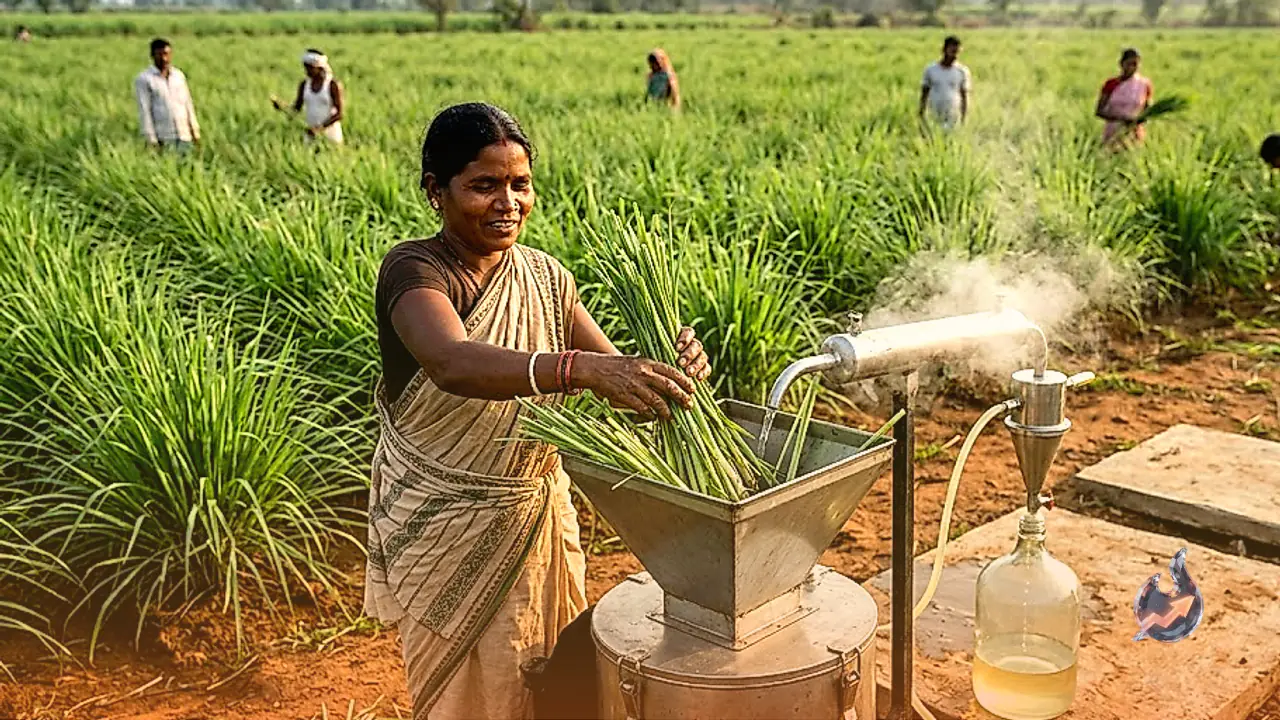

Agricultural practices in the Guni region of Khunti are drawing attention as local cultivators embrace lemon grass farming on a massive scale. Spanning a total area of 120 acres, this aromatic crop cultivation is accompanied by an onsite processing setup that allows farmers to extract essential oil right where it is grown. This integrated approach helps local cultivators streamline production and manage the entire lifecycle of the harvest without relying heavily on external processing units.
The Four-Stage Extraction Process
A local farmer named Indra, who is actively involved in lemon grass cultivation, explained that the production of this valuable essential oil involves four distinct stages. The procedure ranges from harvesting the green foliage to generating high-pressure steam for extraction. Each step is carefully executed to ensure maximum oil yield and uncompromised quality.
Harvesting and Distillation Tank Preparation
The workflow begins with the harvesting of fresh or slightly withered lemon grass leaves. Once gathered, these leaves are thoroughly cleaned and packed tightly into a distillation tank. Simultaneously, water is boiled in a large boiler to generate high-pressure steam. This steam is introduced into the bottom of the tank, where it moves upward through the packed vegetation.
Condensation and Separation Stages
The intense heat of the steam vaporizes the oil trapped within the cells of the lemon grass leaves. This mixture of steam and oil vapor then passes through a cold-water condenser, which cools the vapors and converts them back into liquid form. The resulting liquid is directed into a Florentine separator. Because lemon grass oil is lighter than water, it naturally forms a distinct top layer, allowing it to be easily skimmed and separated from the water below.
Quality Testing and Packaging
Following separation, the extracted oil undergoes quality checks that evaluate factors such as color, fragrance, and density. Once it meets the required standards, the essential oil is packed for commercial distribution in the market. Having processing facilities directly on-site reduces logistical hurdles and empowers local growers to handle production efficiently.