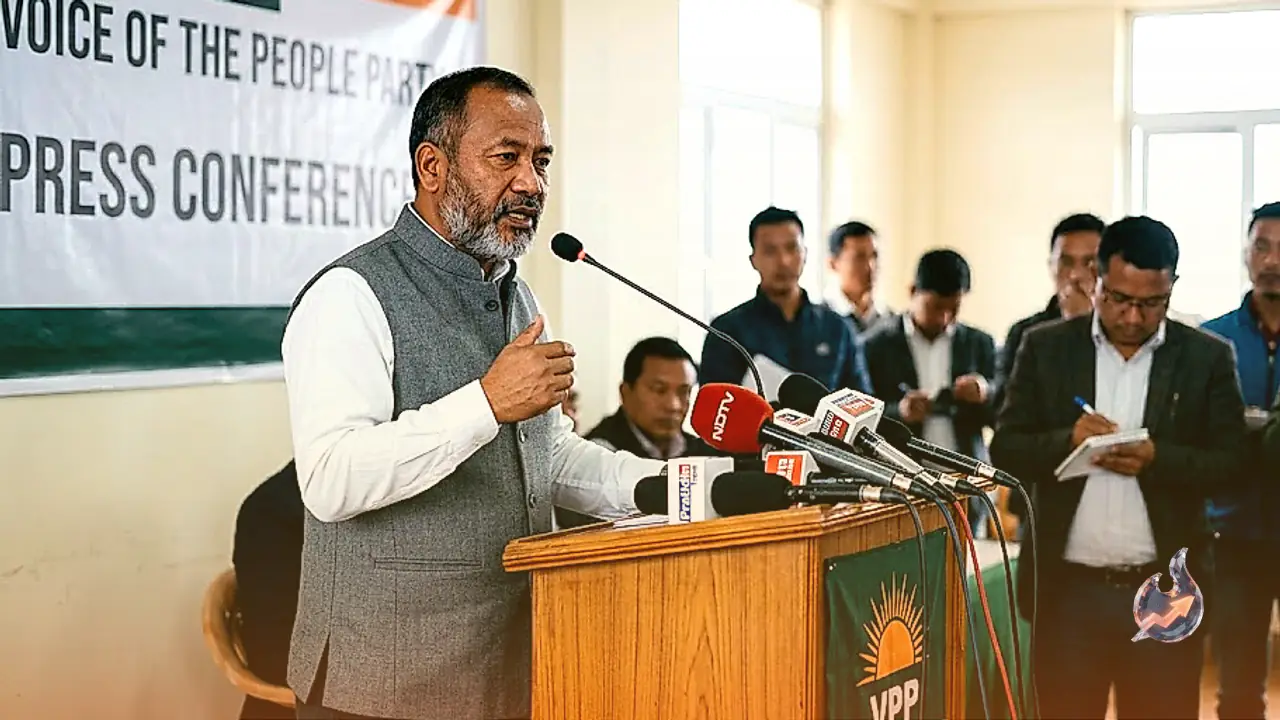

















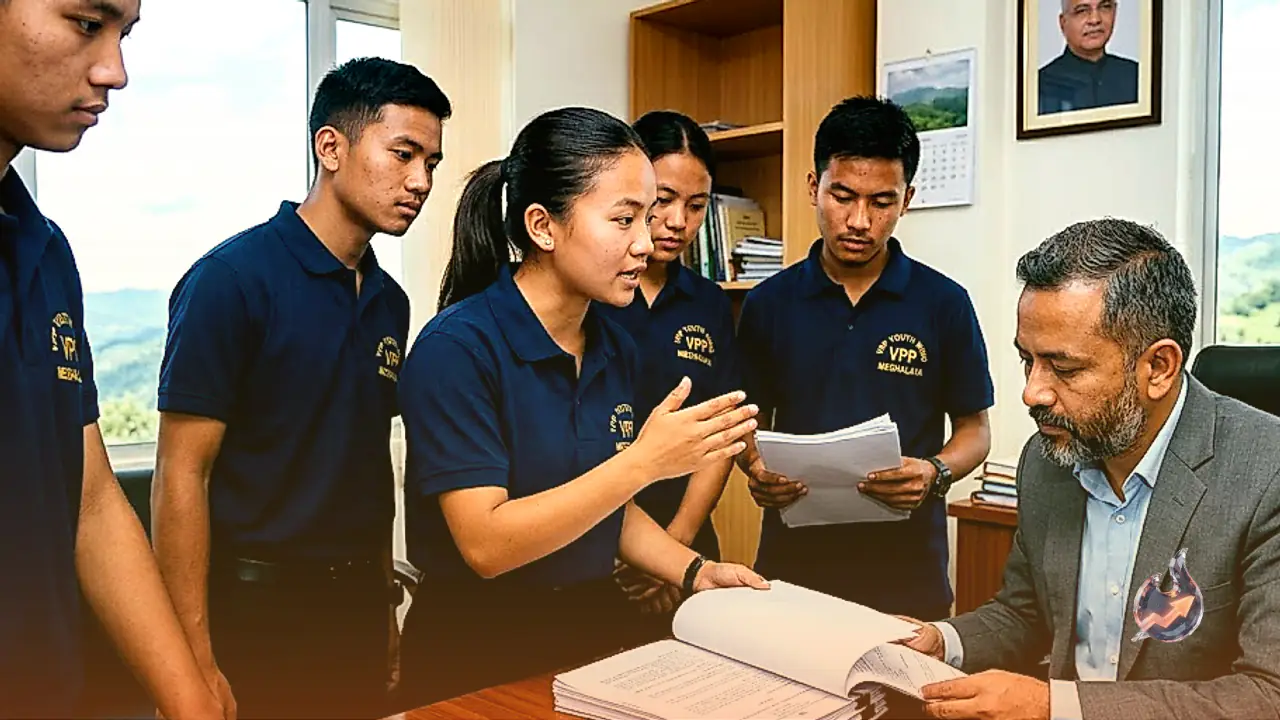

Demands for sweeping structural safeguards have surfaced regarding the proposed Meghalaya State Agriculture Policy 2026, which was recently placed in the public domain for stakeholder review. In a comprehensive submission addressed to Agriculture and Farmers’ Welfare Minister Timothy D. Shira, the State Youth Wing of the Voice of the People Party (VPP) pressed for enforceable market infrastructure, price fluctuation shields, cold chain investments, and guaranteed local employment within the policy framework. The party stressed that shifting the focus from gross yield to net farmer income requires decisive intervention against unfair market practices and institutional intermediaries.
Context and Challenges Outlined in the Draft Policy
The Department of Agriculture and Farmers’ Welfare unveiled the 61-page draft of Meghalaya’s inaugural State Agriculture Policy on September 13. The foundational document is designed to pivot the state’s farm economy away from an exclusive emphasis on raising harvest volume toward systematically expanding farming household earnings. In doing so, the draft formally acknowledges multiple structural handicaps that have historically suppressed returns, including fragmented landholdings, underdeveloped physical markets, heavy reliance on unregulated middlemen, inadequate irrigation coverage, minimal post-harvest storage, and deficient processing capacity.
To confront these limitations, the draft framework sets out a 15-point strategic roadmap. This program encompasses soil health improvement, irrigation development, certified organic practices, farmer collectives, farm mechanization, strategic crop prioritization, cold-chain logistics, agro-exports, technological modernization, and climate-resilient farming techniques. In direct response to these parameters, the VPP youth wing dispatched its policy recommendations dated September 30 to help tighten the administrative machinery.
Direct Market Access, Licences, and Solar Cold Storage
A central pillar of the youth wing’s charter is the mandatory creation of solar-powered cold storage units across every district in the state. To make these capital-intensive facilities accessible, the submission urges an 80 per cent capital subsidy for Farmer Producer Organisations (FPOs) handling perishable horticulture crops. In parallel, the youth body called for bringing all middlemen, aggregators, and marketing agents under strict licensing and oversight administered by the Meghalaya State Agricultural Marketing Board (MSAMB).
Such regulatory control, the memorandum noted, is essential to eradicate exploitative practices like arbitrary weight deductions known as kilo cutting, thereby assuring growers transparent and equitable realization for their produce. The recommendations also emphasize expanding designated aggregation hubs, regulated rural weekly markets, and comprehensive district-level cold chains so that producers can interface with buyers directly rather than selling under distress.
MSP Price Trigger Mechanism and Rapid Relief Protocols
To shield agricultural households during market crashes, the youth wing advocated for an automated public procurement trigger. Whenever open-market spot rates plummet more than 15 per cent beneath the minimum support price (MSP), authorities should be mandated to step in within 72 hours. Furthermore, all associated procurement clearances must be settled directly into farmers’ bank accounts via direct benefit transfer within seven days.
The memorandum noted that trigger price benchmarks should be established and notified prior to seasonal sowing. During severe droughts or famines, the state should actively procure staple rice and seasonal vegetables at MSP to supply the Public Distribution System (PDS) and mid-day meal operations. In addition, the submission recommends deploying mobile procurement vans across villages to buy salvable produce during extreme weather events, alongside rolling out zero-cost crop insurance policies and establishing community seed banks dedicated to indigenous seed varieties.
Local Hiring Mandates and Gravity Ropeway Logistics
Beyond fiscal protections, the VPP youth wing highlighted the potential of the agricultural transition to solve regional unemployment. The letter recommends mandating an 80 per cent hiring quota for local youth across all state-backed agricultural infrastructure projects and marketing hubs, accompanied by an explicit procurement preference for indigenous materials.
On post-harvest value addition, the submission outlines plans for district cluster micro-processing centres targeting surplus harvests. These units would leverage an 80 per cent subsidy through the Pradhan Mantri Formalisation of Micro Food Processing Enterprises (PMFME) scheme for rural youth and self-help groups, keeping value addition firmly anchored within Meghalaya under a CPPP framework. Addressing rugged terrain logistics, the party proposed piloting agricultural and gravity ropeways connecting remote field clusters to roadheads, which could cut crop transit costs by 70 per cent. The state would fund an 80 per cent subsidy for ropeway installation, local youth would receive technical operation training, and FPOs would take charge of routine upkeep. The letter, submitted by VPP youth wing president Bah Marbud Dkhar and secretary Bah Nathaniel Mawrie, was simultaneously marked to the Commissioner and Secretary of the Department of Agriculture and Farmers’ Welfare for administrative action.