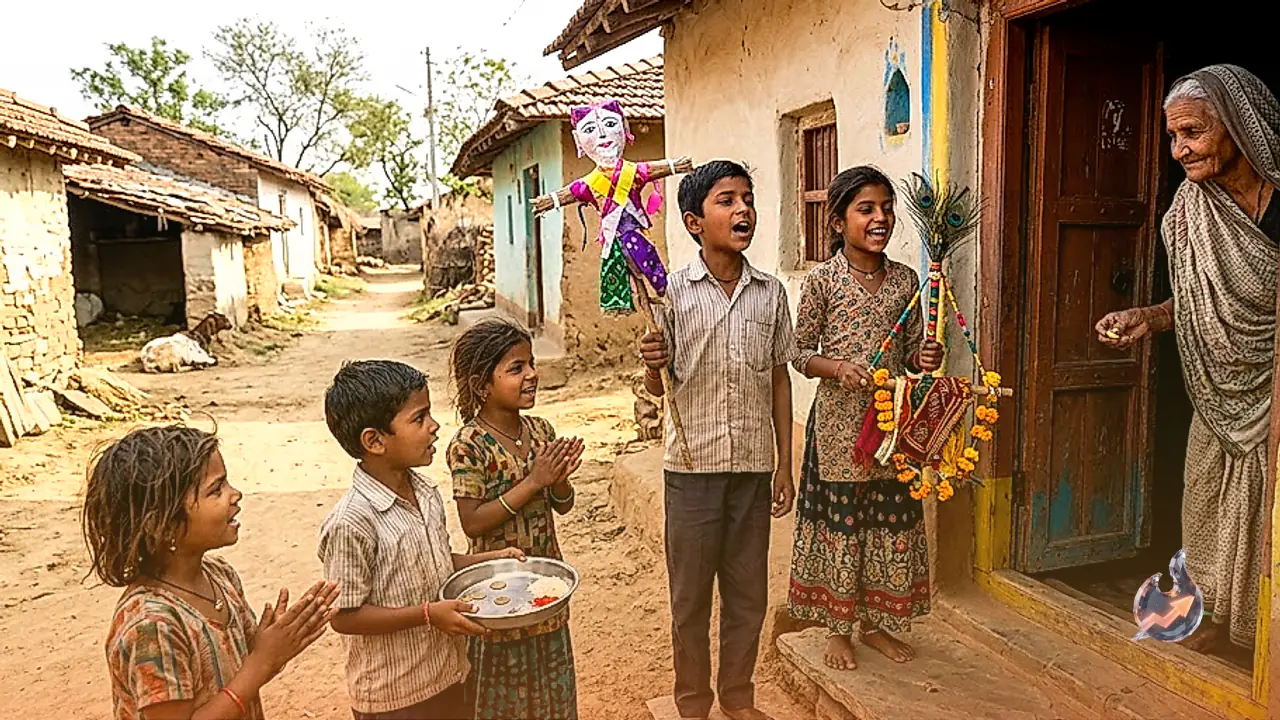















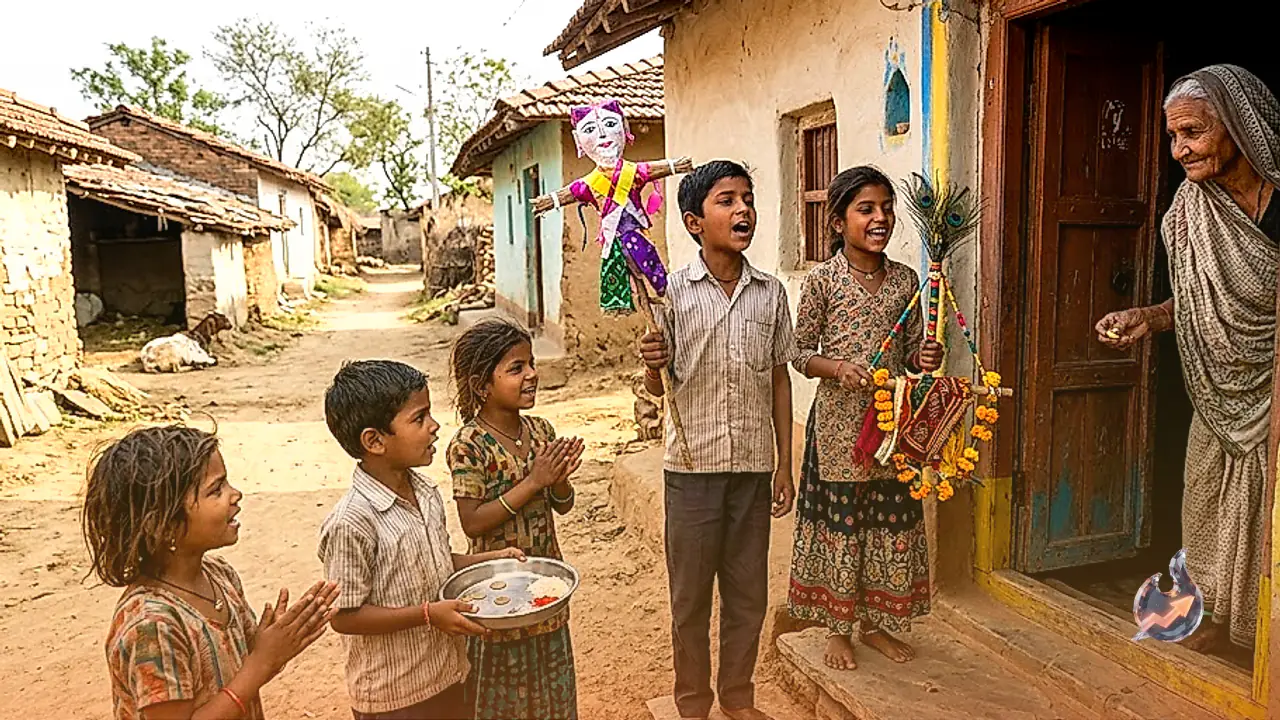

Across the countryside of Rajasthan's Bharatpur district, age-old cultural practices continue to thrive despite the rapid pace of modern living. Among the region's most distinctive community rituals is the folk tradition of Tesu and Jhanjhi. As dusk falls, rural lanes and neighborhood alleys come alive with groups of young children carrying colorful effigies. Going door to door across the village, the youngsters recite traditional folk songs in sweet melodies and seek customary gifts. Villagers welcome these lively processions warmly, offering pearl millet, grains, or cash according to their means before sending the children off with blessings.
Roots Traced to the Epic Mahabharata and Warrior Barbarika
According to local oral folklore and cultural scholars, this captivating rural pastime traces its heritage directly back to the Dvapara Yuga and the great battle of the Mahabharata. In rural narratives, Tesu is revered as an embodiment of Barbarika, the invincible warrior of the epic. Legends state that prior to entering the battlefield of Kurukshetra, Barbarika pledged to fight strictly on behalf of whichever side was losing. Lord Krishna recognized that this pledge could dramatically alter the final outcome of the war. After testing Barbarika's extraordinary courage and commitment, Krishna asked for the warrior's head as a sacred offering. To commemorate this unmatched sacrifice and dedication, villages have preserved the reverence of Tesu across centuries.
Lively Folk Songs and Evening Celebrations in Courtyards
Alongside Tesu, the associated practice of Jhanjhi brings enormous excitement to young village children. Every evening, local boys and girls organize themselves into small neighborhood groups and set out across the settlement. The atmosphere fills with joy as the children stand before residential doorways, singing cherished traditional verses. While there, they enact the playful steps of the Tesu and Jhanjhi performance. Household elders uphold the ancient tradition by showering the children with praise, giving them edible treats, harvested grains, or small coins. This everyday exchange serves as a vibrant display of communal harmony and mutual affection within rural life.
Artisanal Crafts Give Way to Ready-Made Market Figures
The passage of time has introduced notable changes in the way these ceremonial figures are made. In past generations, families and children crafted Tesu figures entirely by hand using bamboo splints, clay, and decorative craft paper. Today, ready-made and vibrant factory-built versions are widely available in local markets. Yet despite commercialization and contemporary distractions, the core of the custom remains unbroken. Children across Bharatpur and the broader Braj belt continue to observe the ritual with genuine dedication, demonstrating that Tesu and Jhanjhi represent far more than a simple childhood pastime, standing instead as an active symbol of rural heritage and living faith.